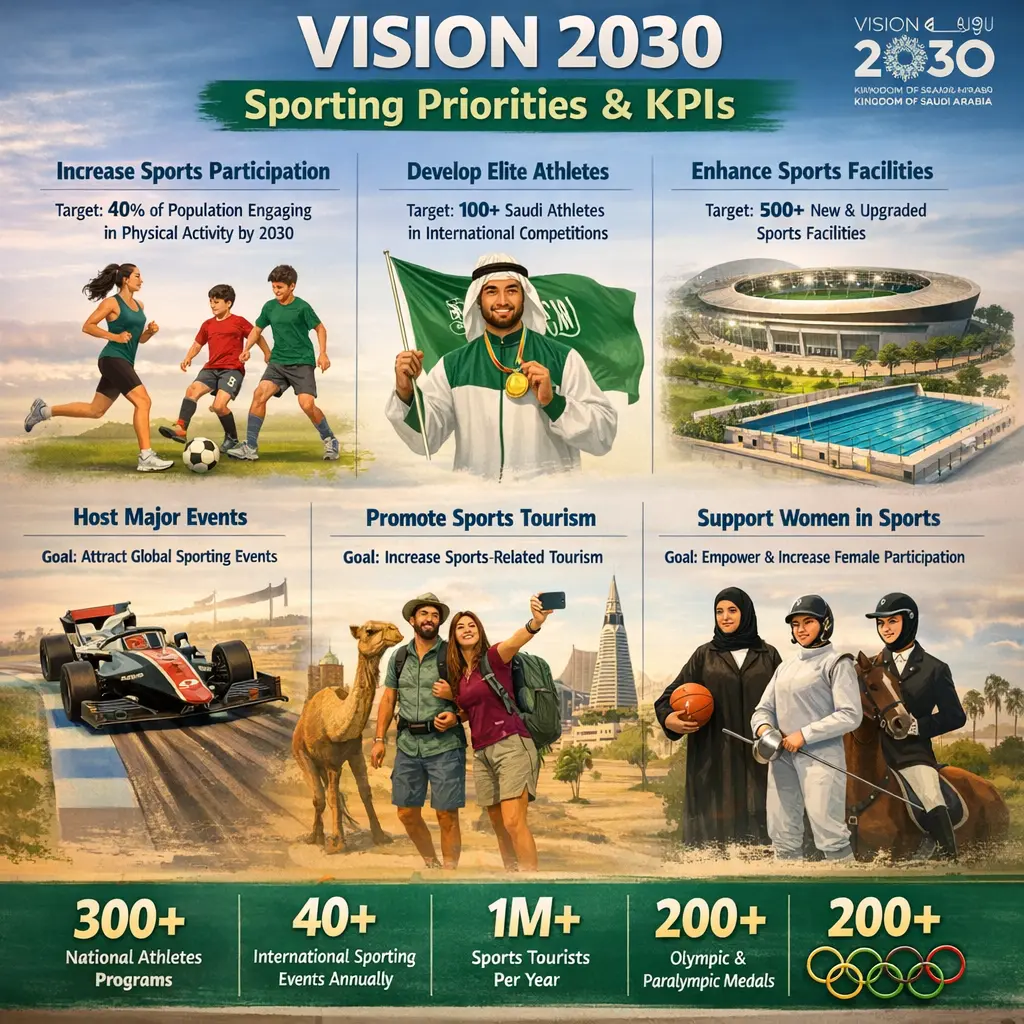
"Vision 2030: Sporting Priorities & KPIs (Tottenham Hotspur F.C.)" outlines the club’s long-term ambitions to elevate its footballing success by 2030. It focuses on strategic goals such as winning major trophies, developing world-class talent, and enhancing academy pathways. Key Performance Indicators (KPIs) include consistent top-four league finishes, youth team promotions, and measurable improvements in player performance, ensuring sustainable growth and competitive excellence on both domestic and European stages.
Vision 2030: Sporting Priorities & KPIs
"Vision 2030: Sporting Priorities & KPIs (Tottenham Hotspur F.C.)" outlines the club’s long-term ambitions to elevate its footballing success by 2030. It focuses on strategic goals such as winning major trophies, developing world-class talent, and enhancing academy pathways. Key Performance Indicators (KPIs) include consistent top-four league finishes, youth team promotions, and measurable improvements in player performance, ensuring sustainable growth and competitive excellence on both domestic and European stages.
💡 Key Takeaways
- Identify the top sporting priorities for 2030 and how they align with your organization's goals.
- Define clear KPIs across participation, performance, finance, and sustainability to track progress.
- Learn to set targets, monitor data, and adapt strategies based on insights.
- Understand stakeholder engagement and how to communicate progress to fans, athletes, and sponsors.
❓ Frequently Asked Questions
What is Vision 2030: Sporting Priorities & KPIs?
A long-term strategic framework outlining sport development priorities and the KPIs used to track progress toward goals through 2030.
What are KPIs in this context?
Key Performance Indicators are measurable targets (e.g., participation, medals, facilities) used to assess how well the sport system is achieving its priorities.
What are typical sporting priorities under Vision 2030?
Examples include increasing grassroots participation, improving elite performance, expanding sport infrastructure, strengthening governance and integrity, athlete welfare and development, and ensuring sustainable funding.
How are KPIs measured and used?
KPIs are tracked using data from surveys, event results, facility usage, and financials; progress is compared against targets to identify gaps and adjust programs.