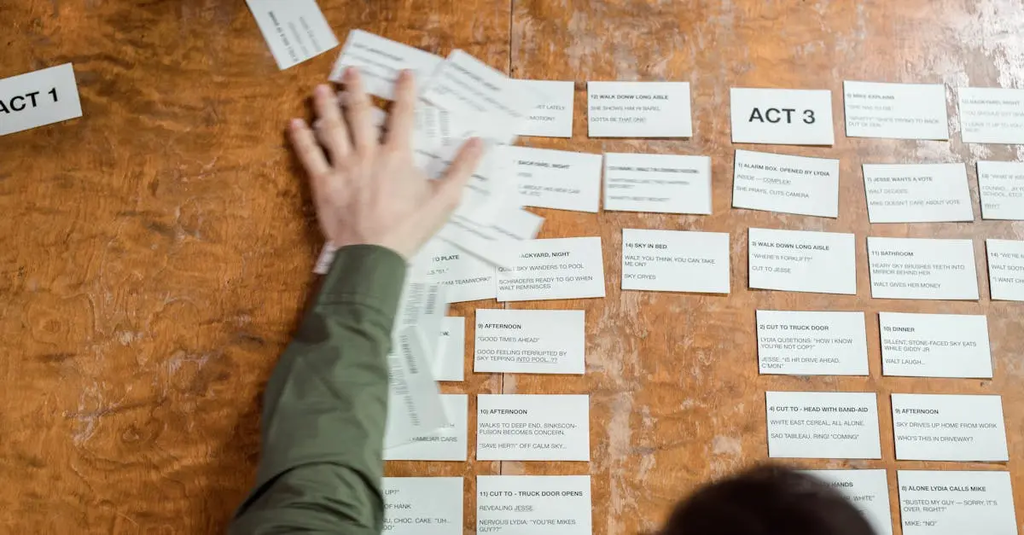
Visual Narrative & Sequencing in Visual Arts & Design refers to the method of telling a story or conveying information through a series of images arranged in a deliberate order. This skill involves organizing visuals so that they guide the viewer’s eye, create meaning, and evoke emotions. Effective sequencing enhances storytelling, clarifies concepts, and ensures a cohesive flow, making complex ideas accessible and engaging through visual communication.
Visual Narrative & Sequencing
Visual Narrative & Sequencing in Visual Arts & Design refers to the method of telling a story or conveying information through a series of images arranged in a deliberate order. This skill involves organizing visuals so that they guide the viewer’s eye, create meaning, and evoke emotions. Effective sequencing enhances storytelling, clarifies concepts, and ensures a cohesive flow, making complex ideas accessible and engaging through visual communication.
💡 Key Takeaways
- Understand how a sequence of images communicates time, space, and emotion without dialogue.
- Learn how panel order and transitions control pacing and reader flow.
- Explore how composition, shot size, and framing guide the viewer's eye and emphasize key moments.
- Practice building a visual narrative arc with a clear setup, progression, and resolution.
❓ Frequently Asked Questions
What is visual narrative and sequencing?
Visual narrative uses images to tell a story; sequencing is arranging frames or panels in a logical order to guide viewers through events, time, and cause-and-effect.
How do you plan the sequence to tell a story clearly?
Identify key beats (setup, action, consequence), place them in a logical order, and use transitions and rhythm to lead the viewer smoothly from one beat to the next.
What shot types and transitions help with sequencing?
Use a mix of wide, medium, and close-ups for readability; apply cuts, fades, or wipes to signify changes in time or space, keeping directionality consistent.
How does pacing affect visual storytelling?
Short, rapid cuts speed up pace and energy; longer frames slow the pace and emphasize moments—adjust pacing to match mood and action.
How can you maintain continuity across panels?
Keep characters, props, and lighting consistent; use establishing shots and logical action progressions so changes between panels feel natural.