"Volcanic Parks and Lava Landscapes: Lassen to Craters of the Moon" refers to the dramatic geological features found in Lassen Volcanic National Park and Craters of the Moon National Monument. These areas showcase rugged terrain shaped by volcanic activity, including cinder cones, lava tubes, and steaming fumaroles. Visitors can explore unique landscapes formed by ancient eruptions, witness vibrant mineral colors, and experience the raw power of Earth's volcanic forces in these remarkable natural parks.
Volcanic Parks and Lava Landscapes: Lassen to Craters of the Moon
"Volcanic Parks and Lava Landscapes: Lassen to Craters of the Moon" refers to the dramatic geological features found in Lassen Volcanic National Park and Craters of the Moon National Monument. These areas showcase rugged terrain shaped by volcanic activity, including cinder cones, lava tubes, and steaming fumaroles. Visitors can explore unique landscapes formed by ancient eruptions, witness vibrant mineral colors, and experience the raw power of Earth's volcanic forces in these remarkable natural parks.
💡 Key Takeaways
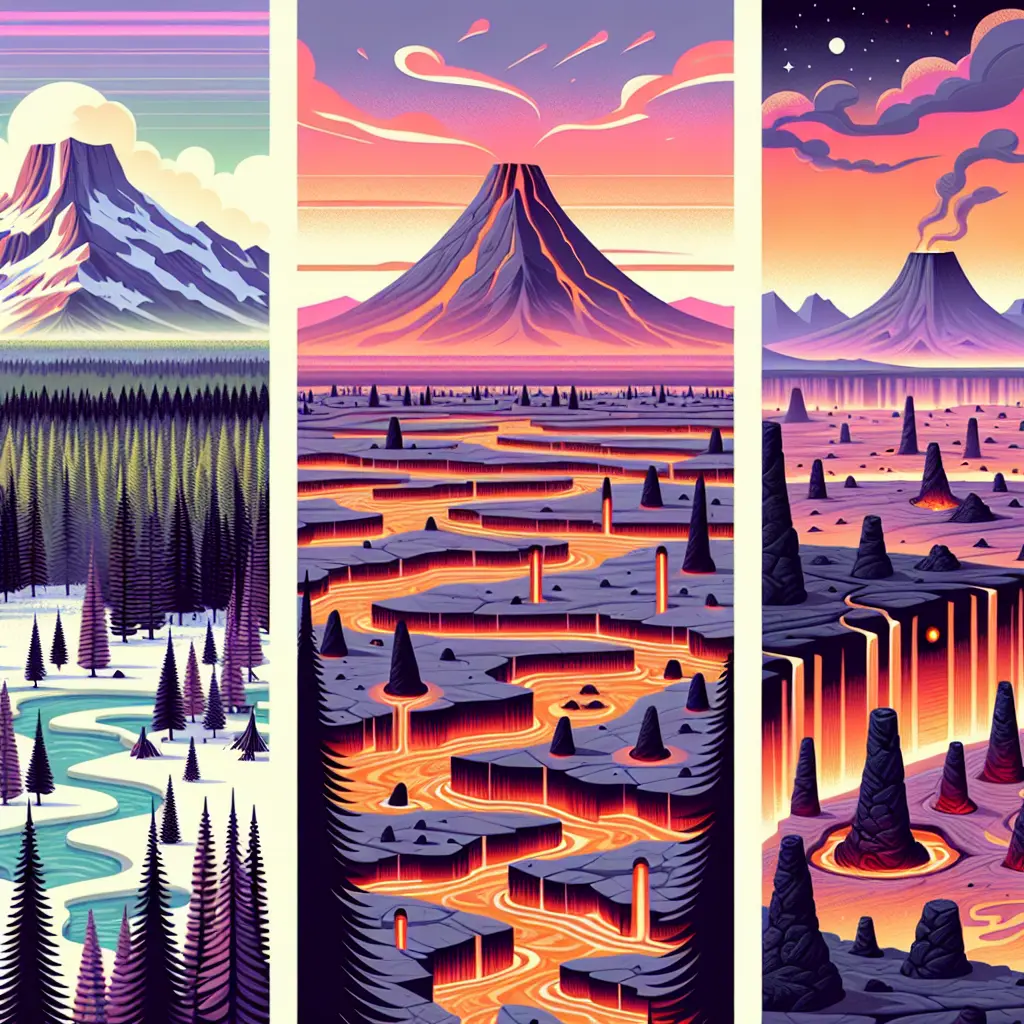
- Identify signature volcanic features found at Lassen Volcanic National Park and Craters of the Moon (cinder cones, lava tubes, lava flows, volcanic domes).
- Explain how volcanic activity and tectonic processes create and modify lava landscapes and rugged terrain.
- Compare the different volcanic styles and landforms between Lassen and Craters of the Moon to understand each site's geological history.
- Appreciate how these parks are protected and learn safe, responsible ways to explore volcanic landscapes while interpreting their geologic past.
❓ Frequently Asked Questions
What is Lassen Volcanic National Park known for?
A Northern California park highlighting active and extinct volcanic features, including Lassen Peak, hydrothermal areas (fumaroles and mud pots), and diverse lava formations like cinder cones and lava flows.
What are lava tubes and why are they important in Craters of the Moon?
Lava tubes are tunnels formed when surface lava cools and solidifies while the still-flowing lava beneath drains away; Craters of the Moon features extensive lava tube systems from past eruptions.
What volcanic features can you typically see in these landscapes?
Cinder cones, lava flows, lava tubes/caves, fissures, and fumaroles in hydrothermal areas.
How were these lava landscapes formed over time?
Over millions of years, volcanic eruptions and lava flows built cones, lava fields, and tubes as magma rose, erupted, and cooled within fractures and rift zones.