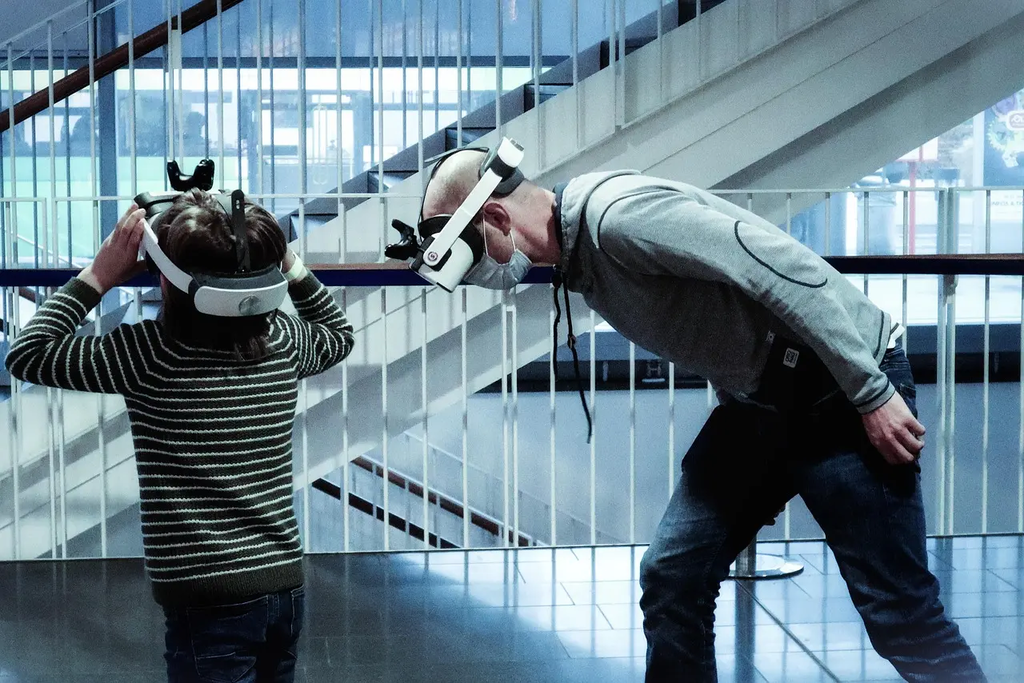
VR headsets are wearable devices that immerse users in a computer-generated virtual environment by displaying 3D visuals and tracking head movements. They often include sensors, built-in screens, and sometimes controllers for interaction. The basics of VR involve simulating real or imagined worlds, providing a sense of presence and interactivity. Users experience VR by wearing the headset, which blocks out the real world and responds to their movements, creating an engaging and immersive experience.
VR Headsets and Basics of VR
VR headsets are wearable devices that immerse users in a computer-generated virtual environment by displaying 3D visuals and tracking head movements. They often include sensors, built-in screens, and sometimes controllers for interaction. The basics of VR involve simulating real or imagined worlds, providing a sense of presence and interactivity. Users experience VR by wearing the headset, which blocks out the real world and responds to their movements, creating an engaging and immersive experience.
💡 Key Takeaways
- Understand how VR headsets create immersion through 3D visuals and head-tracking.
- Identify the core hardware in VR: sensors, built-in displays, and the option of controllers for interaction.
- Grasp the basics of VR as the simulation of real or imagined worlds.
- Recognize how user interaction (primarily via controllers) shapes the VR experience.
❓ Frequently Asked Questions
What is virtual reality (VR)?
VR is a fully immersive, computer-generated 3D environment experienced through a headset, using visuals and tracking that respond to your movements.
What are the main parts of a VR headset?
Key parts include built‑in displays with lenses for 3D viewing, sensors (gyroscope, accelerometer, magnetometer) for tracking, and support for input devices like controllers.
How does head movement tracking work in VR?
Tracking uses the headset's sensors to detect orientation and, often, external cameras or sensors to track position. The visuals update in real time to match your movements.
What other inputs do VR systems use besides head movement?
Common inputs include controllers, hand tracking, voice commands, gaze tracking, and haptic feedback for interaction.
What is the difference between VR and AR?
VR creates a fully immersive virtual world, while AR overlays digital content onto the real world. They offer different experiences and may use different hardware.