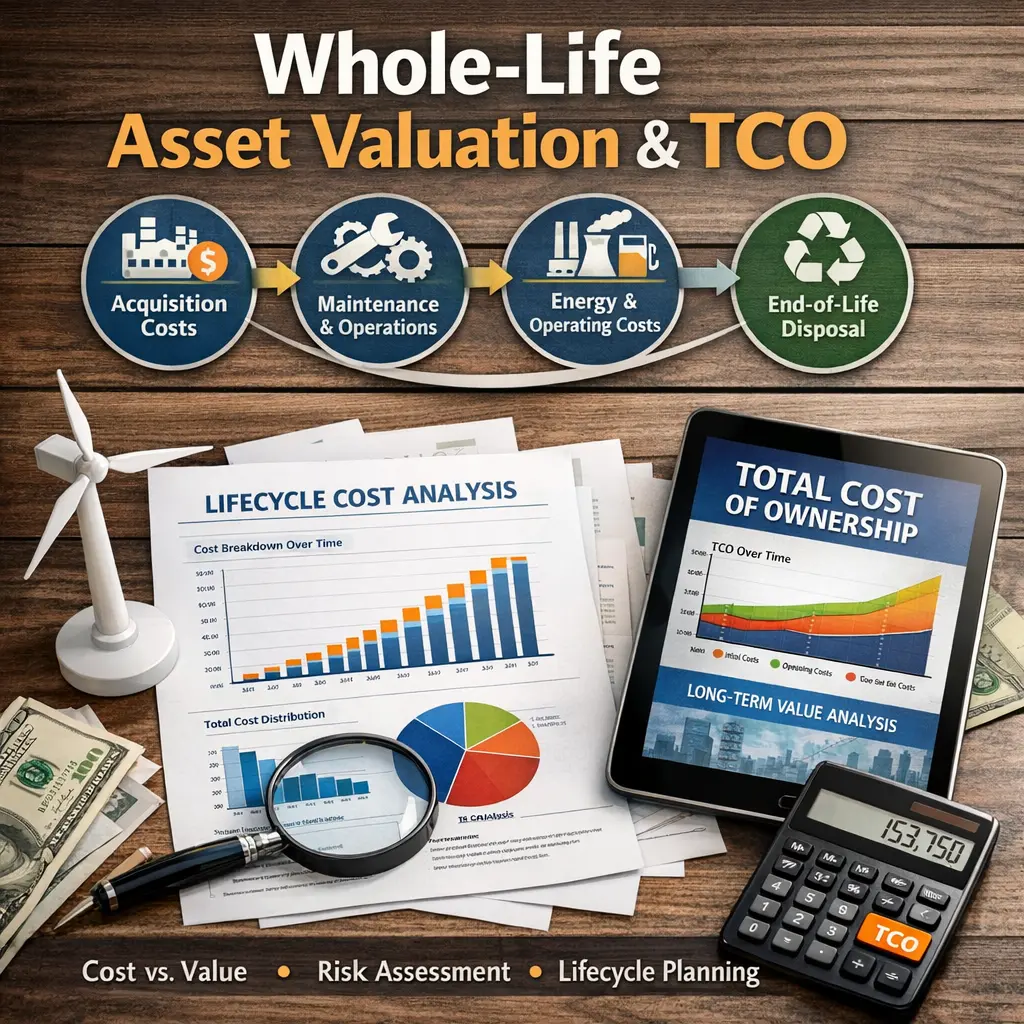
Whole-life Asset Valuation & TCO (Total Cost of Ownership) refers to a comprehensive financial management approach where all costs associated with an asset are evaluated across its entire lifecycle. This includes acquisition, operation, maintenance, and disposal expenses. By considering both direct and indirect costs, businesses can make informed decisions, optimize resource allocation, and improve long-term value. This practice supports sustainable business strategies by ensuring transparent, effective management of assets and their associated financial impacts.
Whole-life Asset Valuation & TCO
Whole-life Asset Valuation & TCO (Total Cost of Ownership) refers to a comprehensive financial management approach where all costs associated with an asset are evaluated across its entire lifecycle. This includes acquisition, operation, maintenance, and disposal expenses. By considering both direct and indirect costs, businesses can make informed decisions, optimize resource allocation, and improve long-term value. This practice supports sustainable business strategies by ensuring transparent, effective management of assets and their associated financial impacts.
💡 Key Takeaways
- Define whole-life asset valuation and how it extends beyond the initial purchase price.
- Explain Total Cost of Ownership (TCO) and how to include acquisition, operating, maintenance, and end-of-life costs across an asset's lifecycle.
- Apply TCO calculations to compare asset options using cash-flow analysis and net present value where appropriate.
- Assess non-financial factors such as reliability, downtime, risk, and resale value to inform long-term asset value.
❓ Frequently Asked Questions
What is whole-life asset valuation?
A long-term assessment of an asset's value over its life, including upfront costs, operating expenses, maintenance, downtime, and end-of-life costs.
What is Total Cost of Ownership (TCO)?
The complete cost of owning an asset from purchase to disposal, covering purchase price, financing, operation, maintenance, downtime, taxes, and disposal.
Which costs are included in TCO?
Purchase price, financing/installation, operating costs (energy, utilities), maintenance/repairs, downtime, taxes, warranties, and disposal or resale value.
How does discounting affect whole-life valuation?
Future costs and benefits are converted to present value with a discount rate, reflecting time and risk, which can change the perceived attractiveness of long-term costs.
How can whole-life valuation inform replacement decisions?
By comparing the lifecycle costs of options, helping you choose the option with the lowest total cost and acceptable risk.