Wide-bandgap devices, such as silicon carbide (SiC) and gallium nitride (GaN) semiconductors, are revolutionizing telecoms, signal processing, and power applications. Their superior properties—high breakdown voltage, thermal stability, and fast switching—enable efficient, compact, and reliable systems. In telecommunications, they enhance high-frequency signal transmission. For power electronics, they improve energy conversion efficiency and reduce losses, making them vital for modern, high-performance infrastructure and advanced electronic devices.
Wide-Bandgap Devices (SiC and GaN) Applications
Wide-bandgap devices, such as silicon carbide (SiC) and gallium nitride (GaN) semiconductors, are revolutionizing telecoms, signal processing, and power applications. Their superior properties—high breakdown voltage, thermal stability, and fast switching—enable efficient, compact, and reliable systems. In telecommunications, they enhance high-frequency signal transmission. For power electronics, they improve energy conversion efficiency and reduce losses, making them vital for modern, high-performance infrastructure and advanced electronic devices.
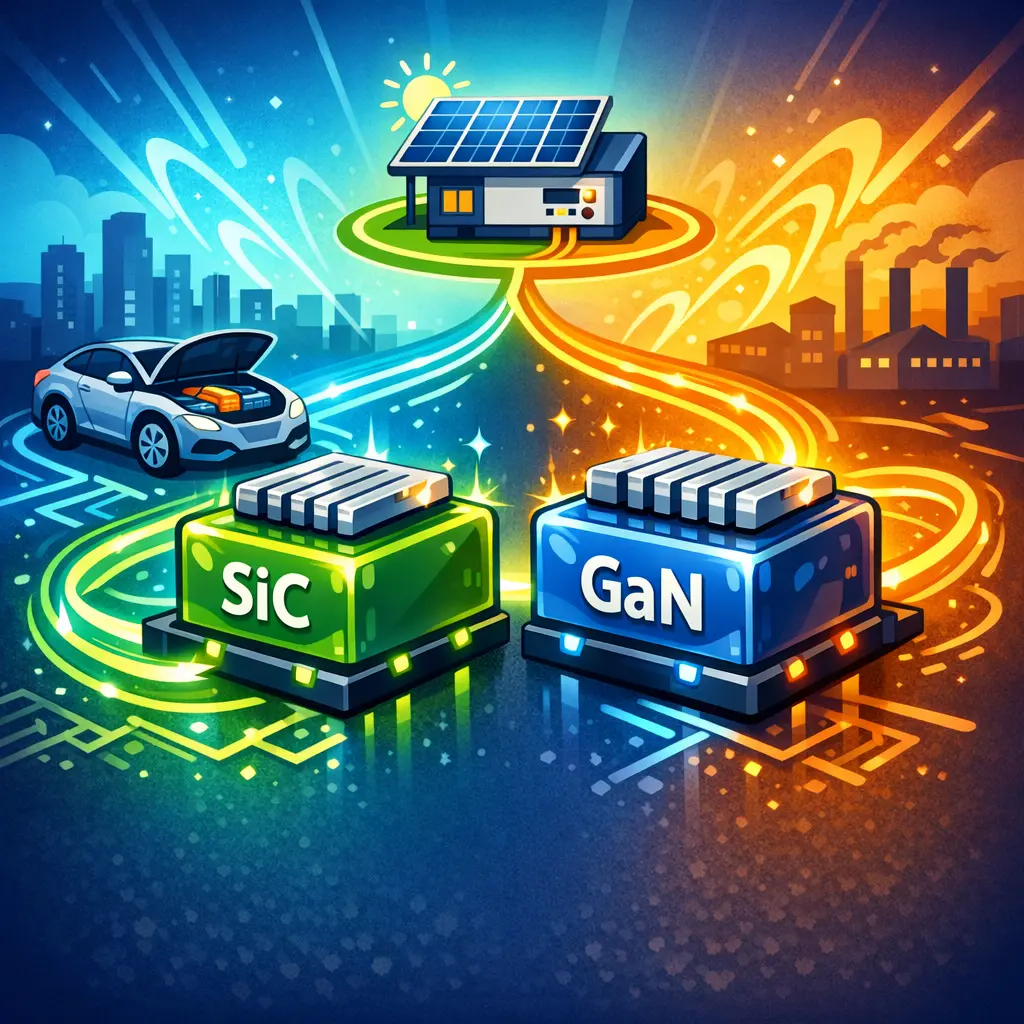
💡 Key Takeaways
- Understand how wide-bandgap materials (SiC and GaN) enable higher voltages and faster switching than silicon.
- Identify key applications that benefit from SiC and GaN, such as electric vehicle powertrains, power supplies, and renewable energy inverters.
- Compare SiC and GaN device types and performance traits (e.g., MOSFETs vs Schottky diodes, switching losses, thermal behavior).
- Recognize design considerations and challenges for wide-bandgap devices, including packaging, parasitics, cooling, and cost trade-offs.
❓ Frequently Asked Questions
What is a wide-bandgap semiconductor, and why are SiC and GaN important for power electronics?
Wide-bandgap semiconductors have larger bandgaps than silicon, enabling higher breakdown voltages, higher operating temperatures, and faster switching. SiC and GaN deliver these benefits for efficient, compact power electronics.
What devices are typically built with SiC and GaN, and how do they differ?
SiC is commonly used for high-voltage MOSFETs and diodes with excellent high-temperature performance; GaN is used for high-speed transistors (HEMTs) that enable very fast switching and high-frequency operation.
Which applications benefit most from SiC and GaN technology?
Electric vehicle powertrains, solar and wind inverters, data-center and industrial power supplies, RF amplifiers, and compact high-efficiency chargers.
What are the main challenges when adopting SiC or GaN devices?
Higher material costs, need for specialized gate drives and protection circuits, thermal management requirements, and considerations around reliability and supply chain maturity.