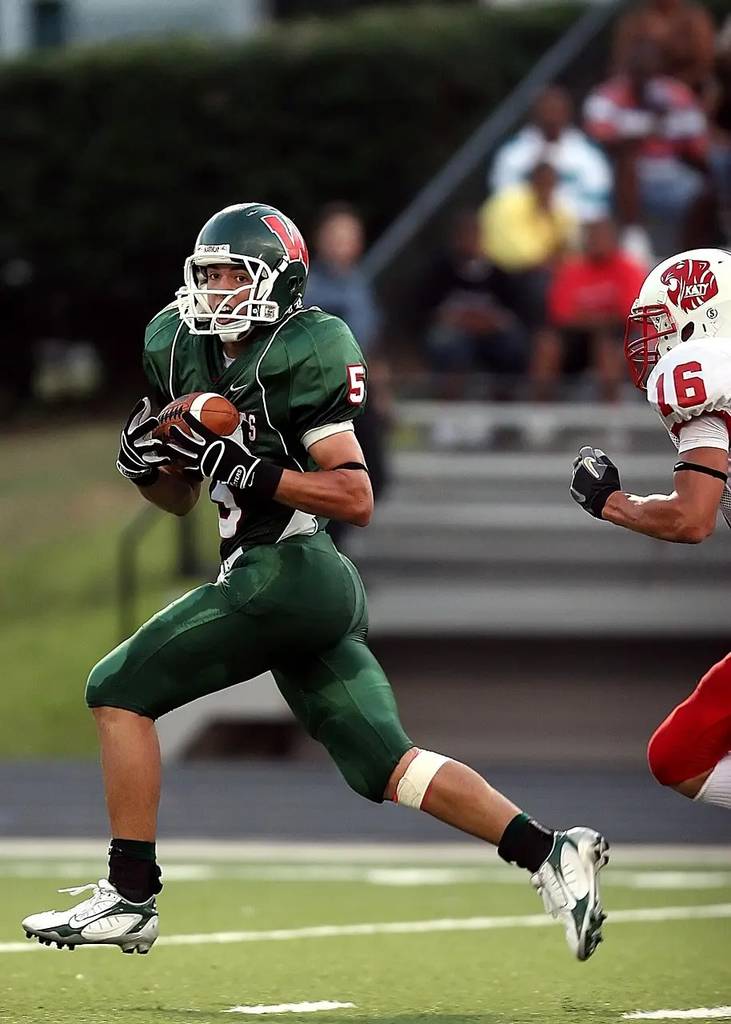
Wide receivers are offensive football players responsible for catching passes from the quarterback. Route trees refer to the set of predetermined paths or routes a receiver runs to get open for a pass. Each route is assigned a number or name and includes patterns like slants, curls, outs, and go routes. Mastery of route trees allows wide receivers to create separation from defenders, making them crucial for a team's passing game success.
Wide Receivers and Route Trees Basics
Wide receivers are offensive football players responsible for catching passes from the quarterback. Route trees refer to the set of predetermined paths or routes a receiver runs to get open for a pass. Each route is assigned a number or name and includes patterns like slants, curls, outs, and go routes. Mastery of route trees allows wide receivers to create separation from defenders, making them crucial for a team's passing game success.
💡 Key Takeaways
- Identify the primary responsibilities of wide receivers during a passing play (catch, gain yards, beat coverage).
- Describe what a route tree is and name common route patterns such as slant, curl, out, and go route.
- Explain how routes are numbered or named in playbooks and how a receiver chooses the right route based on play design and coverage.
- Understand the basics of timing between the quarterback and receiver, and how route running techniques affect catch probability (spacing, leverage, alignment).
❓ Frequently Asked Questions
Who is a wide receiver and what is their primary role?
A wide receiver is an offensive player who catches passes from the quarterback. Their main job is to run routes, create separation, and catch the ball to gain yards.
What is a route tree?
A route tree is a set of predetermined routes that a receiver runs to get open. Each route has a specific path and depth on the field.
What are common routes in a route tree?
Common routes include slants (diagonal inside), curls (short turn back toward the quarterback), outs (toward the sideline), and go routes (deep straight downfield).
Why do teams assign numbers or names to routes in a route tree?
Numbers or names help quarterbacks and receivers communicate routes quickly and ensure everyone runs the correct pattern on a play.