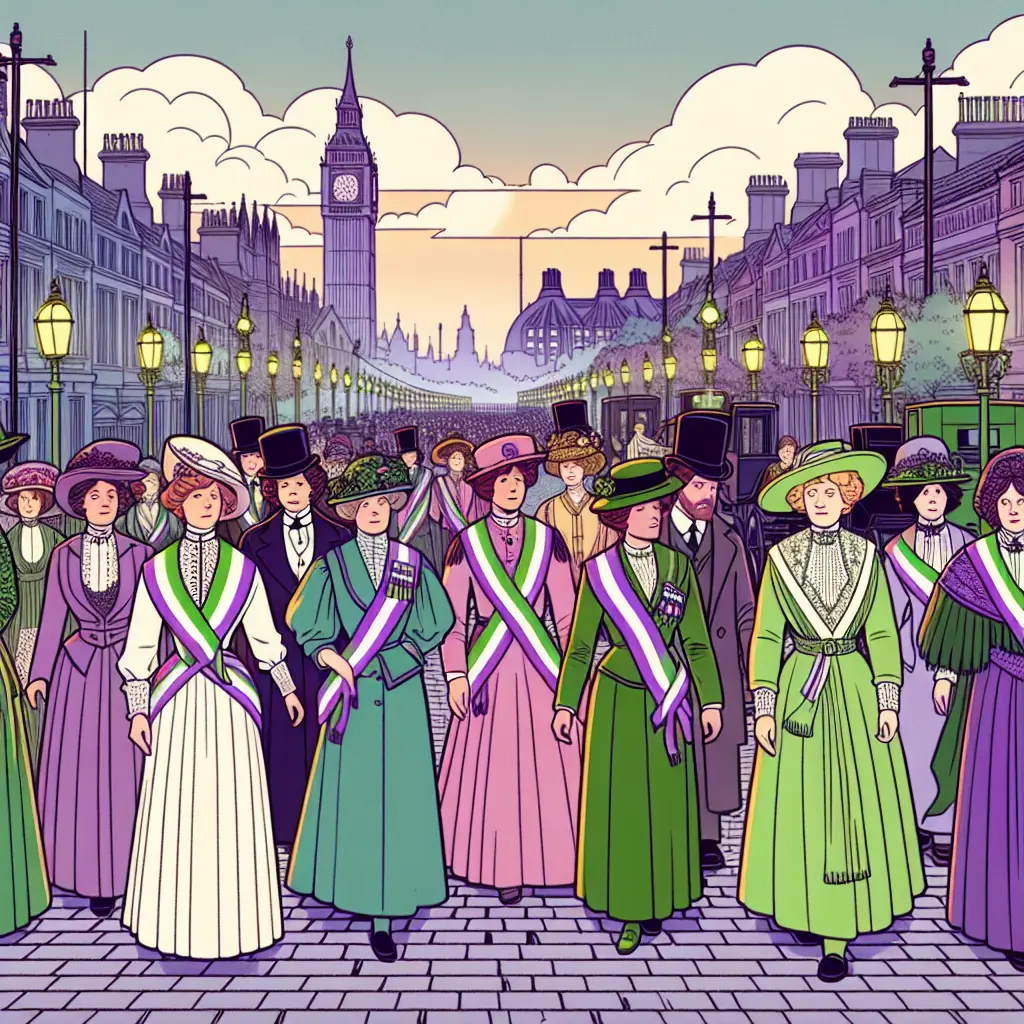
Women's suffrage movements in Britain were organized campaigns during the late 19th and early 20th centuries advocating for women's right to vote. Led by groups like the Suffragists and the more militant Suffragettes, these movements used protests, lobbying, and civil disobedience to challenge societal norms and government policies. Their persistent efforts culminated in legislative changes, granting partial voting rights in 1918 and equal suffrage with men in 1928, significantly advancing gender equality in Britain.
Women's suffrage movements in Britain
Women's suffrage movements in Britain were organized campaigns during the late 19th and early 20th centuries advocating for women's right to vote. Led by groups like the Suffragists and the more militant Suffragettes, these movements used protests, lobbying, and civil disobedience to challenge societal norms and government policies. Their persistent efforts culminated in legislative changes, granting partial voting rights in 1918 and equal suffrage with men in 1928, significantly advancing gender equality in Britain.
💡 Key Takeaways
- Identify the Suffragists and Suffragettes and how their approaches differed.
- Describe the tactics used—protests, lobbying, and civil disobedience—and give examples.
- Explain the campaigns' impact on British laws, politics, and public opinion regarding women's voting rights.
- Place the movements on a late 19th–early 20th century timeline, highlighting key milestones (e.g., the 1918 Representation of the People Act).
❓ Frequently Asked Questions
Who were the two main groups in Britain's women's suffrage movement and how did their approaches differ?
Suffragists, represented by groups like the NUWSS, used peaceful, constitutional methods such as petitions and lobbying. Suffragettes, led by the WSPU, employed militant tactics including protests, civil disobedience, and hunger strikes.
What methods did the suffrage movements use to win voting rights?
Petitions, lobbying MPs, public demonstrations, meetings, and, for the suffragettes, civil disobedience and direct action, along with organized campaigns.
When did women win the right to vote in Britain, and what were the key acts?
In 1918, the Representation of the People Act allowed some women (over 30 with property) to vote. In 1928, the Equal Franchise Act extended voting to all women over 21 on equal terms with men.
What impact did World War I have on the suffrage movement?
Women’s contributions to the war effort helped shift public opinion and political will toward enfranchisement, contributing to the 1918 concessions and strengthened campaigning.