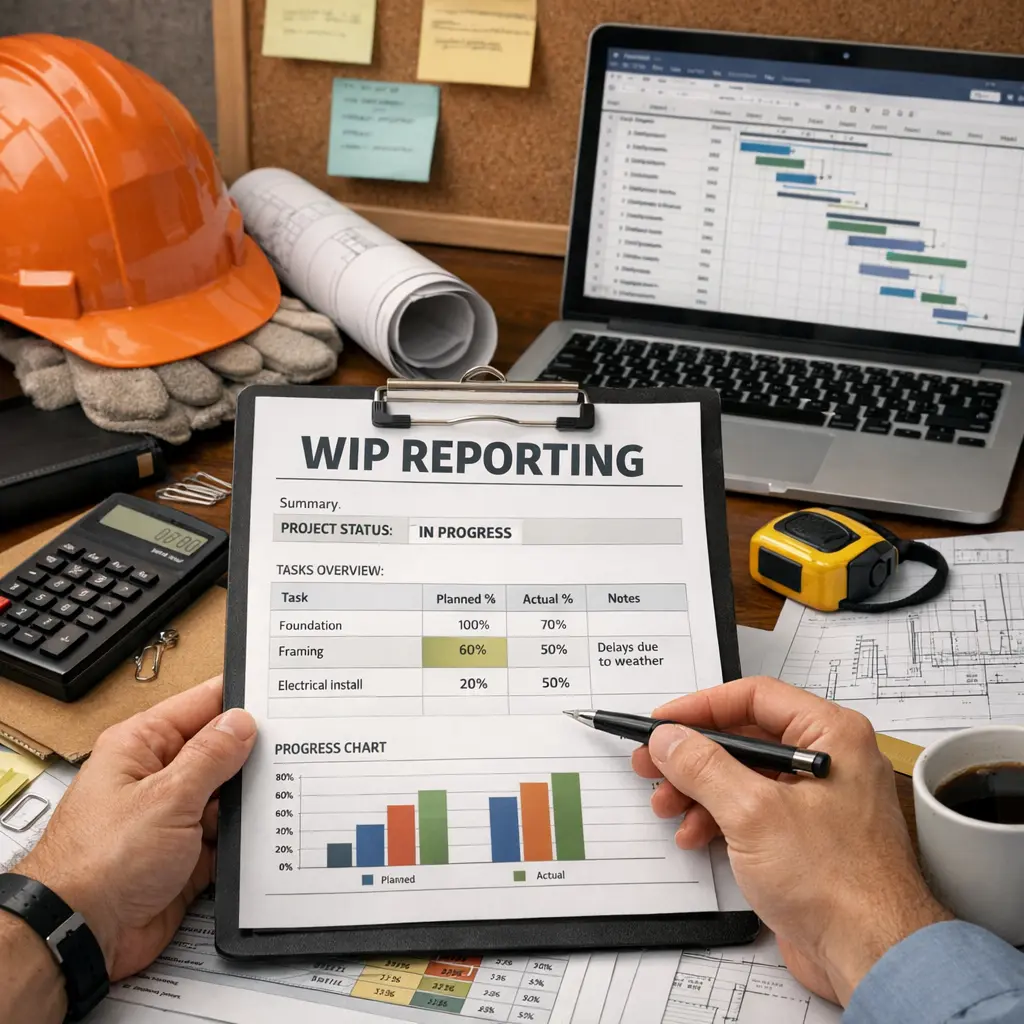
Work-in-Progress (WIP) Reporting in financial management involves tracking the value and status of ongoing projects or unfinished goods. It provides insights into project costs, revenue recognition, and resource allocation. WIP reports help businesses monitor project profitability, identify cost overruns, and ensure accurate financial statements. Effective WIP reporting supports informed decision-making, enhances project control, and aligns financial performance with business objectives by offering a clear snapshot of current operational progress.
Work-in-Progress (WIP) Reporting
Work-in-Progress (WIP) Reporting in financial management involves tracking the value and status of ongoing projects or unfinished goods. It provides insights into project costs, revenue recognition, and resource allocation. WIP reports help businesses monitor project profitability, identify cost overruns, and ensure accurate financial statements. Effective WIP reporting supports informed decision-making, enhances project control, and aligns financial performance with business objectives by offering a clear snapshot of current operational progress.
💡 Key Takeaways
- Understand what WIP reporting is and why it improves visibility into work and delivery predictability.
- Learn the key metrics used in WIP reports (work items in progress, cycle time, throughput, blockers) and how to measure them.
- Apply WIP limits and simple visual tools (Kanban boards, cumulative flow diagrams) to smooth workflows and reduce bottlenecks.
- Interpret WIP data to forecast delivery dates, identify bottlenecks, and communicate status to stakeholders.
❓ Frequently Asked Questions
What is Work-in-Progress (WIP) reporting?
WIP reporting tracks items that are partially finished in production or development, showing how many are in process, their current stage, and how long they spend in the system.
What is the purpose of WIP reporting?
To monitor flow, identify bottlenecks, forecast lead times, optimize capacity, and improve delivery reliability.
What are common WIP metrics?
WIP value (cost of in‑process items), WIP days (average time in process), cycle time (time to finish a unit), and throughput (units completed per period).
How is WIP calculated?
WIP can be measured by count or value of items in process. In manufacturing, WIP value equals materials in process plus allocated labor and overhead; WIP days reflect average time an item spends in production.
What are best practices for WIP reporting?
Set WIP limits, use visual boards (e.g., Kanban), track progress by stage, review dashboards regularly, and align WIP levels with pull-based scheduling to reduce bottlenecks.