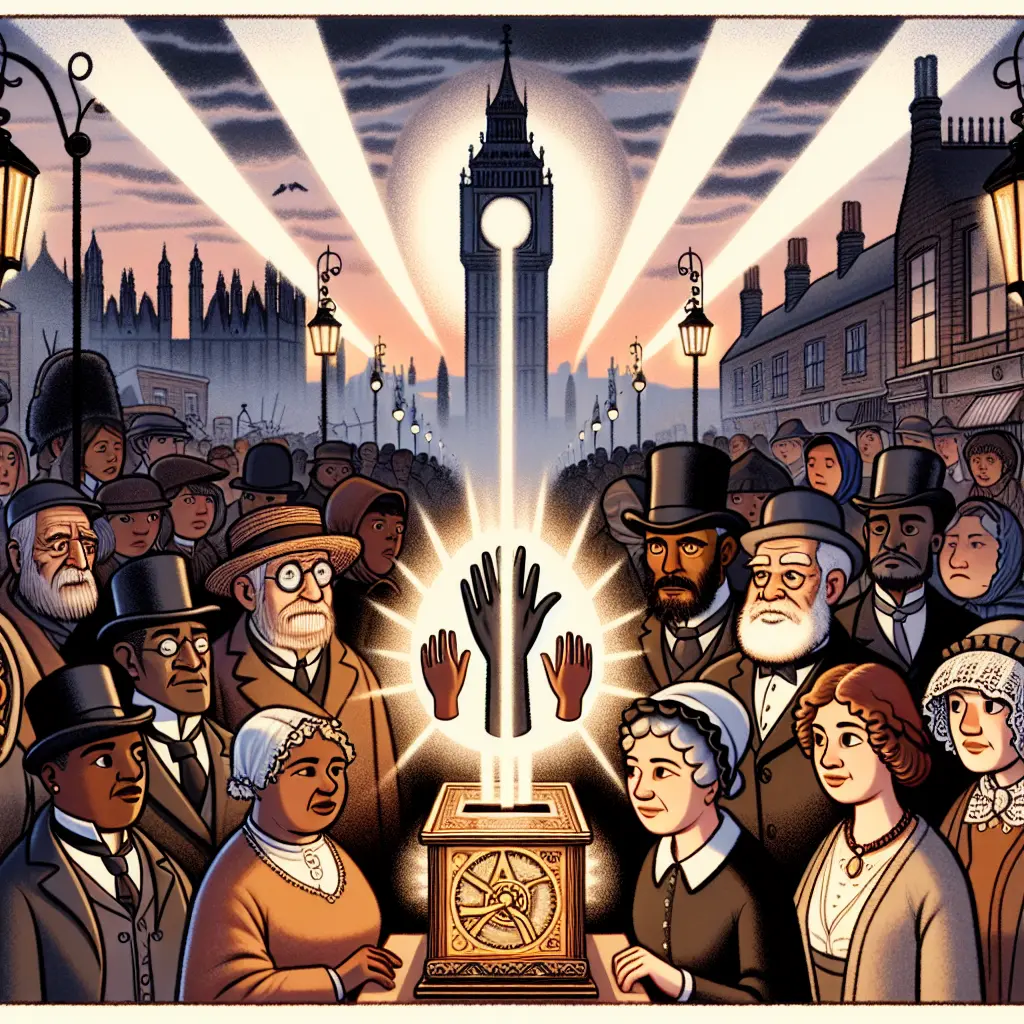
Working-class movements and Chartism refer to the collective efforts of industrial workers in 19th-century Britain to improve their social, political, and economic conditions. Chartism, emerging in the 1830s and 1840s, was a prominent working-class movement demanding political reforms, including universal male suffrage and secret ballots, as outlined in the People’s Charter. These movements highlighted widespread discontent and played a crucial role in shaping democratic reforms and labor rights in Britain.
Working-class movements and Chartism
Working-class movements and Chartism refer to the collective efforts of industrial workers in 19th-century Britain to improve their social, political, and economic conditions. Chartism, emerging in the 1830s and 1840s, was a prominent working-class movement demanding political reforms, including universal male suffrage and secret ballots, as outlined in the People’s Charter. These movements highlighted widespread discontent and played a crucial role in shaping democratic reforms and labor rights in Britain.

💡 Key Takeaways
- Explore the social and economic context of 19th-century Britain that gave rise to working-class movements and calls for political reform.
- Identify Chartism as a major working-class movement (1830s–1840s) and outline its core demands in the People's Charter (universal male suffrage, secret ballot, payment for MPs, equal electoral districts, annual parliaments, and abolition of property qualifications for MPs).
- Explain Chartism’s methods and turning points, including mass petitions and protests, and why it did not achieve its aims in the short term.
- Evaluate Chartism’s legacy for British democracy and labour organization, including its influence on later reforms and the development of trade unions.
❓ Frequently Asked Questions
What is Chartism?
Chartism was a 1830s–1840s working-class movement in Britain that sought political reforms to make Parliament more representative, centered on the People’s Charter.
What were the Six Points of the People’s Charter?
Universal male suffrage; secret ballot; abolition of property qualifications for MPs; payment of MPs; equal electoral districts; annual parliaments.
Who led Chartism and what were its main approaches?
Two strands existed: moral force led by William Lovett, emphasizing peaceful petitions and reforms; and mass-action currents associated with Feargus O’Connor advocating more radical action.
What were key events or petitions linked to Chartism?
Notable moments include the 1839 and 1842 Chartist petitions to Parliament and the Newport Rising of 1839, along with large Chartist meetings in the 1840s.
What is Chartism's legacy?
Although its immediate goals were not achieved, Chartism helped shape later working-class politics, influenced the growth of trade unions, and contributed to gradual parliamentary reforms widening the franchise.