The phrase refers to Chelsea F.C.’s successful 2009-10 season, during which they won both the Premier League and FA Cup, achieving a domestic double. Their goal-scoring patterns were characterized by a prolific attack, with the team scoring a record 103 league goals. Key players like Didier Drogba and Frank Lampard contributed significantly, and Chelsea often dominated matches with high-scoring victories, showcasing fluid attacking play and clinical finishing throughout the campaign.
2009-10 Double Winners: Goal-Scoring Patterns
The phrase refers to Chelsea F.C.’s successful 2009-10 season, during which they won both the Premier League and FA Cup, achieving a domestic double. Their goal-scoring patterns were characterized by a prolific attack, with the team scoring a record 103 league goals. Key players like Didier Drogba and Frank Lampard contributed significantly, and Chelsea often dominated matches with high-scoring victories, showcasing fluid attacking play and clinical finishing throughout the campaign.
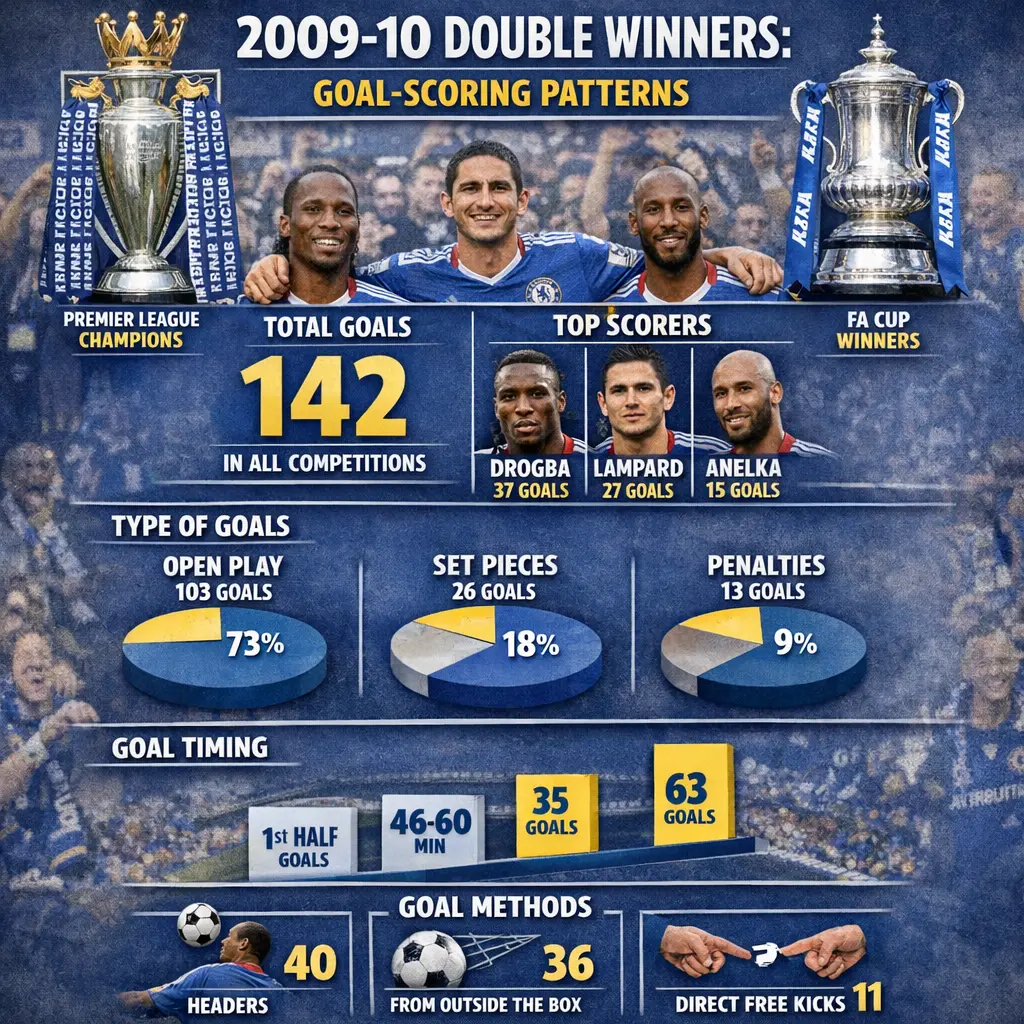
💡 Key Takeaways
- Identify the primary goal scorers for the 2009-10 double-winners and how their goals contributed to the campaign.
- Analyze how goals were distributed across Premier League and cup matches to reveal scoring patterns.
- Explore how set-pieces and penalties added to the total goal tally and which players were most involved.
- Understand how the team's tactical approach generated consistent scoring opportunities and influenced goal timing.
❓ Frequently Asked Questions
What is a double in football?
A double occurs when a team wins two major competitions in a single season, usually the domestic league title and the primary domestic cup.
What does 'goal-scoring patterns' mean in this article?
It refers to how goals are distributed among players, when they are scored, and which players or positions contribute most to a team's total.
Why do goal-scoring patterns matter for double winners?
They show whether success came from a balanced attack or from one or two standout scorers, and how consistently the team found goals across matches.
What data might illustrate these scoring patterns?
Top scorers and their totals, goals by minute and by match, and breakdowns by player position, competition, and home/away games.