The 2020-21 midseason managerial change at Chelsea F.C., replacing Frank Lampard with Thomas Tuchel, had a transformative impact. Tuchel’s arrival revitalized the squad, improved defensive solidity, and fostered tactical discipline. Under his leadership, Chelsea climbed the Premier League table, secured a top-four finish, and notably triumphed in the UEFA Champions League, highlighting the effectiveness and immediate influence of the managerial switch on the club’s fortunes.
2020-21 Midseason Managerial Change Impact
The 2020-21 midseason managerial change at Chelsea F.C., replacing Frank Lampard with Thomas Tuchel, had a transformative impact. Tuchel’s arrival revitalized the squad, improved defensive solidity, and fostered tactical discipline. Under his leadership, Chelsea climbed the Premier League table, secured a top-four finish, and notably triumphed in the UEFA Champions League, highlighting the effectiveness and immediate influence of the managerial switch on the club’s fortunes.
💡 Key Takeaways
- Understand why teams switch managers midseason and the typical goals of such a move.
- Learn which performance metrics matter after a managerial change (points per game, goals for/against, and form).
- Differentiate short-term boosts from long-term outcomes and consider factors that influence impact (squad quality, injuries, fixture difficulty).
- Recognize methodological challenges when evaluating impact (time to take effect, selection bias, and comparing against appropriate baselines).
❓ Frequently Asked Questions
What is a midseason managerial change?
A change of the team’s head coach during the current season, often announced partway through, sometimes with a caretaker interim manager before a permanent appointment.
Why do teams change managers midseason?
To reverse poor form, alter tactics or style, address player issues, or pursue longer-term goals; changes can also be driven by injuries or strategic direction.
How can you measure the impact of a managerial change?
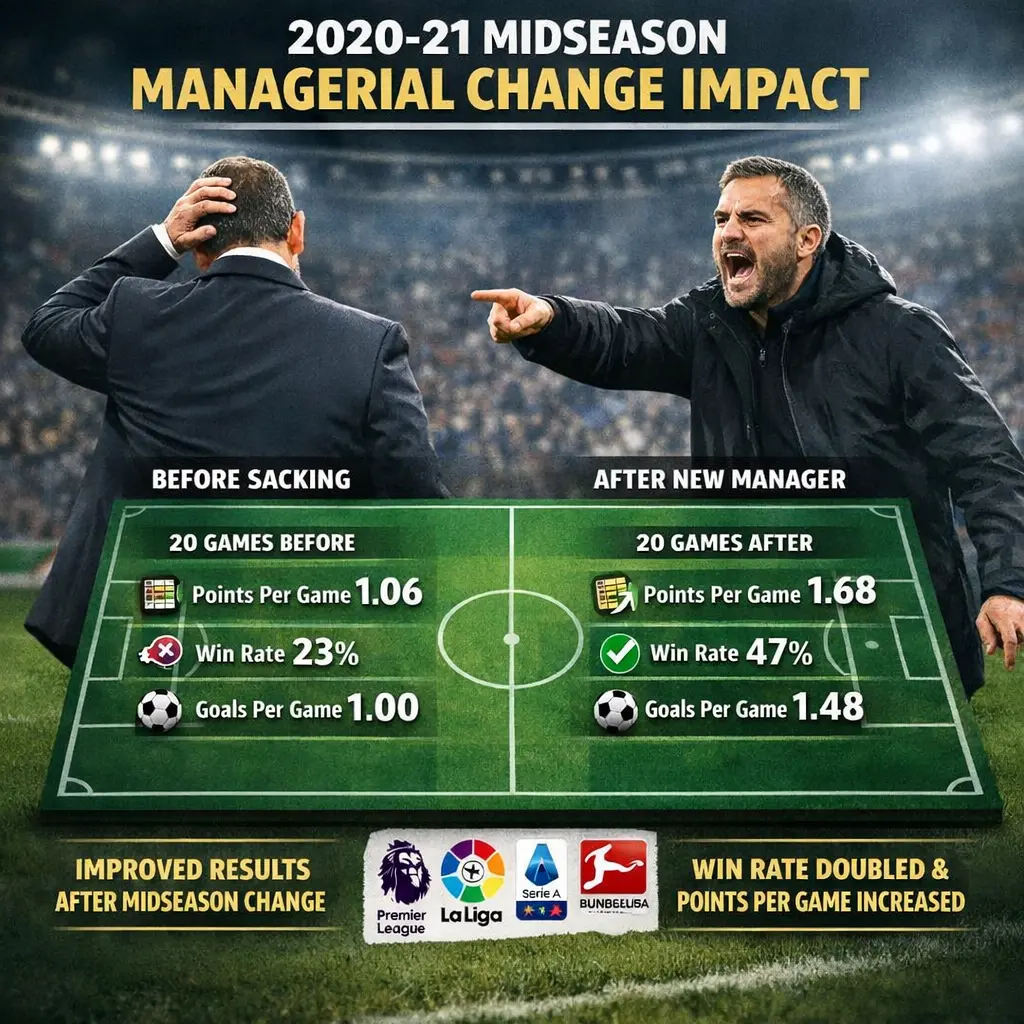
Compare performance before and after the change using metrics like points per game, win rate, and goals scored/conceded, while considering sample size and context such as fixture difficulty and injuries.
What factors affected the 2020-21 season's managerial changes?
COVID-19 disruptions and dense schedules created unusual conditions, so short-term results may not fully reflect a new manager’s impact; evaluate patterns over a longer horizon.