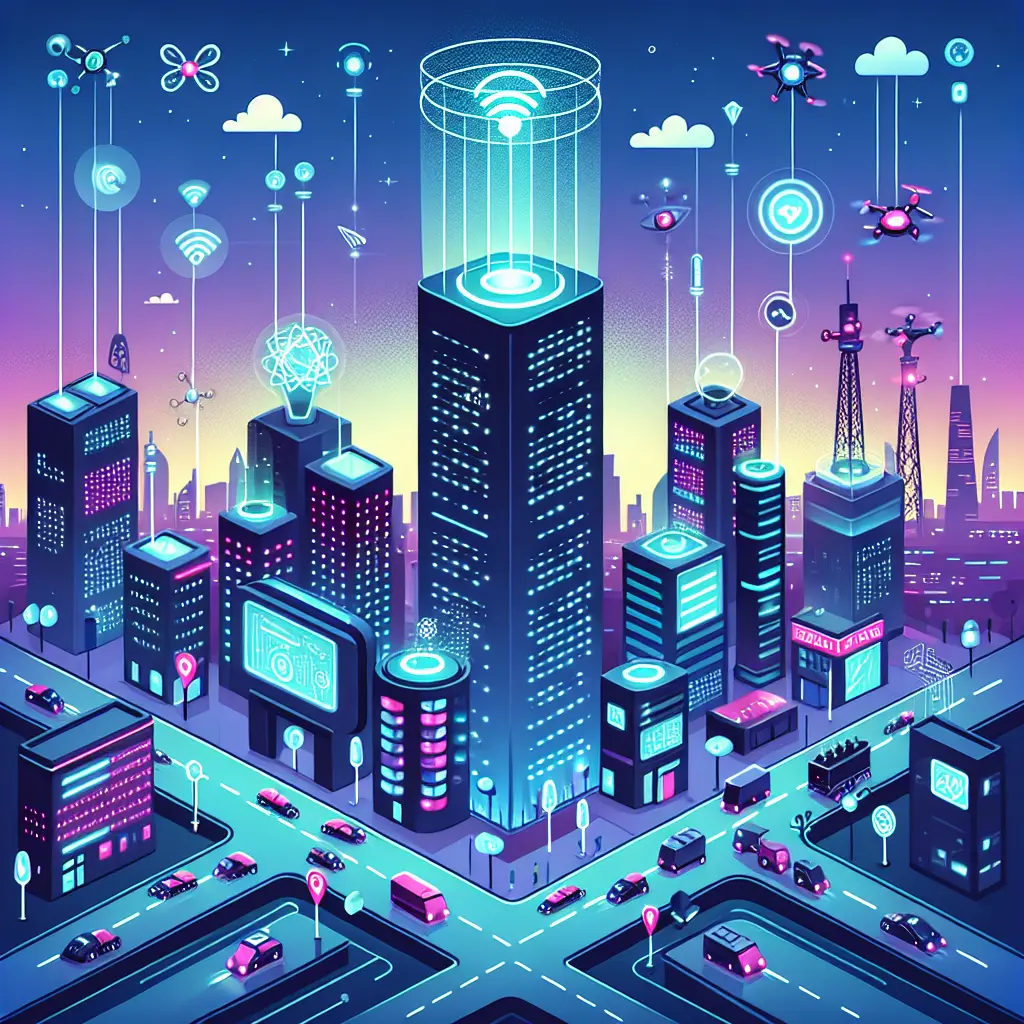
The phrase “2025 Edge Computing, IoT & 5G Rollouts” refers to the anticipated widespread implementation and integration of edge computing technologies, Internet of Things (IoT) devices, and 5G networks by 2025. This convergence will enable faster data processing at the network’s edge, support massive IoT connectivity, and deliver ultra-low latency communication, driving innovation across industries such as healthcare, manufacturing, transportation, and smart cities.
2025 Edge Computing, IoT & 5G Rollouts
The phrase “2025 Edge Computing, IoT & 5G Rollouts” refers to the anticipated widespread implementation and integration of edge computing technologies, Internet of Things (IoT) devices, and 5G networks by 2025. This convergence will enable faster data processing at the network’s edge, support massive IoT connectivity, and deliver ultra-low latency communication, driving innovation across industries such as healthcare, manufacturing, transportation, and smart cities.
💡 Key Takeaways
- Understand how edge computing, IoT, and 5G converge to enable near real-time data processing at the network edge.
- Learn how 5G's low latency, high bandwidth, and massive device support enable scalable IoT and edge workloads.
- Compare edge computing with centralized cloud models in terms of latency, bandwidth, cost, and architecture.
- Identify key security, privacy, and management considerations for large-scale Edge/IoT/5G deployments.
❓ Frequently Asked Questions
What is edge computing and how does it relate to IoT and 5G?
Edge computing processes data near where it's generated, reducing latency. It complements IoT by handling device data closer to users and benefits from 5G's fast, low-latency connectivity.
How do 5G rollouts enable faster edge computing for IoT?
5G provides higher bandwidth, lower latency, and support for more devices, enabling real-time data exchange with edge servers and quicker IoT processing at the edge.
What are common use cases for 2025 edge, IoT, and 5G integration?
Smart manufacturing, autonomous machines and vehicles, remote monitoring, augmented/virtual reality, smart cities, and healthcare IoT requiring real-time insights.
What challenges should organizations plan for with large-scale edge/IoT/5G deployments?
Security and privacy, device management, interoperability, data governance, energy use, deployment costs, and maintaining reliability across distributed edge sites.
How does edge computing differ from traditional cloud computing?
Edge computes near the data source to reduce latency and bandwidth needs, while cloud computing centralizes processing in distant data centers; edge emphasizes immediacy and locality.