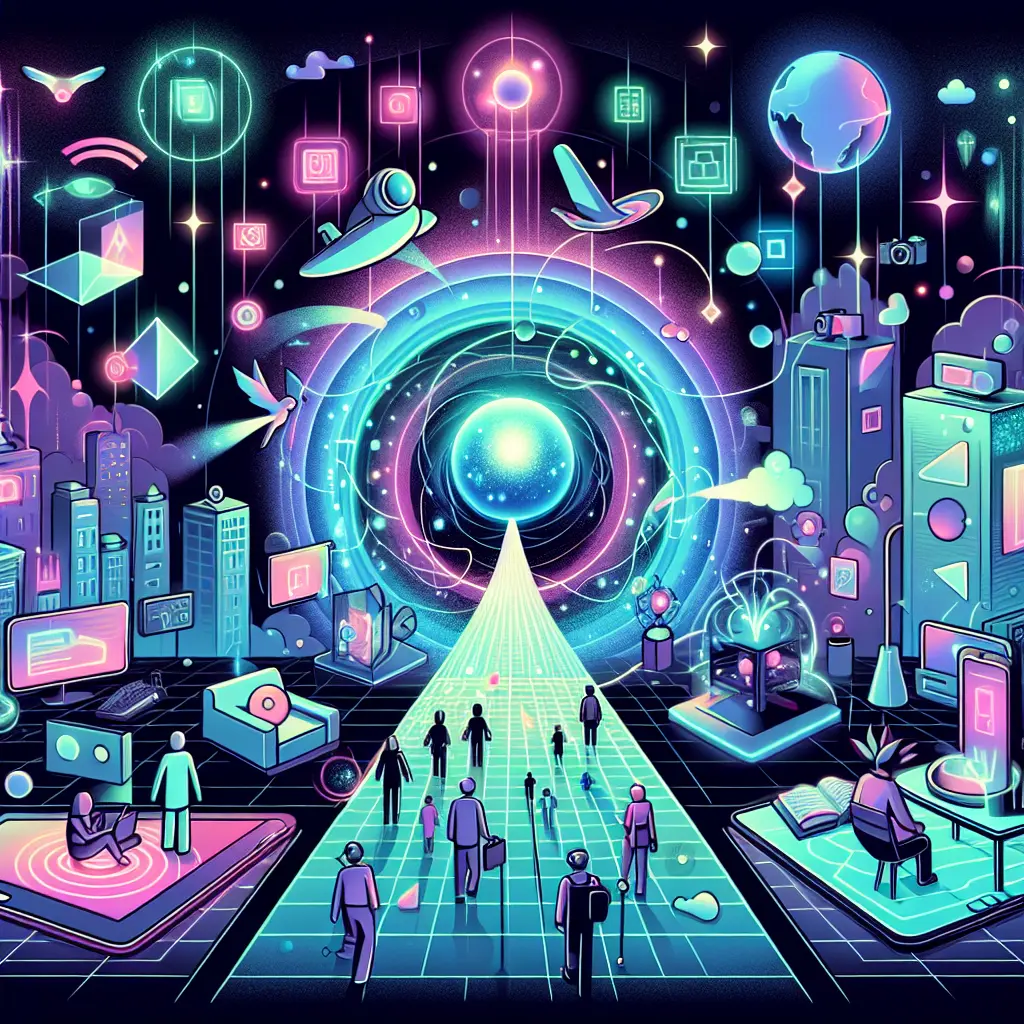
The phrase "2025 Metaverse, Spatial Computing & Interoperability" refers to the anticipated advancements in digital environments by 2025, where immersive virtual worlds (the metaverse) are powered by spatial computing technologies that understand and interact with physical space. Interoperability emphasizes seamless connectivity and data exchange across different platforms and ecosystems, enabling users and assets to move fluidly between various virtual and augmented realities, thus creating a more unified and accessible digital experience.
2025 Metaverse, Spatial Computing & Interoperability
The phrase "2025 Metaverse, Spatial Computing & Interoperability" refers to the anticipated advancements in digital environments by 2025, where immersive virtual worlds (the metaverse) are powered by spatial computing technologies that understand and interact with physical space. Interoperability emphasizes seamless connectivity and data exchange across different platforms and ecosystems, enabling users and assets to move fluidly between various virtual and augmented realities, thus creating a more unified and accessible digital experience.
💡 Key Takeaways
- Define what the 2025 metaverse is and how spatial computing blends digital content with real-world space.
- Identify core spatial computing technologies (AR/VR/MR, sensors, computer vision) and their roles in immersive experiences.
- Explain interoperability basics: cross-platform asset portability, identity, and open standards that enable seamless interaction.
- Describe key challenges and considerations (privacy, security, UX, ethical design) in interoperable metaverse ecosystems.
❓ Frequently Asked Questions
What is the metaverse?
The metaverse is a collective, immersive virtual space where people can interact, work, and play across connected platforms, often blending VR, AR, and real-world data to create persistent experiences.
What is spatial computing?
Spatial computing uses sensors, geometry, and AI to sense and interpret physical space, so digital content can be anchored to real-world locations and respond to users' movements and surroundings.
What does interoperability mean for the metaverse?
Interoperability means different platforms, apps, and devices can exchange data and digital assets, enabling seamless movement of avatars and objects across environments.
How might 2025 look for these technologies?
Expect more immersive, cross‑platform experiences, standardized data formats, and tools that let people move assets and identity across metaverse services with lower friction.