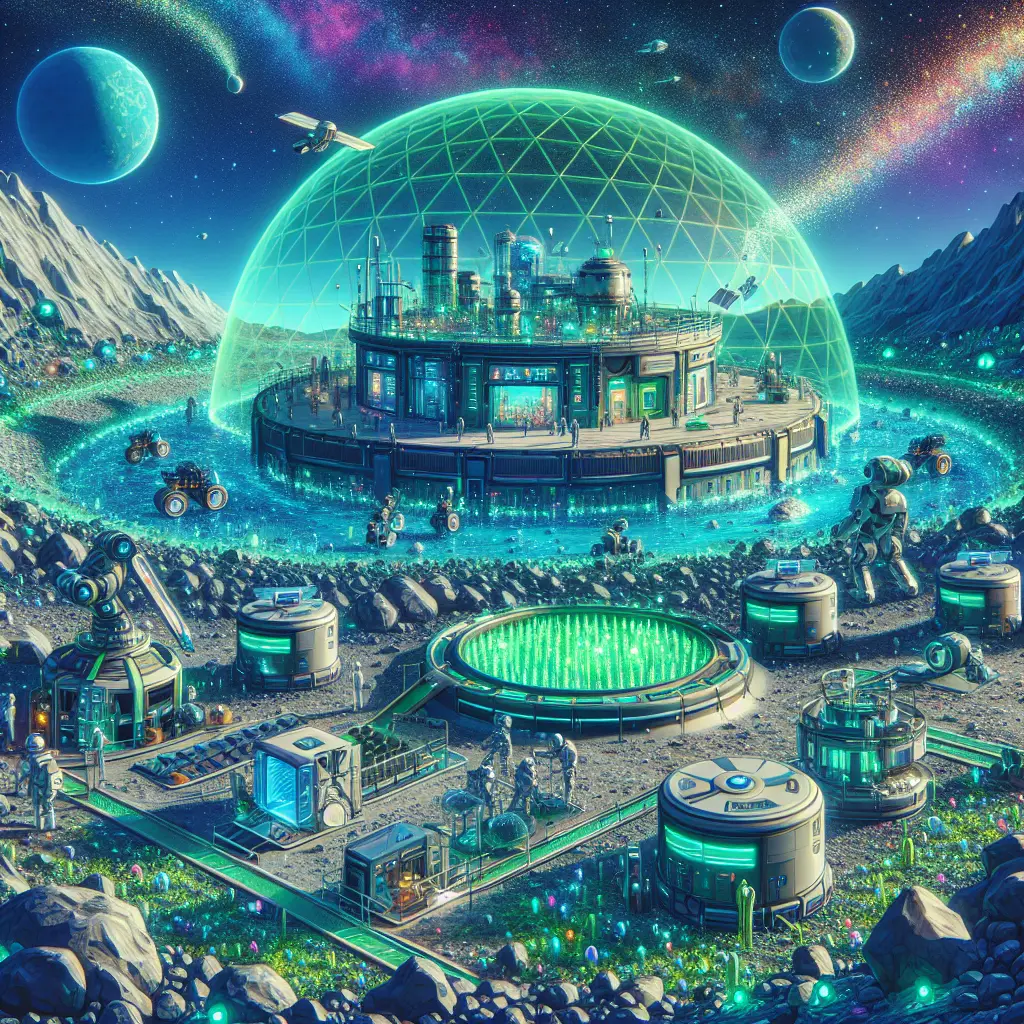
"2025 Space Mining, Debris & Sustainability" refers to the emerging focus in 2025 on extracting valuable resources from celestial bodies, managing the increasing amount of space debris orbiting Earth, and ensuring that these activities are conducted in an environmentally responsible and sustainable way. It highlights the intersection of technological advancement, environmental stewardship, and the need for international cooperation to protect the long-term viability of outer space activities.
2025 Space Mining, Debris & Sustainability
"2025 Space Mining, Debris & Sustainability" refers to the emerging focus in 2025 on extracting valuable resources from celestial bodies, managing the increasing amount of space debris orbiting Earth, and ensuring that these activities are conducted in an environmentally responsible and sustainable way. It highlights the intersection of technological advancement, environmental stewardship, and the need for international cooperation to protect the long-term viability of outer space activities.
💡 Key Takeaways
- Understand what space mining is and why it gained momentum in 2025
- Learn how space debris is tracked, forecasted, and mitigated to safeguard missions
- Explore sustainable design, operations, and governance for off-Earth resource extraction
- Recognize environmental, legal, and ethical considerations surrounding space resources and debris management
❓ Frequently Asked Questions
What is space mining?
The extraction of valuable resources from space bodies (e.g., asteroids or the Moon) to use in space or bring back to Earth.
What is space debris and why is it a concern?
Nonfunctional satellites, spent rocket stages, and fragments orbiting Earth that can collide with spacecraft or create more debris.
What is ISRU and why is it important for sustainability?
In-Situ Resource Utilization: using local space resources (like water ice) to support missions, reducing launches from Earth and limiting environmental impact.
How can space activities be conducted more sustainably?
By following debris-mitigation practices, designing for end-of-life disposal, using resources efficiently, and adhering to international guidelines for safe and responsible exploration.