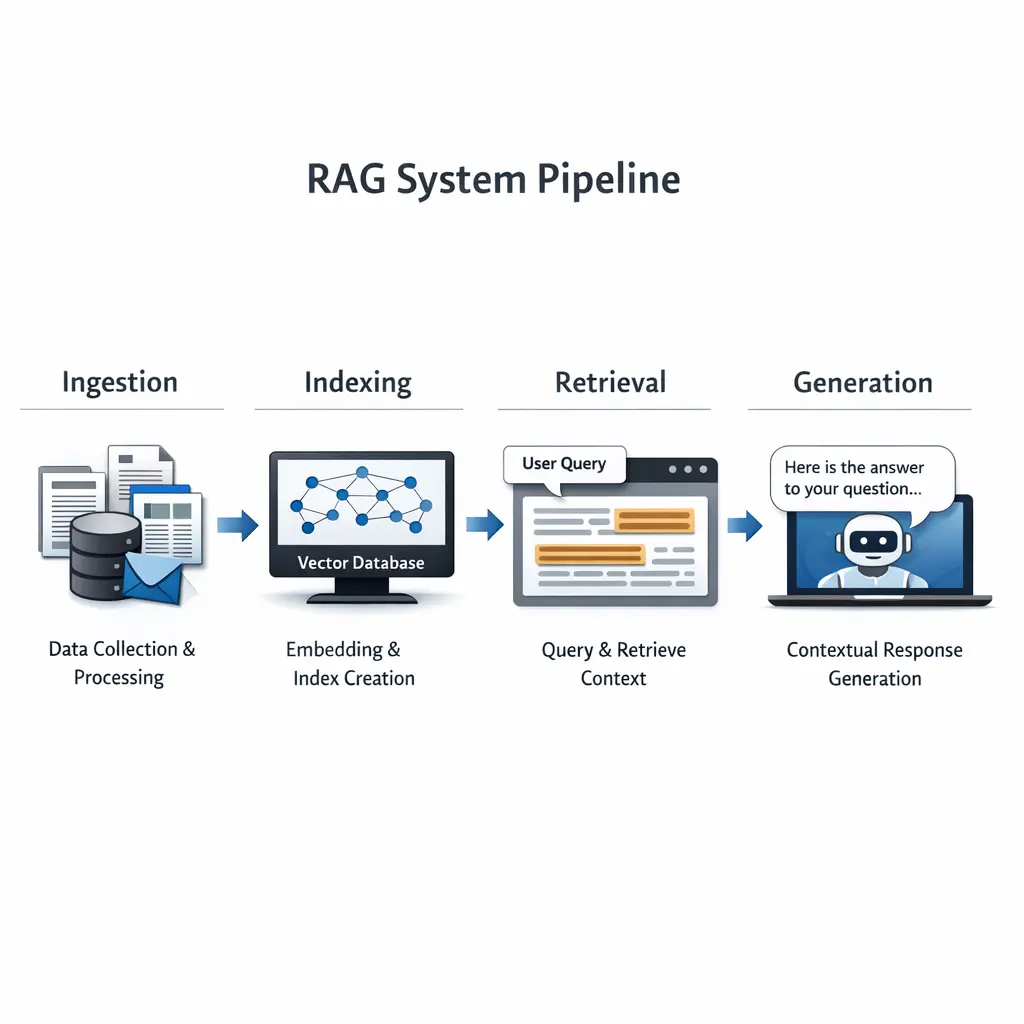
Access control and multi-tenancy in RAG systems ensure that only authorized users can access specific data and functionalities within Retrieval-Augmented Generation frameworks. Access control manages permissions, protecting sensitive information and resources. Multi-tenancy allows multiple users or organizations to securely share the same RAG infrastructure while keeping their data isolated. Together, they enable scalable, secure, and efficient use of RAG systems across diverse users, maintaining privacy and compliance in shared environments.
Access Control and Multi-Tenancy in RAG Systems
Access control and multi-tenancy in RAG systems ensure that only authorized users can access specific data and functionalities within Retrieval-Augmented Generation frameworks. Access control manages permissions, protecting sensitive information and resources. Multi-tenancy allows multiple users or organizations to securely share the same RAG infrastructure while keeping their data isolated. Together, they enable scalable, secure, and efficient use of RAG systems across diverse users, maintaining privacy and compliance in shared environments.
💡 Key Takeaways
- Define RAG systems and explain why access control is crucial for protecting data in retrieval-augmented workflows.
- Compare RBAC and ABAC approaches and how they apply to user permissions and query handling in RAG pipelines.
- Describe multi-tenancy concepts and how data isolation and tenant boundaries are enforced in RAG data stores and retrieval layers.
- Identify common security risks in RAG deployments (e.g., cross-tenant data leakage) and practical mitigation strategies like least privilege and auditing.
- Outline actionable steps to implement secure access control: policy engines, authentication, authorization checks at retrieval, tenant-scoped indexing, and comprehensive logging.
❓ Frequently Asked Questions
What is access control in RAG systems?
Access control governs who can query, view, or manage data and components in a retrieval-augmented generation pipeline, using authentication, authorization, and permission policies across retrieval, processing, and generation stages.
What is multi-tenancy, and why is it important for RAG systems?
Multi-tenancy lets a single deployment serve multiple tenants with isolated data and configurations, preventing cross-tenant access and ensuring policy and compliance boundaries.
How can you implement data isolation for multiple tenants in RAG pipelines?
Isolate data per tenant with separate storage or logical partitions, tenant-scoped indices and retrievers, per-tenant credentials, and routing rules that prevent cross-tenant data access.
Which access control models are commonly used in RAG environments?
RBAC (permissions by role), ABAC (permissions by attributes like tenant or project), and PBAC (policy-based access control); use least-privilege and combine models as needed.
What are common security risks in RAG systems and how can you mitigate them?
Risks include data leakage from retrieved content or prompts. Mitigations: data filtering/redaction, strict tenant isolation, encryption, robust access controls, monitoring, and audit logs.