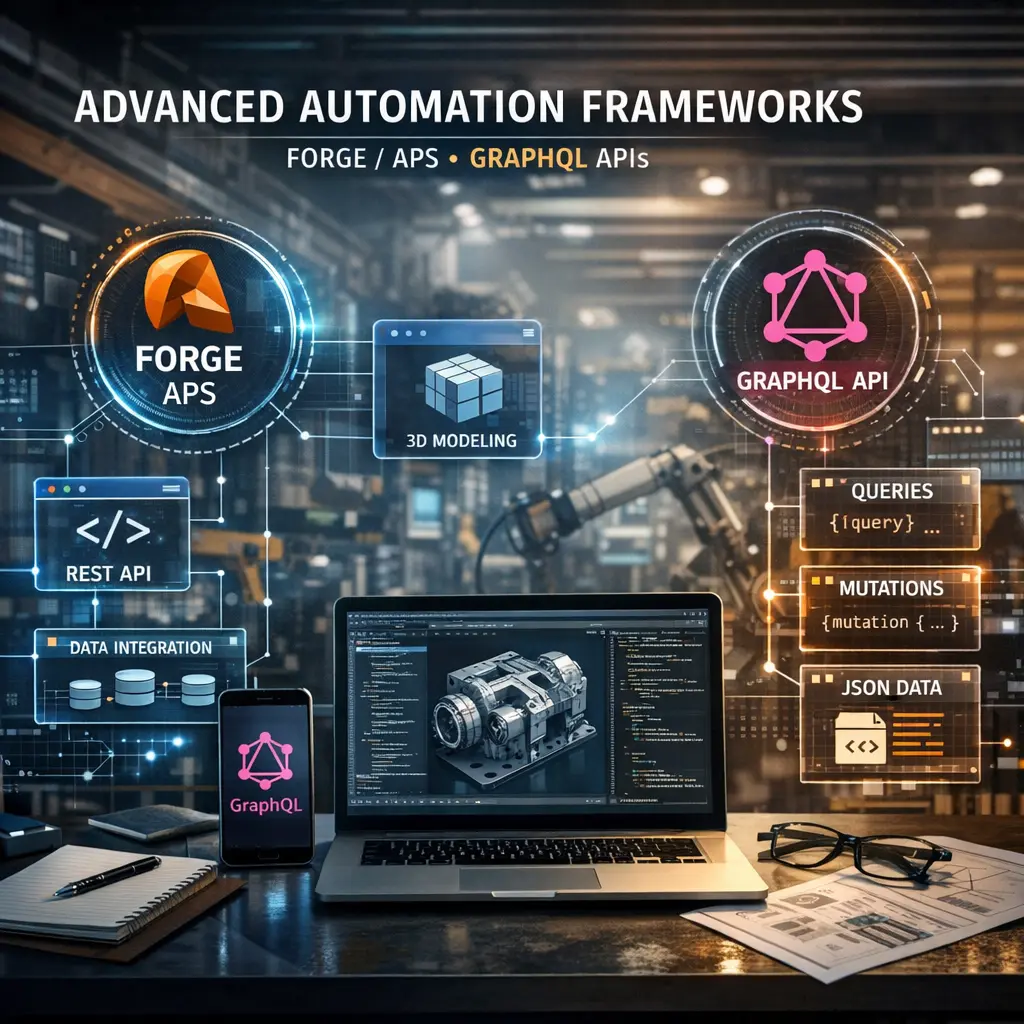
Advanced Automation Frameworks, such as Forge/APS and GraphQL APIs, are cutting-edge digital tools used in construction information management. They enable seamless integration, automation, and real-time data exchange across various construction applications. These frameworks streamline workflows, enhance collaboration, and improve data accessibility by connecting different software platforms, allowing construction professionals to automate repetitive tasks and make more informed decisions throughout the project lifecycle.
Advanced Automation Frameworks (Forge/APS, GraphQL APIs)
Advanced Automation Frameworks, such as Forge/APS and GraphQL APIs, are cutting-edge digital tools used in construction information management. They enable seamless integration, automation, and real-time data exchange across various construction applications. These frameworks streamline workflows, enhance collaboration, and improve data accessibility by connecting different software platforms, allowing construction professionals to automate repetitive tasks and make more informed decisions throughout the project lifecycle.
💡 Key Takeaways
- Understand the core concepts and components of Forge and APS automation frameworks.
- Build and orchestrate automated workflows with triggers, scheduling, and error handling in Forge/APS.
- Design, query, and mutate data from GraphQL APIs to power automation tasks.
- Apply best practices for scalable automation pipelines: modular design, testing, and observability.
- Implement security and performance considerations when integrating GraphQL APIs with automation frameworks.
❓ Frequently Asked Questions
What is an advanced automation framework?
A framework that provides reusable components and conventions (workflow orchestration, adapters, scheduling, error handling, monitoring) to design, run, and scale automated tasks consistently across systems.
What is GraphQL and how does it relate to APIs in automation?
GraphQL is a query language and runtime that lets clients request exactly the data they need via a single endpoint. In automation, GraphQL APIs supply and accept data for workflows, enabling precise data fetching, mutations, and real-time updates.
What are the benefits and trade-offs of using GraphQL APIs in automation workflows?
Benefits include precise data retrieval, a single flexible endpoint, and strong typing; trade-offs include added complexity, caching considerations, and the need for solid schema design.
How do you typically integrate Forge/APS with GraphQL APIs?
Within the framework, use a GraphQL client or HTTP adapter, map GraphQL types to automation data models, configure authentication, and implement error handling, logging, and testing for reliable data flow.