"Analytics at United: Early Adoption to Present" refers to Manchester United F.C.'s journey in integrating data analytics into their football operations. Initially, the club adopted basic performance analysis to gain competitive insights. Over time, United expanded their use of advanced metrics, player tracking, and predictive modeling to inform tactics, recruitment, and player development. Today, analytics play a crucial role in shaping on-field strategies and off-field decisions, reflecting the club’s commitment to innovation and success.
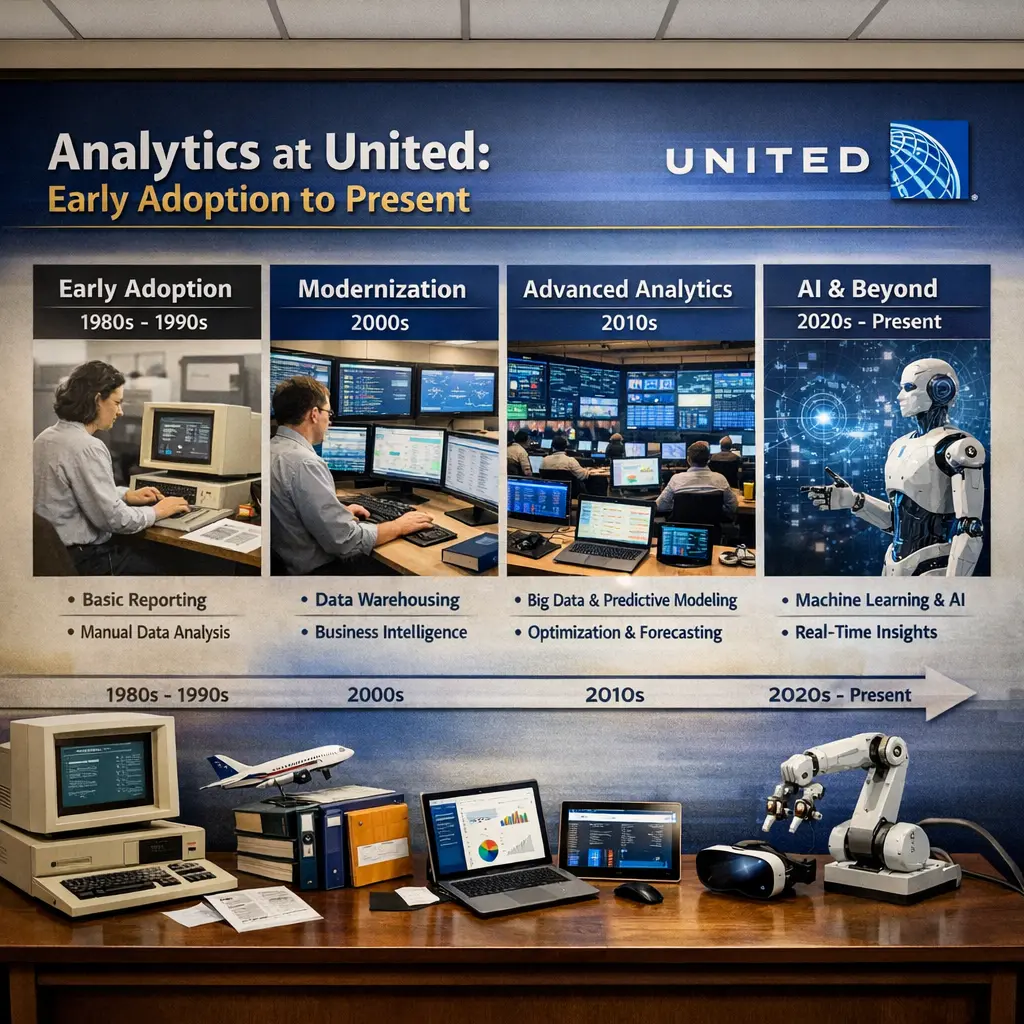
Analytics at United: Early Adoption to Present
"Analytics at United: Early Adoption to Present" refers to Manchester United F.C.'s journey in integrating data analytics into their football operations. Initially, the club adopted basic performance analysis to gain competitive insights. Over time, United expanded their use of advanced metrics, player tracking, and predictive modeling to inform tactics, recruitment, and player development. Today, analytics play a crucial role in shaping on-field strategies and off-field decisions, reflecting the club’s commitment to innovation and success.
💡 Key Takeaways
- Trace United's analytics journey from early adoption to modern, data-driven decision making.
- Identify key analytics use cases across operations, revenue management, and customer experience.
- Explain how real-time analytics and dashboards enable proactive decisions in flight operations and crew scheduling.
- Describe the data, architecture, and governance needed to mature analytics in a large airline.
- Discuss challenges, governance, and best practices for sustaining analytics initiatives at scale in a global carrier.
❓ Frequently Asked Questions
What does 'Early Adoption to Present' mean in United Airlines' analytics?
It describes the journey from early experiments with data to enterprise‑wide analytics that inform operations, revenue, and customer experience today.
What are some key analytics use cases for United Airlines?
Examples include on‑time performance optimization, demand forecasting and dynamic pricing, predictive maintenance, network and crew scheduling optimization, and customer analytics from loyalty programs.
What data sources power United Airlines analytics?
Booking and flight data, maintenance logs and sensor data, weather, crew schedules, loyalty program data, and customer feedback from various channels.
What are common challenges in adopting analytics at an airline?
Maintaining data quality and integration across systems, governance and privacy concerns, model monitoring, change management, and regulatory compliance.