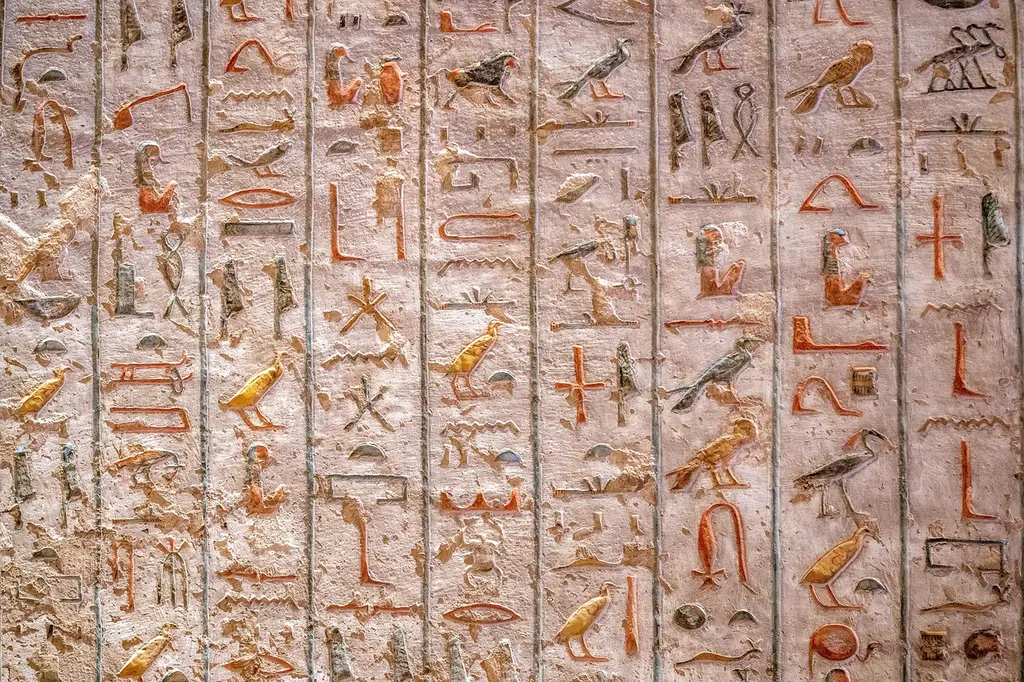
"Ancient Scripts (Guess by Image)" refers to an activity or game where participants are shown images of old, historical writing systems or inscriptions. The challenge is to identify or guess which ancient script is depicted, such as Egyptian hieroglyphs, Sumerian cuneiform, or Mayan glyphs. This exercise can be educational, helping people learn about the diversity and evolution of written language throughout human history by visually recognizing unique script characteristics.
Ancient Scripts
"Ancient Scripts (Guess by Image)" refers to an activity or game where participants are shown images of old, historical writing systems or inscriptions. The challenge is to identify or guess which ancient script is depicted, such as Egyptian hieroglyphs, Sumerian cuneiform, or Mayan glyphs. This exercise can be educational, helping people learn about the diversity and evolution of written language throughout human history by visually recognizing unique script characteristics.
💡 Key Takeaways
- Identify major ancient writing systems (cuneiform, hieroglyphs, Chinese script) and where they appeared.
- Explain how ancient symbols encode language through logograms and phonetics.
- Describe the evolution from pictographs to syllabaries and alphabets across cultures.
- Learn how scholars decipher inscriptions using artifacts and context, such as tablet inscriptions and monuments.
❓ Frequently Asked Questions
What are ancient scripts?
Writing systems used by early civilizations to record language, usually with symbols or pictures on durable media like clay, stone, or papyrus.
How do ancient scripts differ from one another?
They vary in form: some are logographic (symbols for words), some are syllabic (symbols for syllables), and some are alphabets (symbols for individual sounds); many are pictographic or a mix.
Which famous ancient scripts should you know about?
Cuneiform (Mesopotamia), Egyptian hieroglyphs (Egypt), Indus script (Indus Valley, undeciphered), Linear B (Mycenaean Greek), and the Phoenician alphabet (ancestor of many modern scripts).
Why is the Rosetta Stone important for ancient scripts?
It provided parallel text in Greek and hieroglyphs, enabling scholars to translate hieroglyphs and understand Ancient Egyptian language.