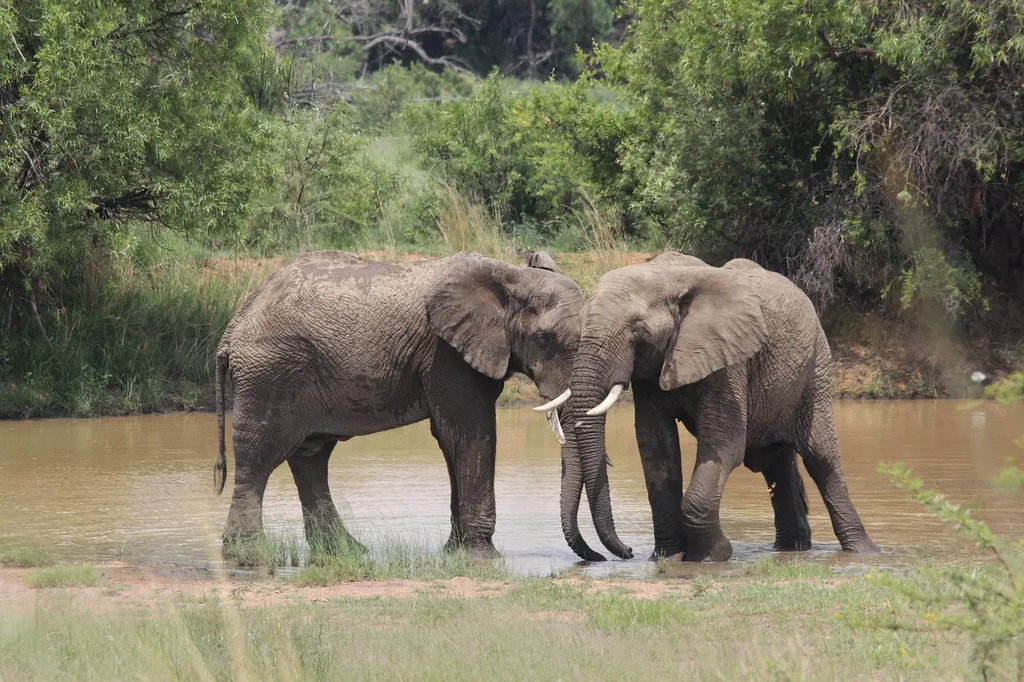
Animal Biophysics explores the fascinating ways animals use physics to survive and thrive in nature. From geckos defying gravity with sticky feet to dolphins using echolocation to "see" underwater, these fun facts reveal nature’s wildest secrets. Biophysics uncovers how creatures jump, swim, fly, and communicate by harnessing energy, motion, and sound, offering a deeper appreciation for the ingenious adaptations found throughout the animal kingdom.
Animal Biophysics
Animal Biophysics explores the fascinating ways animals use physics to survive and thrive in nature. From geckos defying gravity with sticky feet to dolphins using echolocation to "see" underwater, these fun facts reveal nature’s wildest secrets. Biophysics uncovers how creatures jump, swim, fly, and communicate by harnessing energy, motion, and sound, offering a deeper appreciation for the ingenious adaptations found throughout the animal kingdom.

💡 Key Takeaways
- Understand how energy, heat, and metabolism govern animal physiology.
- Explore how tissues and organs respond to mechanical and fluid forces.
- Learn how animals move, sense, and transport substances using biophysical principles.
- Identify common measurement methods and scaling laws used in animal biophysics.
❓ Frequently Asked Questions
What is animal biophysics?
The study of how physical principles govern animal structure and function—movement, heat and mass transfer, diffusion, and energy use.
How do physical forces shape animal locomotion?
Muscle forces, body shape, gravity, and fluid resistance determine energy efficiency, speed, and stability during movement.
What is allometry in animals?
The study of how traits scale with body size, affecting metabolism, strength, speed, and performance across species.
How does thermoregulation work in biophysical terms?
Animals balance heat production with heat loss via metabolism, insulation, circulation, evaporation, and behavior to keep a stable temperature.
Why is diffusion important for animal physiology?
Diffusion moves oxygen and carbon dioxide across membranes and tissues, supporting cellular metabolism when distances are short.