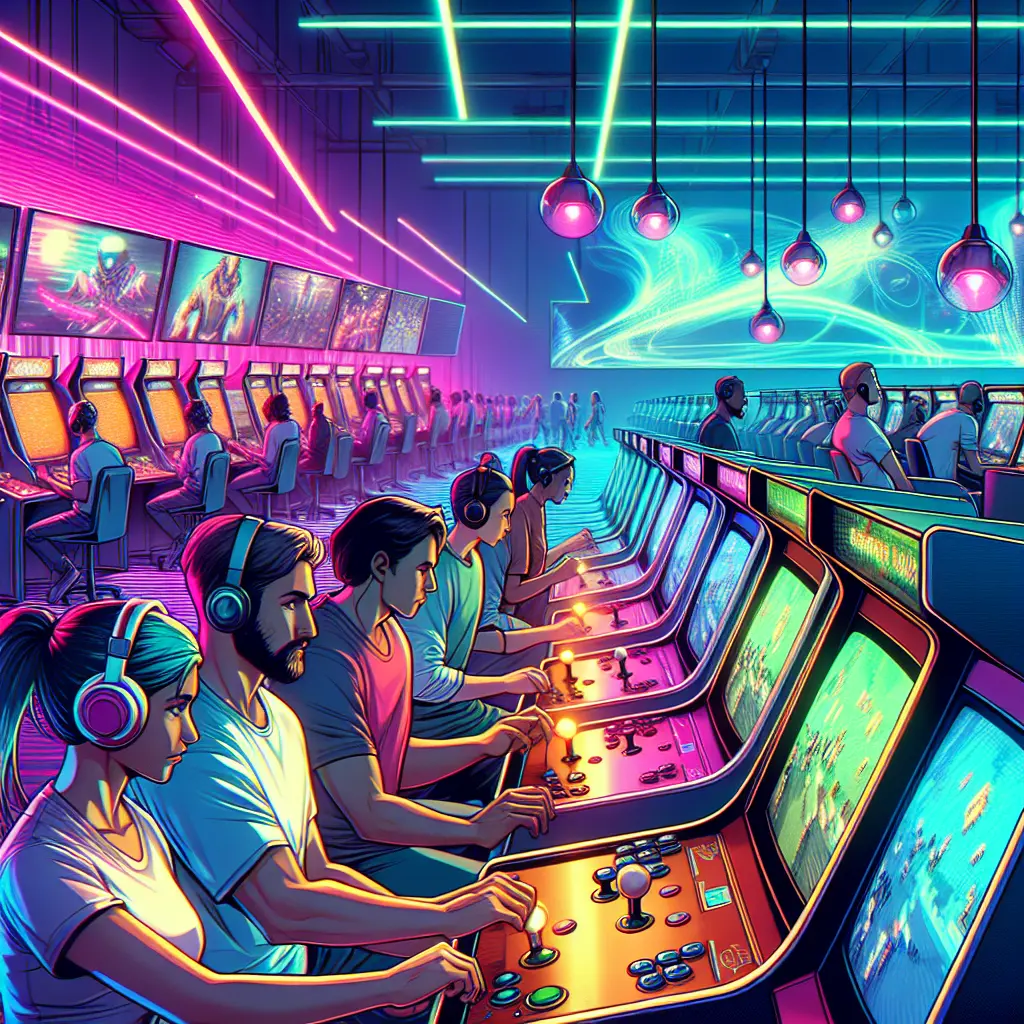
"Arcades, LAN Parties, and the Rise of eSports" refers to the evolution of social gaming culture. Arcades in the 1980s and 1990s provided communal spaces for competitive play. LAN parties in the late 1990s and early 2000s allowed friends to connect computers for multiplayer gaming. These gatherings laid the foundation for eSports, where organized, professional video game competitions now attract global audiences and offer significant prizes.
Arcades, LAN Parties, and the Rise of eSports
"Arcades, LAN Parties, and the Rise of eSports" refers to the evolution of social gaming culture. Arcades in the 1980s and 1990s provided communal spaces for competitive play. LAN parties in the late 1990s and early 2000s allowed friends to connect computers for multiplayer gaming. These gatherings laid the foundation for eSports, where organized, professional video game competitions now attract global audiences and offer significant prizes.
💡 Key Takeaways
- Trace the evolution from 1980s–1990s arcades to the rise of organized eSports and its cultural significance.
- Explain how LAN parties centralized multiplayer gaming by linking PCs and consoles in shared spaces.
- Identify key games, events, and milestones that defined the early competitive scene and its growth.
- Assess the social, economic, and technological shifts that transformed casual play into a global competitive ecosystem.
❓ Frequently Asked Questions
What were arcades and why were they central to gaming culture in the 1980s and 1990s?
Arcades were public venues with coin-operated game cabinets where players gathered to compete and socialize, creating shared high-score culture and local rivalries.
What is a LAN party, and what role did it play in multiplayer gaming during the late 1990s and early 2000s?
A LAN party is a gathering where friends connect their computers on a local network to play multiplayer games together, enabling low-latency play and organized matches.
How did arcades and LAN parties contribute to the rise of eSports?
They built early competitive communities, showcased skilled players, and helped spawn organized leagues, sponsorships, and the online ecosystems that underlie modern eSports.
What distinguishes eSports from casual gaming?
eSports are organized, often professional competitions with teams, prize money, structured schedules, and spectators, unlike informal, solo or casual play.