"Basic Science Tools (Guess by Image)" refers to an activity or educational exercise where participants are shown images of common scientific instruments or tools, such as beakers, microscopes, thermometers, or test tubes. The task is to identify or name these tools based solely on their visual appearance. This approach helps reinforce knowledge of laboratory equipment, encourages visual recognition, and enhances familiarity with essential items used in scientific experiments and investigations.
Basic Science Tools
"Basic Science Tools (Guess by Image)" refers to an activity or educational exercise where participants are shown images of common scientific instruments or tools, such as beakers, microscopes, thermometers, or test tubes. The task is to identify or name these tools based solely on their visual appearance. This approach helps reinforce knowledge of laboratory equipment, encourages visual recognition, and enhances familiarity with essential items used in scientific experiments and investigations.
💡 Key Takeaways
- Identify common basic science tools (beakers, test tubes, rulers, thermometers, microscopes) and their simple uses.
- Practice safe handling, cleaning, and storage of laboratory equipment.
- Understand measurement basics—units, accuracy vs. precision, and how to read instrument scales.
- Observe, record, and organize basic data clearly to support simple experiments.
❓ Frequently Asked Questions
What are basic science tools and why are they used?
Basic science tools include rulers, beakers, flasks, balances, thermometers, microscopes, and safety gear. They help observe, measure, mix, transfer, and analyze materials in experiments.
How do you read a ruler to measure length accurately?
Align the object with the zero mark, read the value at the far edge, and note the main scale plus any smallest markings to estimate the measurement.
What is the difference between a beaker and a flask, and when would you use each?
A beaker is a wide-mouthed container for holding and rough volume measurements; a flask (like an Erlenmeyer) has a narrow neck to reduce splashes and is good for mixing by swirling. Use each based on stability and measurement needs.
What is a microscope and what does it show?
A microscope enlarges tiny objects beyond the limits of the naked eye, revealing details such as cells and tissues for study.
Why is personal protective equipment (PPE) important in a lab?
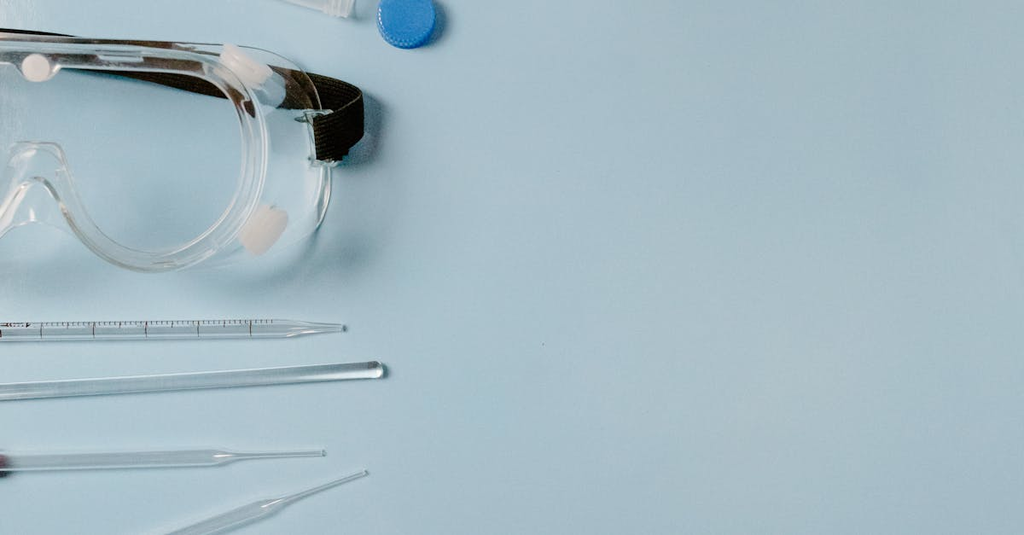
PPE like safety goggles, gloves, and a lab coat protect your eyes, skin, and clothing from chemicals, heat, and other hazards.