Bio-based and renewable construction materials are derived from natural, sustainable sources such as plants, agricultural waste, or recycled biomass. These materials, including bamboo, hempcrete, cork, and bio-composites, offer environmentally friendly alternatives to traditional, fossil fuel-based products. They reduce carbon footprints, promote resource efficiency, and often enhance building performance. Their use supports the transition to greener construction practices, aligning with global efforts to mitigate climate change and encourage circular economy principles within the construction industry.
Bio-Based and Renewable Construction Materials
Bio-based and renewable construction materials are derived from natural, sustainable sources such as plants, agricultural waste, or recycled biomass. These materials, including bamboo, hempcrete, cork, and bio-composites, offer environmentally friendly alternatives to traditional, fossil fuel-based products. They reduce carbon footprints, promote resource efficiency, and often enhance building performance. Their use supports the transition to greener construction practices, aligning with global efforts to mitigate climate change and encourage circular economy principles within the construction industry.
💡 Key Takeaways
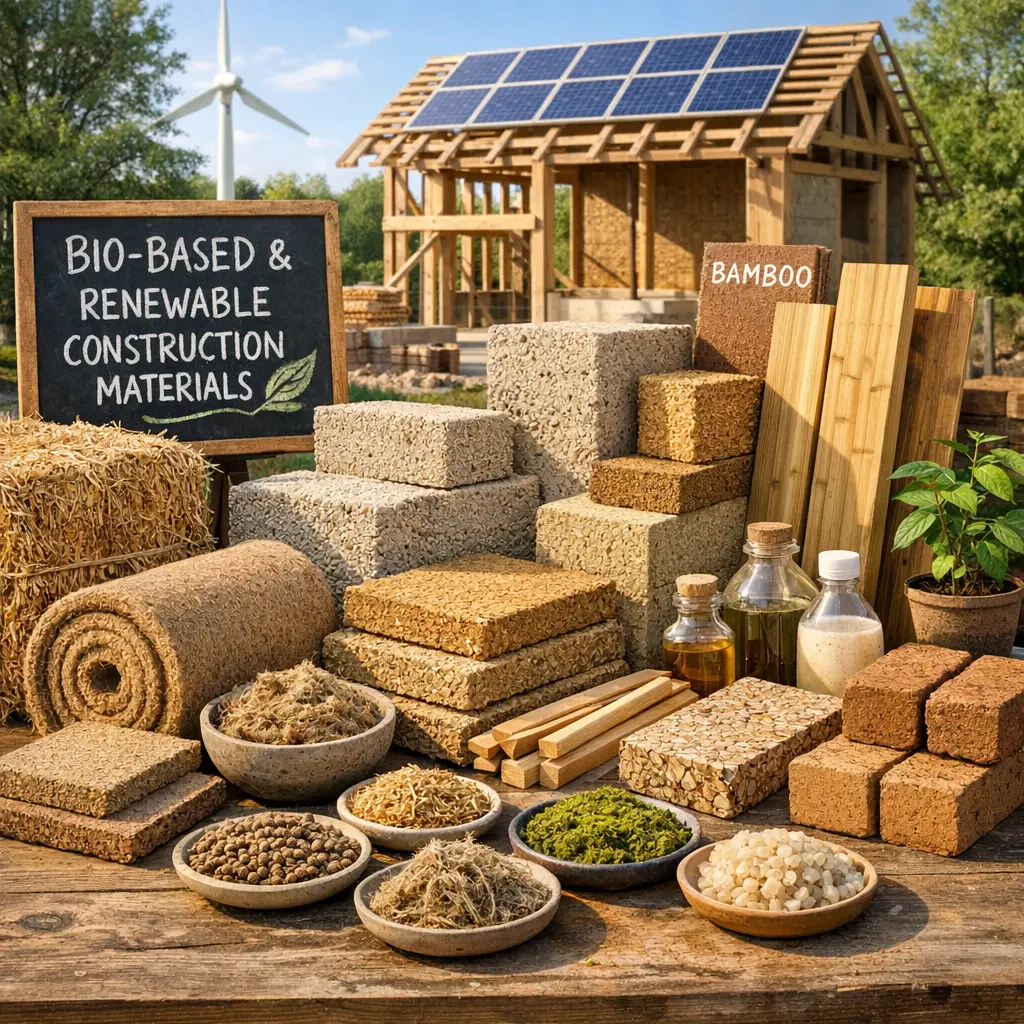
- Define bio-based and renewable construction materials and name common examples (e.g., wood, bamboo, hemp, cork, mycelium, and algae-based composites).
- Understand how biobased materials can reduce embodied energy and contribute to carbon storage over a building's life cycle.
- Identify design and performance considerations such as strength, durability, moisture management, insulation, and fire safety when using bio-based materials.
- Learn how to evaluate sustainability with standards and tools (e.g., lifecycle assessment, FSC/PEFC certifications, and end-of-life options like recyclability or biodegradability).
❓ Frequently Asked Questions
What are bio-based construction materials?
Materials derived from renewable biological sources (plants, algae, and other organic matter) used in building components and products.
What makes a material renewable?
A renewable material comes from resources that can be replenished naturally or through sustainable management within a human lifetime.
What are common examples of bio-based and renewable construction materials?
Timber, bamboo, hemp-based composites (hempcrete), straw bale, cork, cellulose insulation, and mycelium-based materials.
What are the main benefits and challenges of using bio-based materials?
Benefits include lower embodied energy and carbon, renewable supply, and potential insulation advantages. Challenges include higher cost, variability in performance, moisture sensitivity, and certification or standards considerations.