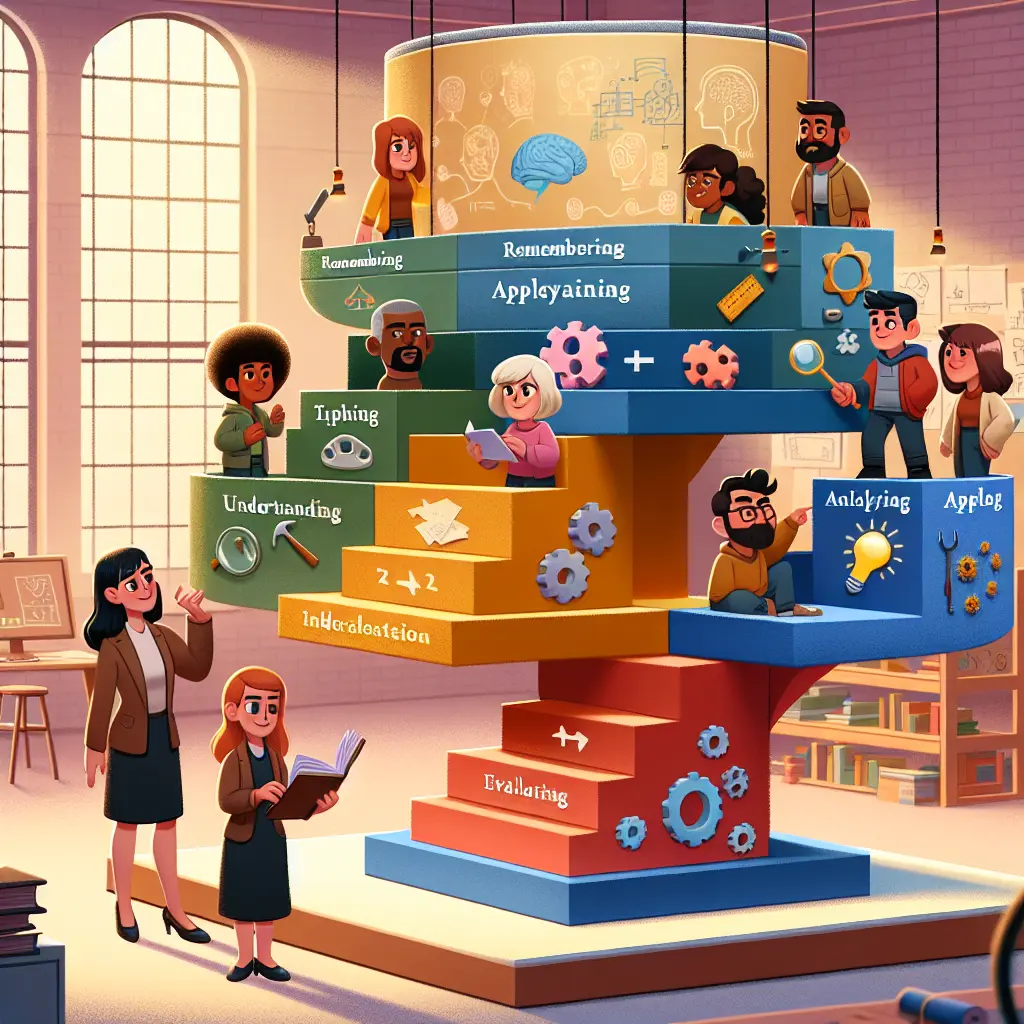
Bloom’s Taxonomy in Practice refers to actively applying the hierarchical framework of cognitive skills—remembering, understanding, applying, analyzing, evaluating, and creating—within educational settings. Teachers use it to design lesson objectives, activities, and assessments that encourage deeper thinking and learning. By structuring tasks across these levels, educators help students progress from basic knowledge recall to higher-order skills like critical analysis and creative problem-solving, fostering comprehensive intellectual development.
Bloom’s Taxonomy in Practice
Bloom’s Taxonomy in Practice refers to actively applying the hierarchical framework of cognitive skills—remembering, understanding, applying, analyzing, evaluating, and creating—within educational settings. Teachers use it to design lesson objectives, activities, and assessments that encourage deeper thinking and learning. By structuring tasks across these levels, educators help students progress from basic knowledge recall to higher-order skills like critical analysis and creative problem-solving, fostering comprehensive intellectual development.
💡 Key Takeaways
- Identify and explain the six Bloom’s Taxonomy levels (Remember, Understand, Apply, Analyze, Evaluate, Create).
- Design lessons that progress from recall to higher‑order thinking to foster deeper learning.
- Create assessments that measure analysis, evaluation, and creation, not just memory.
- Differentiate instruction by aligning objectives, activities, and assessments to Bloom’s levels.
❓ Frequently Asked Questions
What is Bloom’s Taxonomy and why is it useful in teaching?
Bloom’s Taxonomy is a hierarchical framework of six cognitive levels (Remembering, Understanding, Applying, Analyzing, Evaluating, Creating) used to design instruction and assessments that promote higher‑order thinking.
What are the six levels of Bloom’s Taxonomy in order?
Remembering, Understanding, Applying, Analyzing, Evaluating, Creating.
How can teachers design lesson activities using Bloom’s Taxonomy?
Plan objectives and tasks that correspond to each level, from recalling facts (Remembering) to producing original ideas (Creating), and align assessments to those levels.
How does Bloom’s Taxonomy support assessment design?
It ensures tasks assess a range of cognitive skills, not just recall, enabling evidence of deeper learning and skill development.
Can Bloom’s Taxonomy be applied across different subjects?
Yes. The framework is universal and helps structure learning and assessment in any discipline to foster deeper understanding.