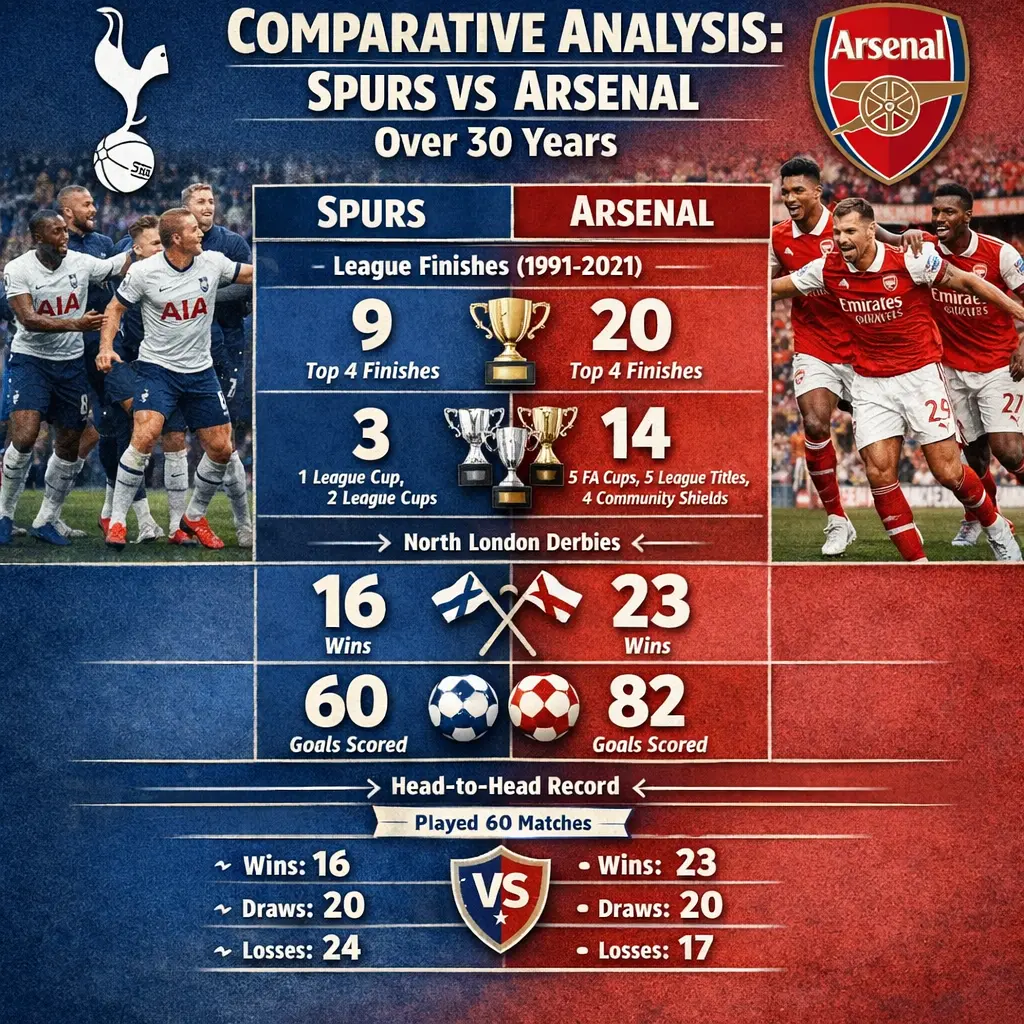
This phrase refers to an in-depth examination of the performances, achievements, and developments of Tottenham Hotspur F.C. (Spurs) compared to Arsenal F.C. over the past 30 years. The analysis typically covers league standings, trophy wins, head-to-head results, financial growth, fanbase evolution, and managerial changes, aiming to highlight trends, periods of dominance, and shifts in club stature between these two North London football rivals.
Comparative Analysis: Spurs vs Arsenal Over 30 Years
This phrase refers to an in-depth examination of the performances, achievements, and developments of Tottenham Hotspur F.C. (Spurs) compared to Arsenal F.C. over the past 30 years. The analysis typically covers league standings, trophy wins, head-to-head results, financial growth, fanbase evolution, and managerial changes, aiming to highlight trends, periods of dominance, and shifts in club stature between these two North London football rivals.
💡 Key Takeaways
- Track head-to-head results and identify periods when Spurs or Arsenal dominated the rivalry in the last 30 years.
- Compare league finishes, cup runs, and trophy tallies to gauge relative success over time.
- Analyze how managerial changes and tactical shifts influenced derby outcomes.
- Assess how transfers, squad depth, and key signings affected performance in important matches.
❓ Frequently Asked Questions
What is the scope of this comparative analysis?
It compares Spurs and Arsenal performance over roughly 30 seasons, focusing on league results, trophies, head-to-heads, and key milestones to show long-term trends and rivalry dynamics.
What metrics are typically used?
Season-by-season league position and points, goals for/against, win rate, trophies won (league, cups, Europe), and direct head-to-head results against the other club.
How should I interpret head-to-head records?
Treat them as direct match outcomes between the two clubs, but consider sample size, home/away balance, and era-specific formats when drawing conclusions.
How are changes in competition formats handled?
Note shifts like the Premier League era (starting mid-1990s) and cup-format changes; use consistent time windows or provide context to compare fairly.