The phrase refers to the analysis of the top six clubs in English football, focusing on Tottenham Hotspur’s position among them. It examines how Spurs compare to rivals like Manchester City, Liverpool, Chelsea, Manchester United, and Arsenal in terms of squad quality, financial power, achievements, and strategy. The “gaps” highlight areas where Tottenham lags behind—such as trophy wins or investment—while “dynamics” explores shifting strengths and competitiveness within this elite group.
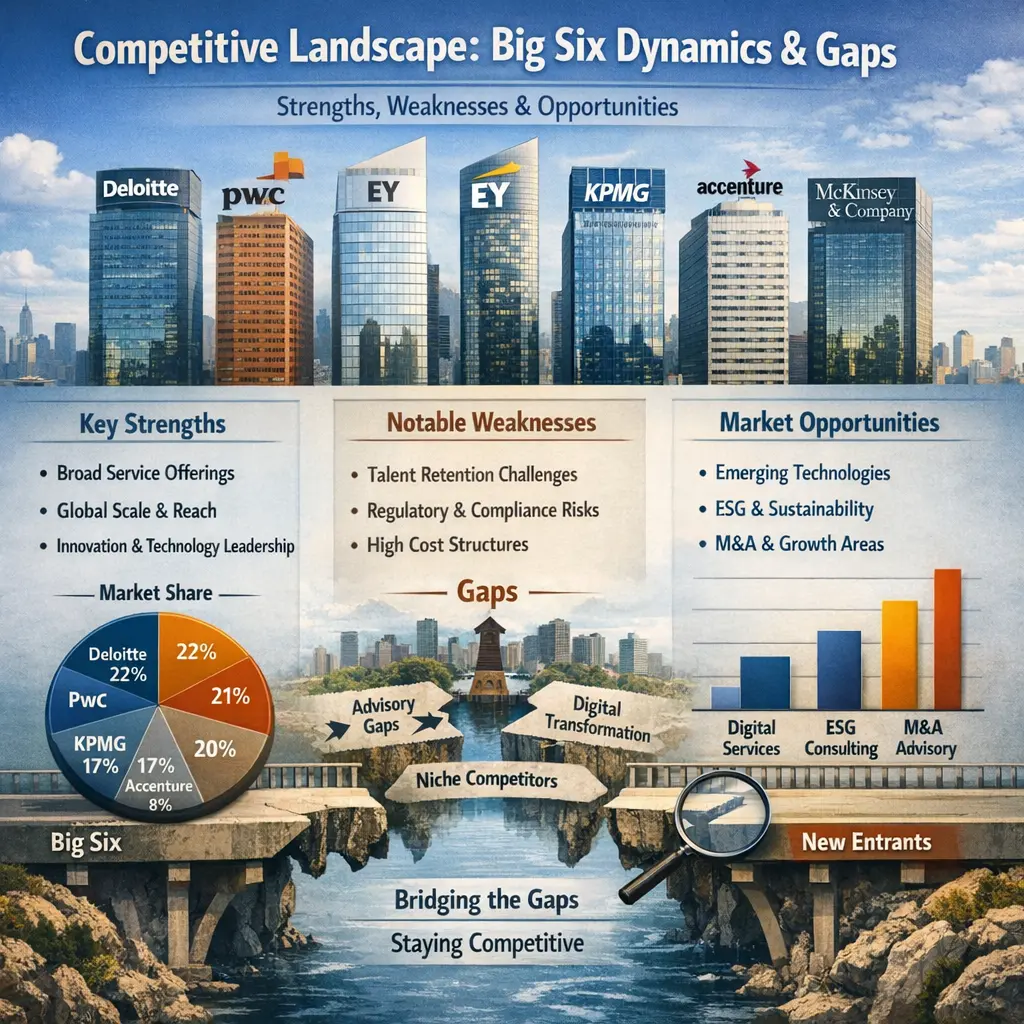
Competitive Landscape: Big Six Dynamics & Gaps
The phrase refers to the analysis of the top six clubs in English football, focusing on Tottenham Hotspur’s position among them. It examines how Spurs compare to rivals like Manchester City, Liverpool, Chelsea, Manchester United, and Arsenal in terms of squad quality, financial power, achievements, and strategy. The “gaps” highlight areas where Tottenham lags behind—such as trophy wins or investment—while “dynamics” explores shifting strengths and competitiveness within this elite group.
💡 Key Takeaways
- Identify who the Big Six players are in the market and the segments they dominate.
- Compare each player's core strengths, weaknesses, and differentiators across products, pricing, and ecosystems.
- Analyze the dynamics driving competition, including innovation tempo, partnerships, and go-to-market strategies.
- Spot gaps and unmet needs where the Big Six underperform, revealing opportunities for disruption or improvement.
- Assess implications for buyers and vendors when navigating decisions and partnerships within the Big Six landscape.
❓ Frequently Asked Questions
What is the competitive landscape in business analysis?
It describes the market environment, including who the major players are, their relative strengths, and the trends shaping competition.
Who are the 'Big Six' in a market context?
The 'Big Six' are the six largest, most influential competitors whose actions significantly impact market dynamics.
What are common dynamics among the Big Six?
Key dynamics include market share distribution, pricing and promotions, product differentiation, ecosystem effects, scale advantages, and innovation pace.
What do 'gaps' in the Big Six landscape refer to?
Gaps are unmet customer needs, underserved segments, or barriers that the six big players do not fully address, creating opportunities for differentiation.