Digital Government and e-Governance refer to the use of digital technologies by government agencies to enhance public service delivery, improve administrative efficiency, and promote transparency. This approach encompasses online platforms for citizen engagement, electronic records management, and digital policy implementation. It also involves legal frameworks and regulations to ensure data security, privacy, and accountability, ultimately fostering greater trust and accessibility in government operations and public services.
Digital Government & e‑Governance
Digital Government and e-Governance refer to the use of digital technologies by government agencies to enhance public service delivery, improve administrative efficiency, and promote transparency. This approach encompasses online platforms for citizen engagement, electronic records management, and digital policy implementation. It also involves legal frameworks and regulations to ensure data security, privacy, and accountability, ultimately fostering greater trust and accessibility in government operations and public services.
💡 Key Takeaways
- Define digital government and e-governance and explain how they differ.
- Describe how online services streamline public administration and citizen interactions.
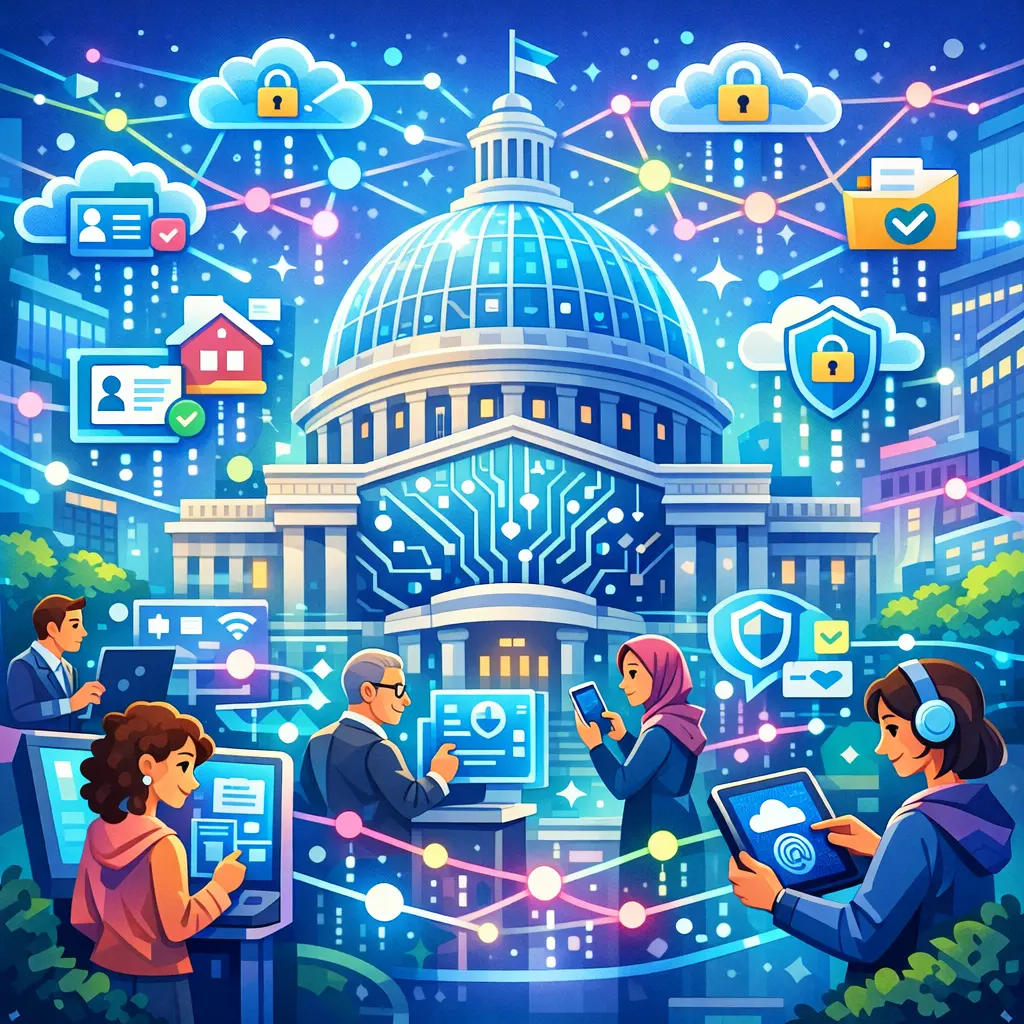
- Identify key technologies enabling e-governance (digital identity, data interoperability, cloud, AI, cybersecurity).
- Discuss benefits and challenges, including transparency, efficiency, privacy, and the digital divide.
- Review real-world examples of successful digital government initiatives and reforms.
❓ Frequently Asked Questions
What is digital government and e-governance?
Digital government uses technology to deliver public services, manage data, and support decision‑making; e‑governance is the broader use of ICT to improve governance, transparency, and citizen participation.
What are the main goals of e-governance?
Improve accessibility and efficiency, enhance transparency and accountability, and engage citizens in governance processes.
What are common digital government services?
Online service portals, digital IDs, e-payments, electronic forms with e-signatures, and access to open data and dashboards.
What are key challenges and benefits of implementing e-governance?
Benefits: faster services, cost savings, and better transparency. Challenges: privacy and security, digital divide, interoperability, and change management.