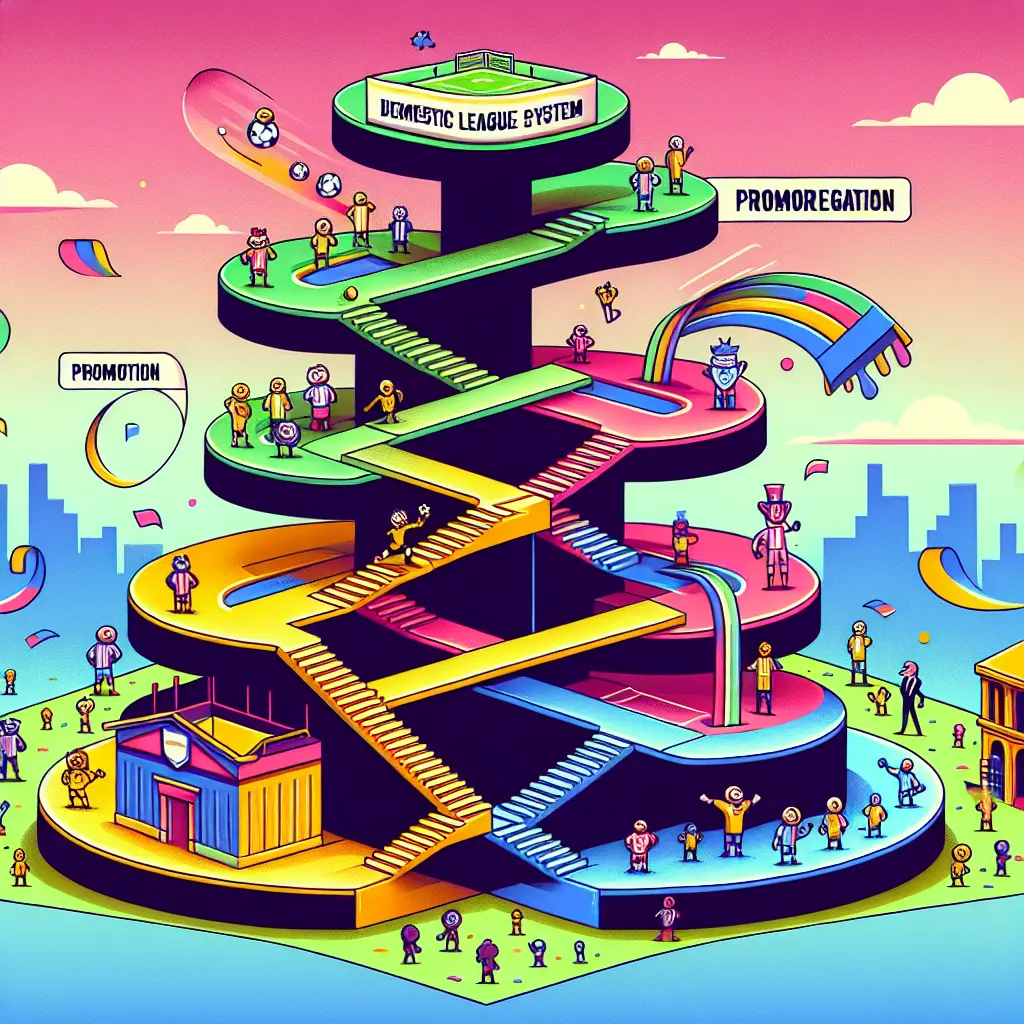
Domestic league systems are hierarchical structures used in many sports, particularly football (soccer), within a country. Teams are organized into multiple divisions or tiers based on performance. Promotion and relegation refer to the movement of teams between these tiers: top-performing teams in a lower division are promoted to a higher one, while underperforming teams in a higher division are relegated to a lower tier, creating competitive balance and opportunities for advancement.
Domestic League Systems & Promotion/Relegation
Domestic league systems are hierarchical structures used in many sports, particularly football (soccer), within a country. Teams are organized into multiple divisions or tiers based on performance. Promotion and relegation refer to the movement of teams between these tiers: top-performing teams in a lower division are promoted to a higher one, while underperforming teams in a higher division are relegated to a lower tier, creating competitive balance and opportunities for advancement.
💡 Key Takeaways
- Understand what a domestic league system is and how divisions are organized by performance.
- Learn how promotion and relegation move teams between tiers based on season results.
- Know how season points, goal difference, and tiebreakers (and playoff formats where used) determine promotions and relegations.
- Explore why leagues use promotion/relegation and common formats like automatic spots and playoffs.
❓ Frequently Asked Questions
What is a domestic league system?
A country's hierarchical set of divisions or tiers where clubs compete and can move between levels based on performance each season.
How does promotion and relegation work?
At the end of a season, top teams in a lower division move up to the next higher division, while bottom teams in a higher division drop down to the next lower division, for the next season.
Do all leagues use promotion and relegation?
Most football leagues in many countries use it, but some systems are closed or use different methods (such as licensing or playoffs) or have no relegation.
What are playoffs in promotion systems?
A postseason mini-competition between high-ranking teams that can decide which teams earn promotion even if they did not finish first in the regular season.
Can you name an example of a common top-tier hierarchy?
In England, the top tiers are the Premier League, Championship, League One, and League Two, with teams moving up or down between them.