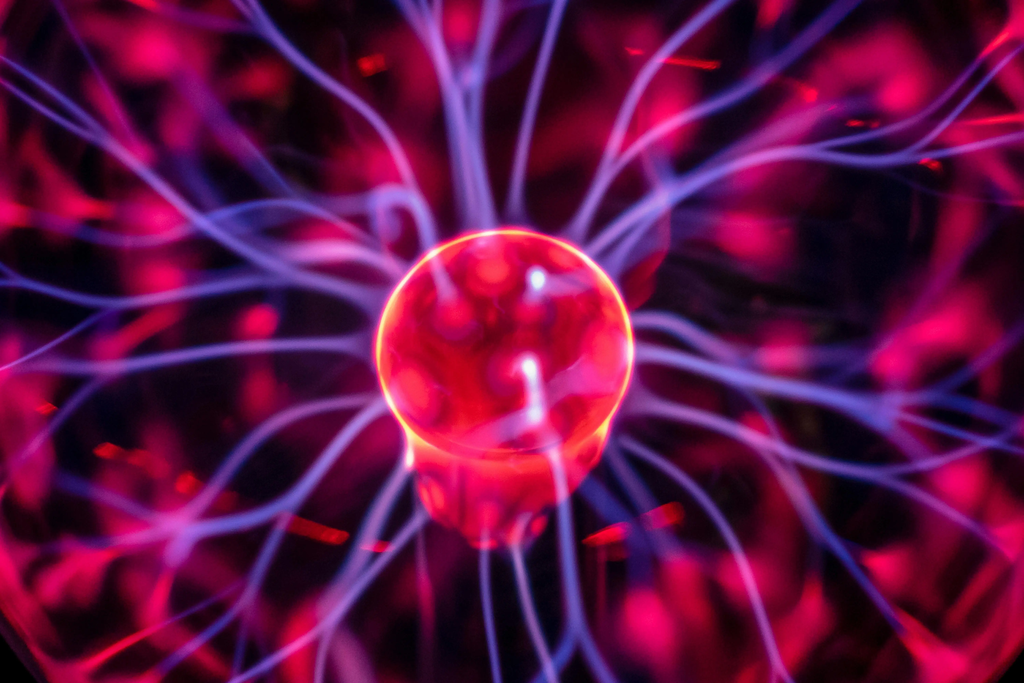
Electrodynamics is the branch of physics that studies how electric and magnetic fields interact with charged particles and how these fields change over time. Radiation, in this context, refers to the emission of energy as electromagnetic waves or particles, often produced when charged particles accelerate. Together, electrodynamics and radiation explain phenomena such as light, radio waves, and X-rays, and are fundamental to understanding how energy is transmitted through space.
Electrodynamics & Radiation
Electrodynamics is the branch of physics that studies how electric and magnetic fields interact with charged particles and how these fields change over time. Radiation, in this context, refers to the emission of energy as electromagnetic waves or particles, often produced when charged particles accelerate. Together, electrodynamics and radiation explain phenomena such as light, radio waves, and X-rays, and are fundamental to understanding how energy is transmitted through space.

💡 Key Takeaways
- Understand how electric and magnetic fields interact and evolve over time via Maxwell's equations.
- Learn how electromagnetic waves arise from changing fields and propagate energy through space.
- Explain radiation from accelerated charges and how EM waves carry energy and momentum (Poynting vector).
- Differentiate near-field and far-field radiation and how source motion affects radiation patterns.
❓ Frequently Asked Questions
What is electrodynamics?
Electrodynamics is the branch of physics that studies how electric and magnetic fields interact with charges and currents and how these fields evolve and propagate over time.
What is electromagnetic radiation?
Electromagnetic radiation is energy carried by electromagnetic waves produced when charges accelerate or when currents change; these waves consist of oscillating electric and magnetic fields that travel through space.
How are electric and magnetic fields related?
A changing electric field generates a magnetic field and a changing magnetic field generates an electric field; this mutual coupling produces electromagnetic waves that propagate at the speed of light.
What types of electromagnetic radiation exist?
The electromagnetic spectrum ranges from radio waves to gamma rays: radio, microwave, infrared, visible, ultraviolet, X-rays, and gamma rays, with different wavelengths corresponding to different energies.