Ethics, safety culture, and risk assessment in labs involving basic electricity and circuits focus on responsible conduct, prioritizing safety, and identifying potential hazards. Ethical behavior ensures honesty, integrity, and respect for others. A strong safety culture promotes adherence to safety protocols, use of personal protective equipment, and emergency preparedness. Risk assessment involves evaluating possible dangers such as electric shocks, short circuits, or equipment failure, and implementing control measures to minimize accidents and ensure a safe laboratory environment.
Ethics, Safety Culture & Risk Assessment in Labs
Ethics, safety culture, and risk assessment in labs involving basic electricity and circuits focus on responsible conduct, prioritizing safety, and identifying potential hazards. Ethical behavior ensures honesty, integrity, and respect for others. A strong safety culture promotes adherence to safety protocols, use of personal protective equipment, and emergency preparedness. Risk assessment involves evaluating possible dangers such as electric shocks, short circuits, or equipment failure, and implementing control measures to minimize accidents and ensure a safe laboratory environment.
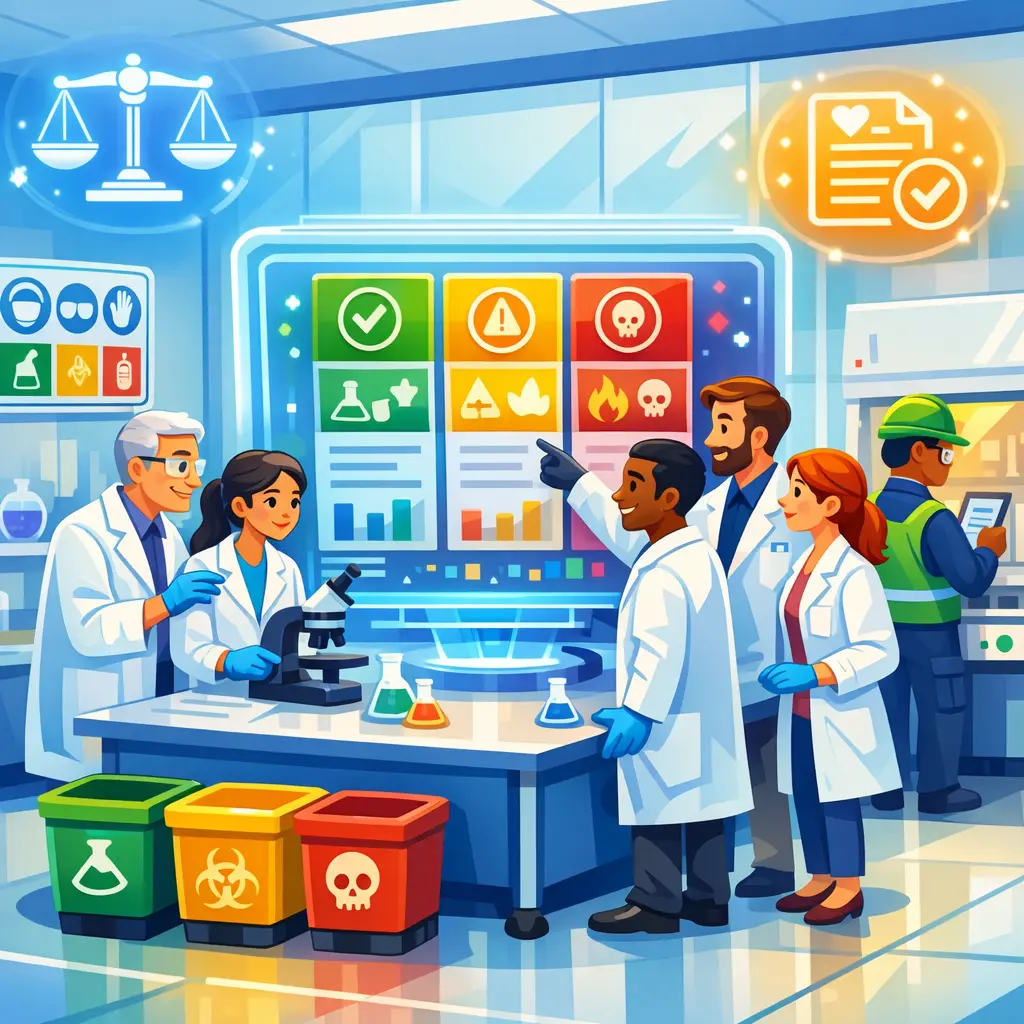
💡 Key Takeaways
- Understand core lab ethics and responsible conduct of research (integrity, data handling, authorship).
- Value safety culture and learn to report near-misses and safety concerns.
- Learn a basic risk assessment process: identify hazards, assess risk, and implement controls.
- Apply fundamental lab safety practices: personal protective equipment, chemical and equipment safety, and emergency procedures.
❓ Frequently Asked Questions
What is ethics in laboratory work?
Ethics means conducting research with integrity—honest data reporting, proper authorship, and avoiding fabrication or plagiarism—while respecting safety, participants, animals, and the environment.
What is safety culture in labs and why is it important?
Safety culture is the shared commitment to safety where leaders model safe practices, workers report hazards and near-misses, and continuous improvement occurs through training and clear procedures.
What is a risk assessment in a laboratory?
A systematic process to identify hazards, evaluate risk (likelihood and severity), implement controls to reduce risk, and monitor effectiveness over time.
What are common controls to reduce lab risk?
Engineering controls (e.g., fume hoods, ventilation), administrative controls (training, SOPs, protocols), and personal protective equipment (gloves, goggles), plus proper waste handling and emergency readiness.