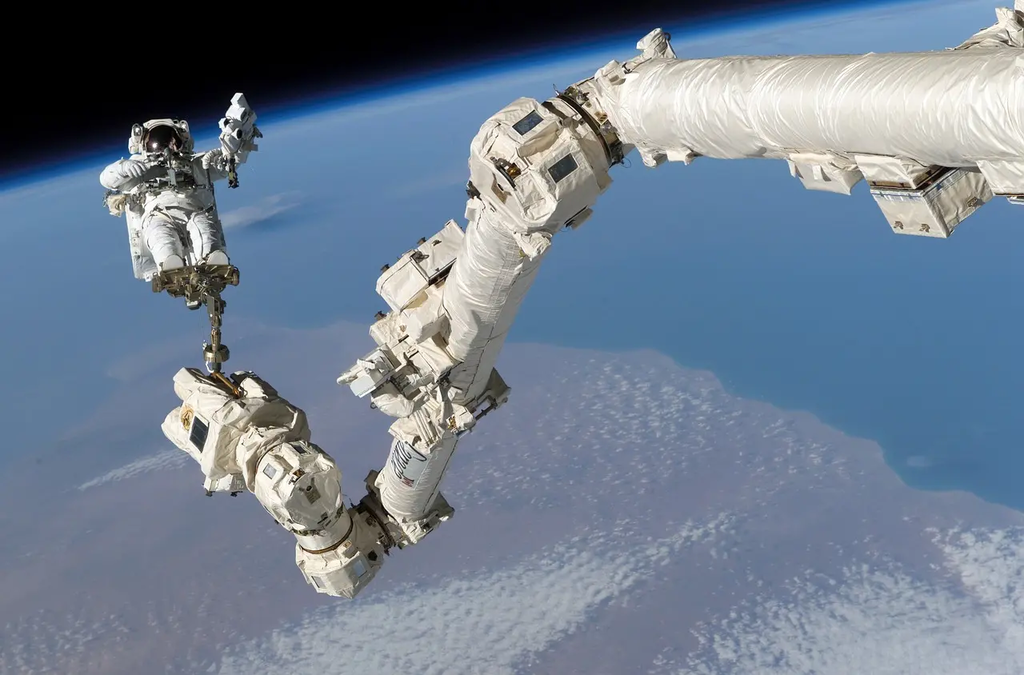
EVA (Extravehicular Activity) techniques and tools have evolved significantly from the Gemini missions to the International Space Station (ISS). Early Gemini astronauts relied on basic handholds and tethers, facing challenges with mobility and fatigue. Over time, innovations like the Apollo A7L suit, maneuvering units, and advanced life support systems improved safety and efficiency. On the ISS, astronauts use sophisticated suits, robotic arms, and specialized tools, allowing for complex repairs, assembly, and scientific tasks during spacewalks.
EVA Techniques and Tools: From Gemini to ISS
EVA (Extravehicular Activity) techniques and tools have evolved significantly from the Gemini missions to the International Space Station (ISS). Early Gemini astronauts relied on basic handholds and tethers, facing challenges with mobility and fatigue. Over time, innovations like the Apollo A7L suit, maneuvering units, and advanced life support systems improved safety and efficiency. On the ISS, astronauts use sophisticated suits, robotic arms, and specialized tools, allowing for complex repairs, assembly, and scientific tasks during spacewalks.
💡 Key Takeaways
- Learn how EVA suits evolved from Gemini to Apollo A7L and the ISS EMU, with improvements in life support and mobility.
- Understand the early EVA challenges—mobility and fatigue—and how tethers, handrails, and foot restraints improved safety and efficiency.
- Explore propulsion and maneuvering aids (MMU and SAFER) that expanded EVA capabilities and reduced reliance on tethers.
- See how EVA tooling and procedures for ISS work advanced, including modular tool stowage, foot restraints, and integrated workstations.
❓ Frequently Asked Questions
What is an EVA and why is it performed?
EVA stands for Extravehicular Activity. It involves astronauts leaving the spacecraft to assemble, repair, or inspect systems, deploy experiments, or service equipment, all while wearing a spacesuit that provides life support and protection.
How did EVA suits evolve from the Gemini era to the ISS?
Gemini used bulky suits with basic life support and limited mobility, relying on handholds and tethers. The Apollo A7L suit improved mobility with better joints and an integrated life-support system. Later, the EMU used on the Shuttle and ISS further enhanced mobility, cooling, and tool integration for longer, more capable spacewalks.
What were the main mobility challenges in early EVAs, and how were they addressed?
Early EVAs faced restricted movement and fatigue due to bulky suits and tether management. Solutions included more flexible joint design (as in the Apollo A7L), portable life-support systems, improved tethers and restraints, and later propulsion aids to help control movement.
What tools and safety systems are commonly used during ISS EVAs?
Common tools include the Pistol Grip Tool (PGT) for fasteners, hand and power tools, retractable tethers, and foot restraints. Suits carry the Portable Life Support System, and astronauts rely on robotic arms and training to maneuver safely during tasks.