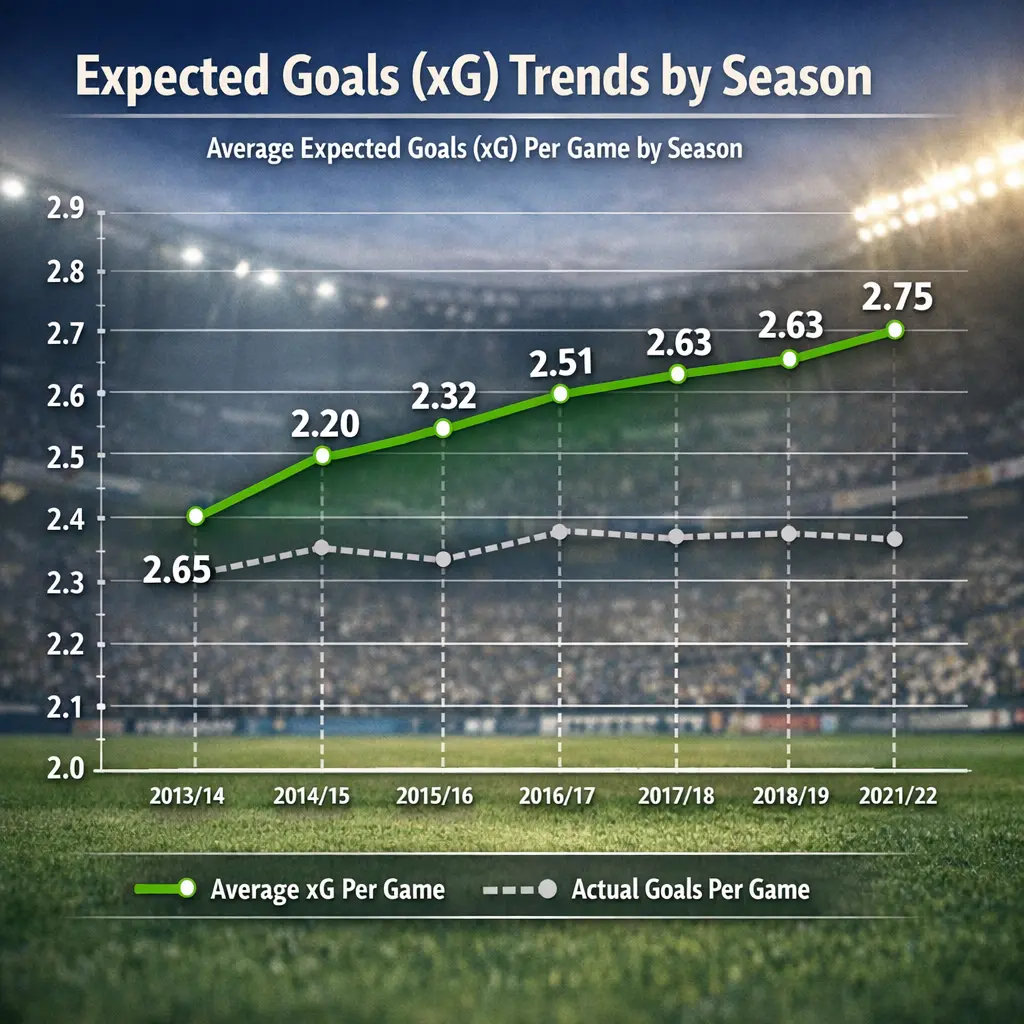
Expected Goals (xG) Trends by Season for Tottenham Hotspur F.C. refers to the analysis of the team’s attacking performance across different seasons, measured by the quality of goal-scoring opportunities created. By tracking xG trends, analysts and fans assess how effectively Tottenham generates chances and how this changes over time, providing insights into tactical shifts, player contributions, and overall team progress or decline in offensive output.
Expected Goals (xG) Trends by Season
Expected Goals (xG) Trends by Season for Tottenham Hotspur F.C. refers to the analysis of the team’s attacking performance across different seasons, measured by the quality of goal-scoring opportunities created. By tracking xG trends, analysts and fans assess how effectively Tottenham generates chances and how this changes over time, providing insights into tactical shifts, player contributions, and overall team progress or decline in offensive output.
💡 Key Takeaways
- Define what expected goals (xG) measures and why it matters for season trends.
- Read season-by-season xG trends to understand changes in attacking quality and style.
- Compare xG with actual goals to assess finishing efficiency across seasons.
- Consider factors that can shift xG trends between seasons, such as tactics, player changes, data methods, and league context.
❓ Frequently Asked Questions
What is expected goals (xG) in football analytics?
xG is a metric that estimates the probability a shot becomes a goal based on shot location, angle, distance, and situation, representing chance quality rather than actual goals.
How do xG trends by season help interpret team performance?
They show whether attacking quality is improving or declining across seasons and help explain why actual goals may differ from expectations.
What factors can cause xG to rise or fall from one season to the next?
Changes in shot selection/quality, tactical approach, player personnel, opponent defenses, injuries, and league pace or rules can all affect xG.
Why might actual goals differ from xG in a season?
Finishing luck, goalkeeper performance, defensive/luck factors, and small sample sizes can cause deviations from xG.
How should you compare xG across seasons reliably?
Use a consistent data source, compare xG per 90 minutes or per shot, adjust for minutes and opponent strength, and consider overall league context.