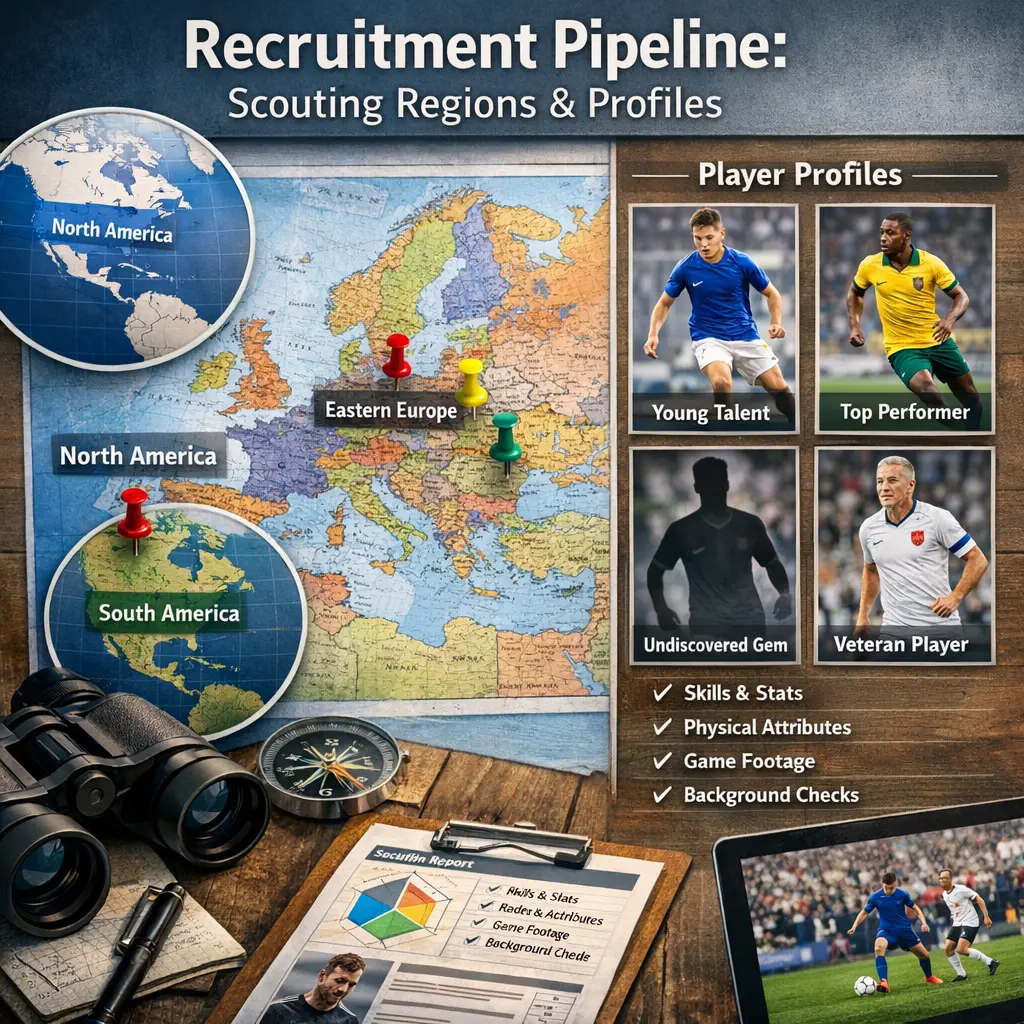
The recruitment pipeline for Tottenham Hotspur F.C. involves systematically identifying and evaluating football talent across various regions and player profiles. Scouts are deployed to targeted areas—both domestically and internationally—to monitor emerging prospects and established players. By analyzing technical skills, tactical awareness, and potential fit within the club’s philosophy, the recruitment team builds a diverse shortlist, ensuring Tottenham can secure high-potential signings that align with both immediate needs and long-term strategic goals.
Recruitment Pipeline: Scouting Regions & Profiles
The recruitment pipeline for Tottenham Hotspur F.C. involves systematically identifying and evaluating football talent across various regions and player profiles. Scouts are deployed to targeted areas—both domestically and internationally—to monitor emerging prospects and established players. By analyzing technical skills, tactical awareness, and potential fit within the club’s philosophy, the recruitment team builds a diverse shortlist, ensuring Tottenham can secure high-potential signings that align with both immediate needs and long-term strategic goals.
💡 Key Takeaways
- Identify regions with strategic talent pools that align with your roles and growth plans.
- Compare regional labor markets: supply, competition, compensation norms, and time-to-fill.
- Create candidate profiles (personas) for each region to tailor sourcing messages and channels.
- Build a regional scouting plan with prioritization, timelines, and KPIs to balance speed and quality.
- Use data-driven dashboards to monitor regional sourcing performance and adjust strategies.
❓ Frequently Asked Questions
What is the recruitment pipeline and how do scouting regions and profiles fit into it?
The recruitment pipeline is the sequence of stages from sourcing to onboarding. Scouting regions indicate where to find candidates, while candidate profiles define who to look for and how to evaluate them.
What does scouting regions mean in recruitment?
It means selecting geographic areas to actively source candidates based on talent density, cost, visa/work authorization, and relocation feasibility.
What are candidate profiles in a recruitment cycle?
Candidate profiles are the ideal candidate descriptions, outlining required and nice-to-have skills, experience, education, certifications, and cultural fit used for screening and outreach.
How should regions and profiles be chosen for a successful pipeline?
Use data on talent supply, salaries, competition, and time-to-fill; build candidate personas; run pilots and track ROI to refine regions and profiles.
What metrics track the effectiveness of regional scouting and profiling?
Key metrics include time-to-fill, quality of hire, source yield, interview-to-offer rate, cost per hire, relocation success, and diversity metrics.