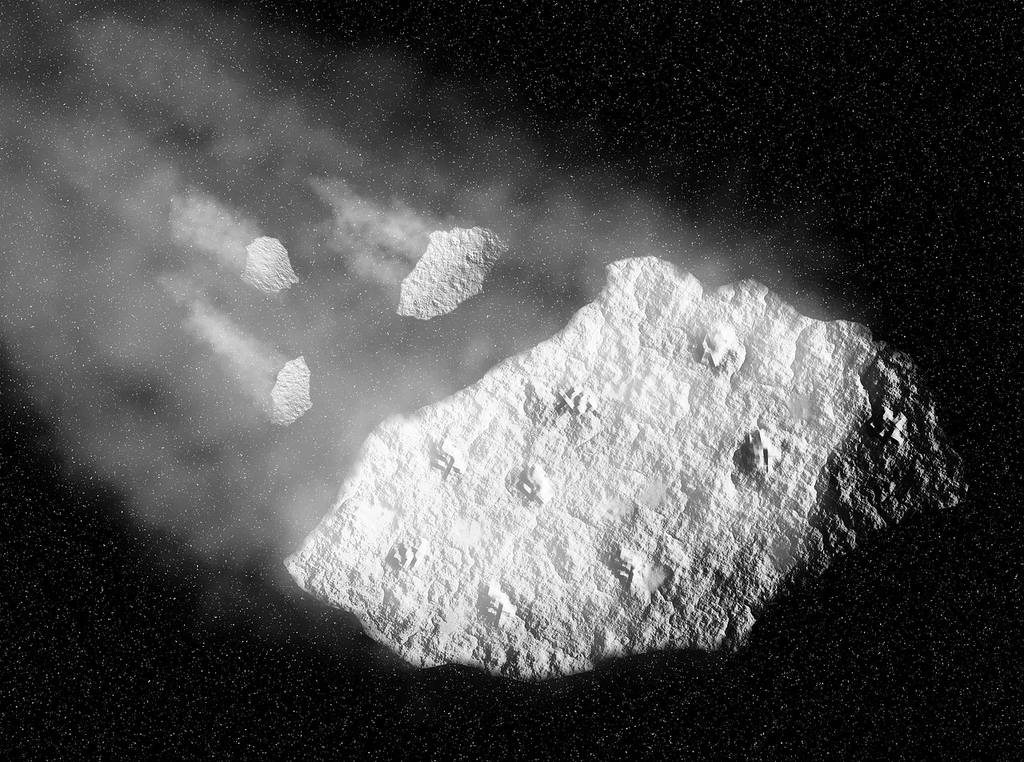
Famous comets are icy celestial bodies that travel through the solar system, often developing bright tails when they approach the Sun. Notable examples include Halley’s Comet, which is visible from Earth roughly every 76 years, and Comet Hale-Bopp, known for its spectacular appearance in 1997. These comets provide valuable insights into the early solar system’s formation and composition, captivating both astronomers and the public with their rare and brilliant displays.
Famous Comets
Famous comets are icy celestial bodies that travel through the solar system, often developing bright tails when they approach the Sun. Notable examples include Halley’s Comet, which is visible from Earth roughly every 76 years, and Comet Hale-Bopp, known for its spectacular appearance in 1997. These comets provide valuable insights into the early solar system’s formation and composition, captivating both astronomers and the public with their rare and brilliant displays.
💡 Key Takeaways
- Name famous comets and recall a key fact about each (e.g., Halley’s periodic return, Hale‑Bopp’s bright 1997 appearance, and Shoemaker‑Levy 9’s collision with Jupiter).
- Describe the basic comet structure—nucleus, coma, and tail—and explain why tails point away from the Sun.
- Understand how astronomers track comets, predict their orbits, and learn about their orbital periods.
- Appreciate the historical and cultural significance of comets and how they advanced science.
❓ Frequently Asked Questions
What is Halley's Comet and why is it famous?
Halley's Comet (1P/Halley) is a short‑period comet that returns roughly every 76 years. Named for Edmond Halley, it was the first comet whose periodic return was predicted and is famous for its bright appearance.
What was notable about Comet Shoemaker–Levy 9?
In 1992 it broke into multiple fragments and collided with Jupiter, providing the first direct observation of a planetary impact and leaving visible scars on the planet.
Why is Comet Hale‑Bopp considered one of the most famous comets?
Discovered in 1995 by Alan Hale and Thomas Bopp, Hale‑Bopp was exceptionally bright and visible to the naked eye for many weeks in 1996–1997, with prominent tails.
What made Comet Hyakutake notable?
Its very close approach to Earth in 1996 produced a spectacular naked‑eye comet with a long, bright tail.