"Fashion & Dress Through Time (Culture, Religion & Society)" refers to the evolving styles of clothing and adornment shaped by historical, cultural, religious, and societal influences. It explores how attire reflects identity, values, beliefs, and social status across different eras and regions. This phrase highlights the interplay between fashion trends and factors such as tradition, faith, and cultural norms, illustrating how dress serves as both personal expression and a symbol of collective heritage.
Fashion & Dress Through Time+50
"Fashion & Dress Through Time (Culture, Religion & Society)" refers to the evolving styles of clothing and adornment shaped by historical, cultural, religious, and societal influences. It explores how attire reflects identity, values, beliefs, and social status across different eras and regions. This phrase highlights the interplay between fashion trends and factors such as tradition, faith, and cultural norms, illustrating how dress serves as both personal expression and a symbol of collective heritage.
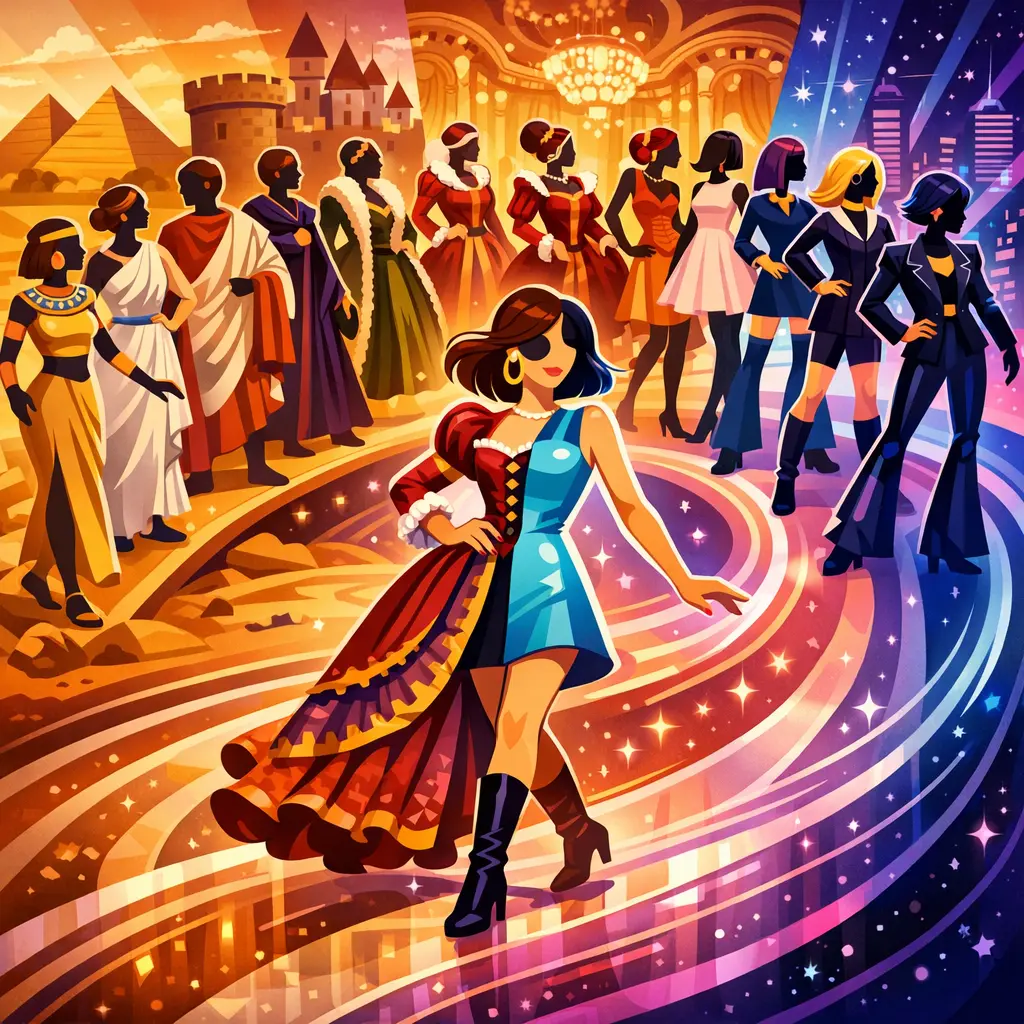
💡 Key Takeaways
- Identify key fashion eras and their defining silhouettes, fabrics, and garments.
- Explore how social norms, technology, and economic conditions shaped dress trends over time.
- Recognize iconic garments and accessories and their cultural or status significance across periods.
- Learn to infer era, region, and social context from clothing cues in historical images.
❓ Frequently Asked Questions
What does the phrase 'fashion through time' mean?
It studies how clothing styles evolve across historical eras, reflecting culture, technology, and social norms.
Which garment best represents the 1920s flapper look?
The flapper dress: a straight, dropped waistline, often with beads or fringe and a shorter hem.
What silhouette defined much of 1950s women’s fashion?
The 'hourglass' silhouette with a cinched waist and a full or circle skirt.
What is the difference between haute couture and ready-to-wear?
Haute couture is custom-made and one-of-a-kind; ready-to-wear is mass-produced in standard sizes.
What factors commonly drive changes in fashion over time?
Technology, economics, cultural shifts, and media/pop culture.