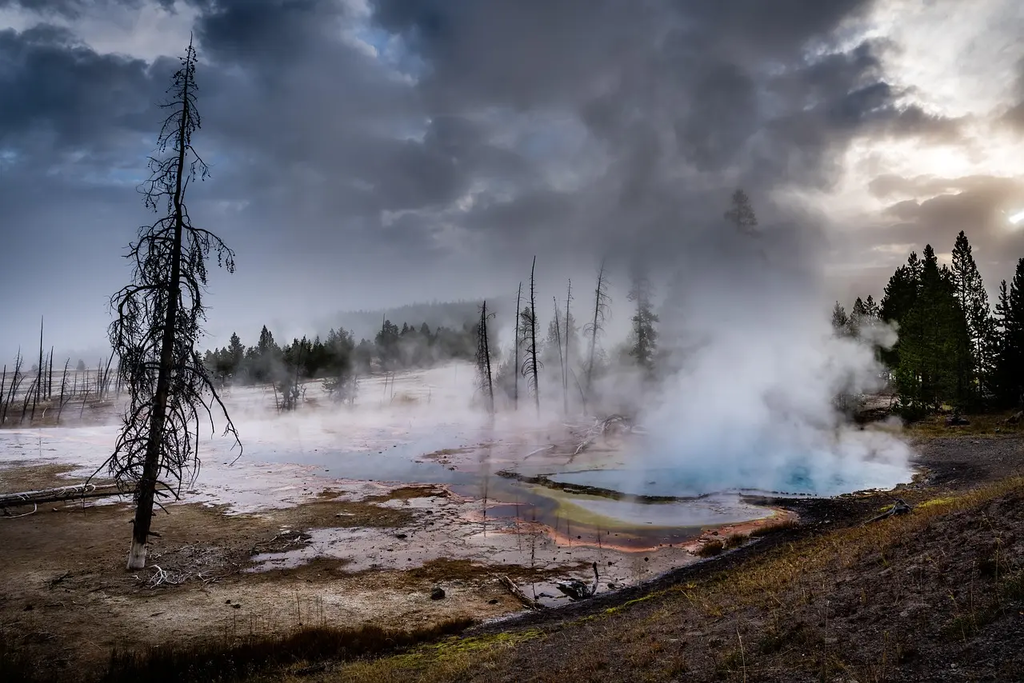
Geysers are natural hot springs that intermittently erupt, shooting boiling water and steam high into the air. This dramatic phenomenon occurs when underground water is heated by volcanic activity until pressure forces it upward. While beautiful and fascinating, geysers can be dangerous due to scalding temperatures and unpredictable eruptions. Their power and volatility showcase nature’s raw and sometimes frightening energy, reminding us of the dynamic forces at work beneath the Earth’s surface.
Geysers
Geysers are natural hot springs that intermittently erupt, shooting boiling water and steam high into the air. This dramatic phenomenon occurs when underground water is heated by volcanic activity until pressure forces it upward. While beautiful and fascinating, geysers can be dangerous due to scalding temperatures and unpredictable eruptions. Their power and volatility showcase nature’s raw and sometimes frightening energy, reminding us of the dynamic forces at work beneath the Earth’s surface.
💡 Key Takeaways
- Understand what geysers are and how they differ from hot springs.
- Learn how geyser eruptions occur, including water, steam, pressure, and underground plumbing.
- Identify factors that influence eruption frequency and duration, like heat source, water supply, and rock permeability.
- Discover notable geysers around the world and basic safety considerations for visitors.
❓ Frequently Asked Questions
What is a geyser?
A geyser is a spring that periodically erupts hot water and steam due to underground heat and a constricted underground plumbing system.
How do geysers erupt?
Underground heat heats water, turning it into steam. Pressure builds until it forces a eruption, blasting hot water and steam to the surface.
What conditions create geysers?
A heat source beneath the surface (often magma), a confined underground chamber or narrow channels to trap steam, and a steady supply of groundwater.
How are geysers different from hot springs?
Geysers erupt in intermittent bursts of steam and hot water, while hot springs release hot water continuously without periodic eruptions.