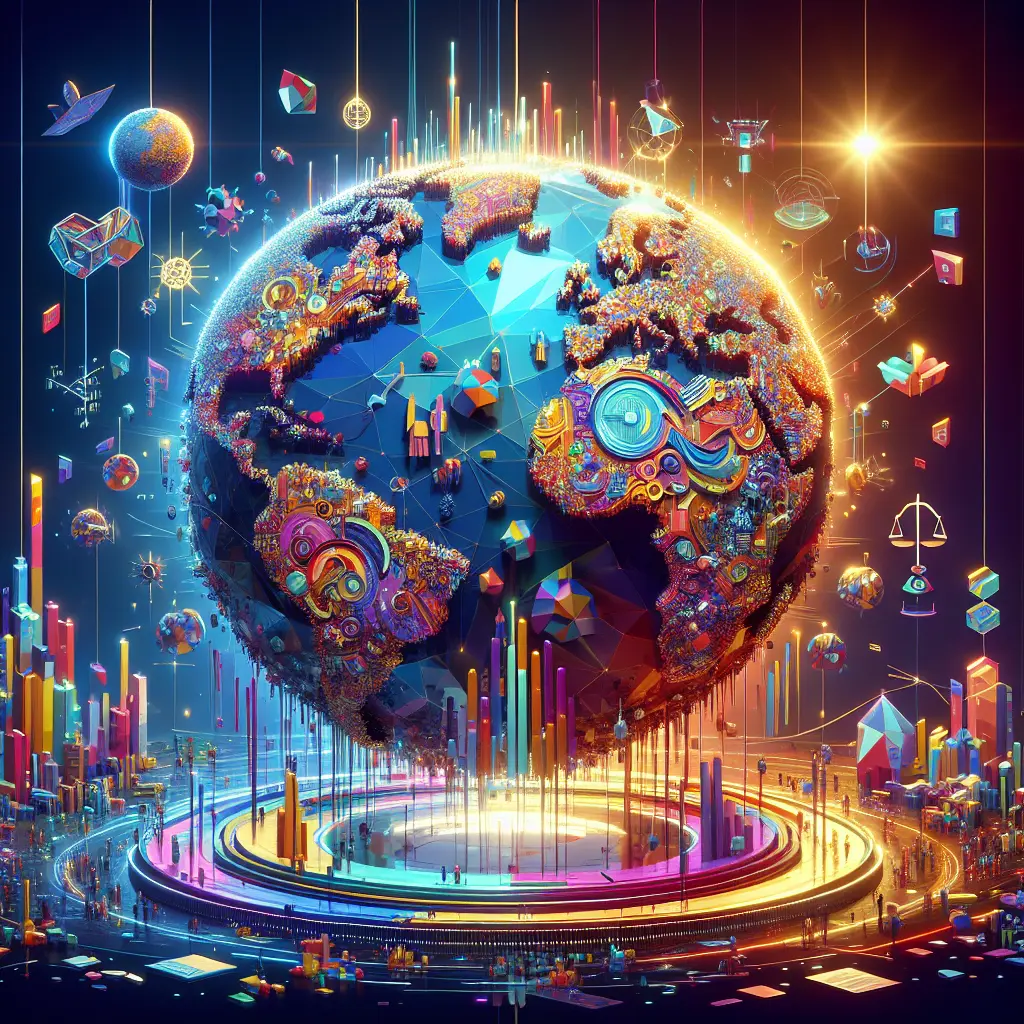
"Globalization Futures: Multipolarity, Fragmentation & Governance" explores the evolving landscape of international relations, highlighting a shift from a unipolar world to one where multiple powers influence global affairs. This multipolarity often leads to fragmentation, as differing interests and regional blocs emerge. Effective governance becomes crucial to address complex global challenges, requiring innovative cooperation, adaptive institutions, and new frameworks to manage economic, political, and social interdependencies in an increasingly divided yet interconnected world.
Globalization Futures: Multipolarity, Fragmentation & Governance
"Globalization Futures: Multipolarity, Fragmentation & Governance" explores the evolving landscape of international relations, highlighting a shift from a unipolar world to one where multiple powers influence global affairs. This multipolarity often leads to fragmentation, as differing interests and regional blocs emerge. Effective governance becomes crucial to address complex global challenges, requiring innovative cooperation, adaptive institutions, and new frameworks to manage economic, political, and social interdependencies in an increasingly divided yet interconnected world.
💡 Key Takeaways
- Understand the shift from a unipolar world to a multipolar global order and the main drivers behind it.
- See how competing powers and interests can fragment international institutions, rules, and governance norms.
- Analyze the evolution of diplomacy, alliances, and strategic competition in a multipolar landscape.
- Explore governance challenges for global commons (trade, security, climate, technology) and the need for pluralistic, adaptive governance frameworks.
❓ Frequently Asked Questions
What is meant by globalization futures in this article?
It refers to possible future scenarios for global interdependence shaped by shifts in power, technology, trade, and governance.
What is multipolarity in international relations?
A situation where multiple countries or powers have significant influence, rather than a single dominant state.
How can multipolarity contribute to fragmentation?
Different powers pursue distinct interests, norms, and rules, which can lead to competing blocs, governance regimes, and less cohesive global cooperation.
What does governance mean in this context?
The processes and institutions that coordinate or regulate cross-border issues like trade, security, and the environment.