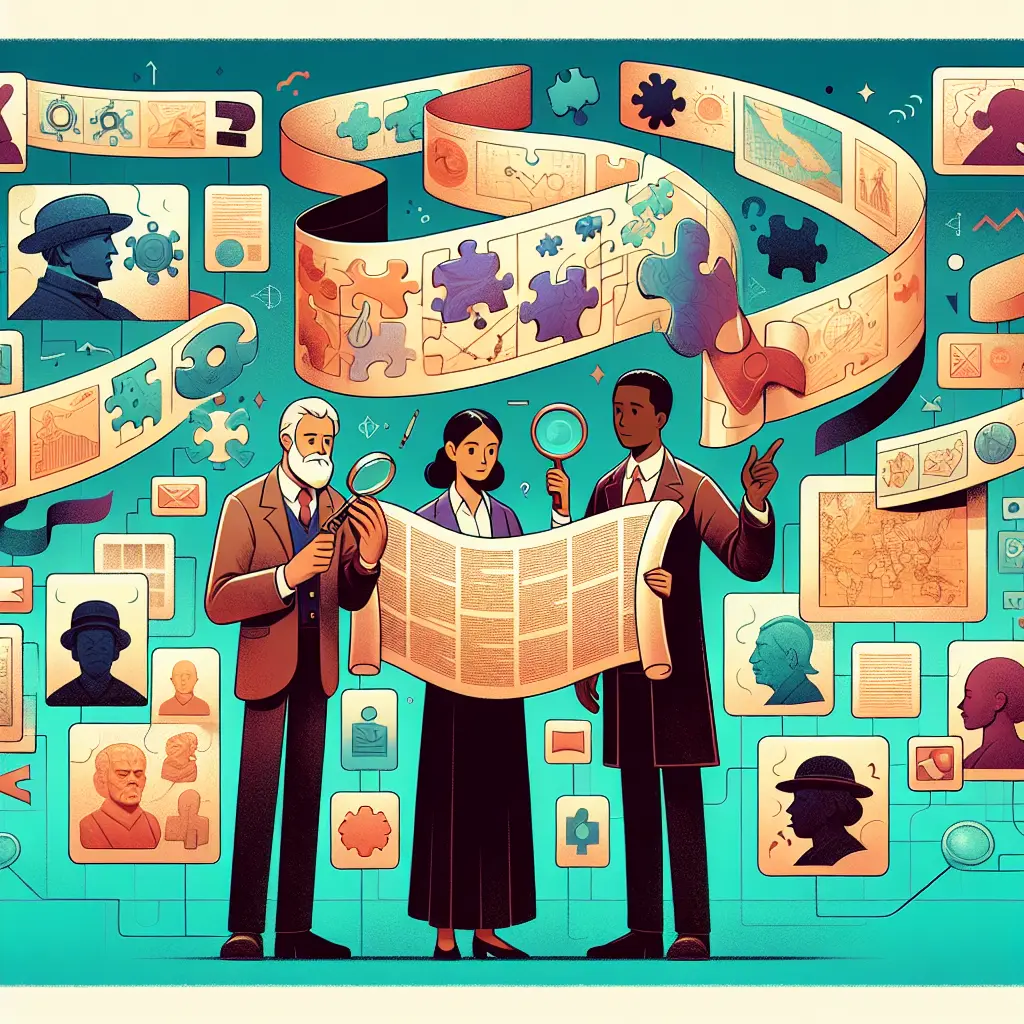
"Historical Mysteries: Key Figures, Features & Motifs" refers to the enigmatic events and unresolved questions from the past that continue to intrigue scholars and the public. These mysteries often involve prominent individuals whose actions or fates remain unclear, distinctive characteristics such as unexplained artifacts or locations, and recurring themes like lost civilizations, secret codes, or vanished populations. Together, they shape our fascination with history's unsolved puzzles.
Historical Mysteries: Key Figures, Features & Motifs
"Historical Mysteries: Key Figures, Features & Motifs" refers to the enigmatic events and unresolved questions from the past that continue to intrigue scholars and the public. These mysteries often involve prominent individuals whose actions or fates remain unclear, distinctive characteristics such as unexplained artifacts or locations, and recurring themes like lost civilizations, secret codes, or vanished populations. Together, they shape our fascination with history's unsolved puzzles.

💡 Key Takeaways
- Identify notable historical mysteries and the key figures associated with them.
- Explore distinctive characteristics, features, and motifs that recur in enigmatic events across different cultures.
- Learn how historians gather and interpret evidence from primary sources, artifacts, and geography to propose explanations.
- Understand how context, culture, and geography influence interpretations and differentiate myths from verifiable facts.
❓ Frequently Asked Questions
What does 'Historical Mysteries: Key Figures, Features & Motifs' cover?
It explores unresolved events and enigmatic individuals in world history, highlighting distinctive traits and recurring patterns that intrigue scholars.
Who are examples of enigmatic figures in history?
Prominent people whose actions or fates are debated or unclear, such as rulers, explorers, or scientists whose histories are disputed or incomplete.
What motifs appear in historical mysteries?
Disappearances, conflicting accounts, mysterious artifacts, myths versus records, and unclear motives that scholars strive to verify.
How do historians investigate these mysteries?
They compare primary sources, artifacts, and dating evidence; assess biases; and triangulate information from multiple disciplines to form well-supported conclusions.