Lotuses hold profound historical significance, especially in ancient cultures like Egypt, India, and China. Revered as symbols of purity, rebirth, and spiritual enlightenment, lotuses often appear in religious texts, art, and architecture. Unlike roses, which symbolize love and passion, lotuses represent transcendence and resilience, blooming beautifully even in muddy waters. Their enduring presence in mythology and rituals highlights their importance in expressing spiritual ideals and the journey toward enlightenment across civilizations.
Historical Significance of Lotuses
Lotuses hold profound historical significance, especially in ancient cultures like Egypt, India, and China. Revered as symbols of purity, rebirth, and spiritual enlightenment, lotuses often appear in religious texts, art, and architecture. Unlike roses, which symbolize love and passion, lotuses represent transcendence and resilience, blooming beautifully even in muddy waters. Their enduring presence in mythology and rituals highlights their importance in expressing spiritual ideals and the journey toward enlightenment across civilizations.

💡 Key Takeaways
- Understand the lotus's symbolic role in Hinduism, Buddhism, and ancient Egypt, and what it represents (purity, rebirth, enlightenment).
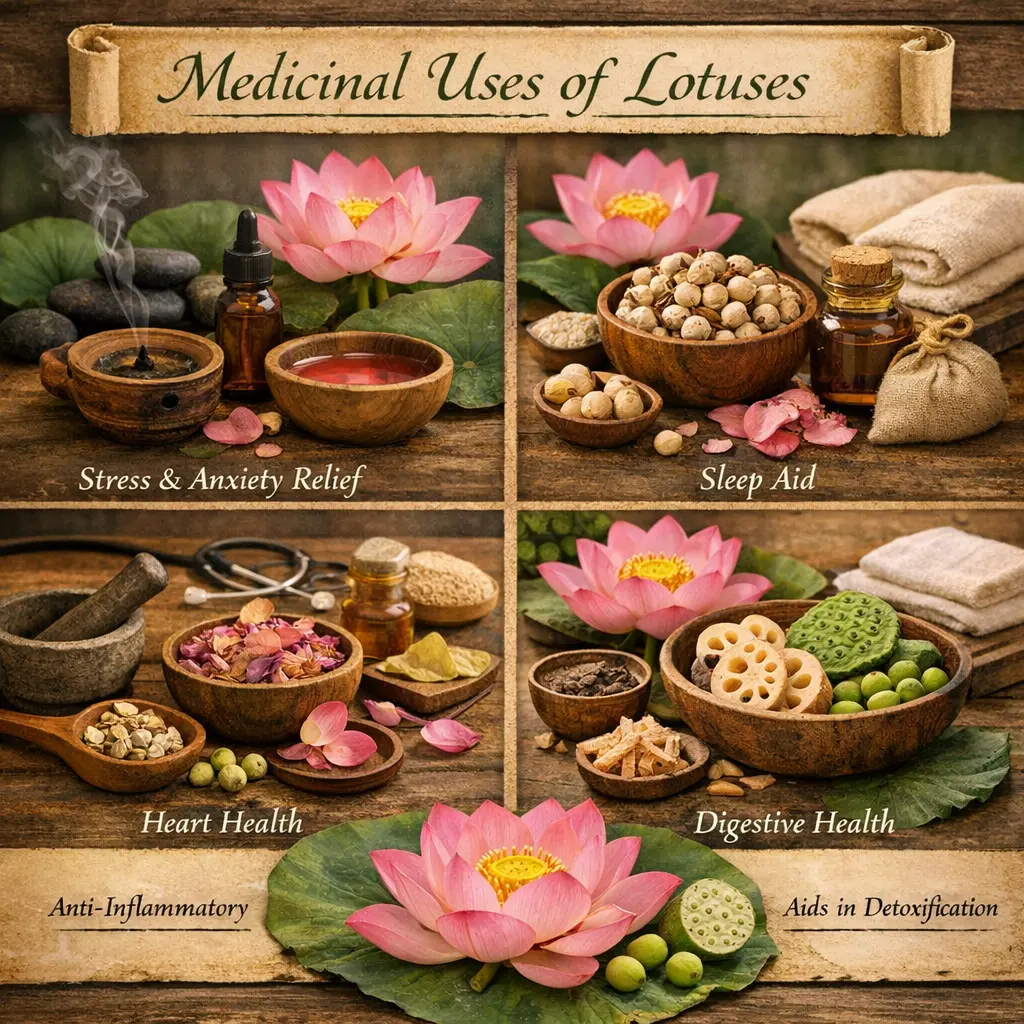
- Trace the historical cultivation and spread of lotus plants, including traditional uses in food, medicine, and daily life.
- Explore lotus motifs in ancient art, architecture, and literature, and how they conveyed cultural values and aesthetics.
- Learn why the lotus is a national or cultural symbol in regions like India and Vietnam and its relevance in modern culture.
❓ Frequently Asked Questions
What does the lotus symbolize in Buddhism?
Spiritual awakening and purity; it rises from muddy water to bloom as enlightenment.
Which Hindu deities are commonly depicted with a lotus, and what does it signify?
Goddess Lakshmi (and sometimes Saraswati) sit or stand on a lotus, symbolizing beauty, fertility, and divine birth.
What is the significance of the blue lotus in ancient Egyptian symbolism?
It signified creation, rebirth, and the sun, often associated with the Nile and renewal.
How is the lotus used as a symbol in East Asian art and philosophy?
It represents purity and resilience—rising clean from muddy waters and ascending toward enlightenment, a sign of noble character.