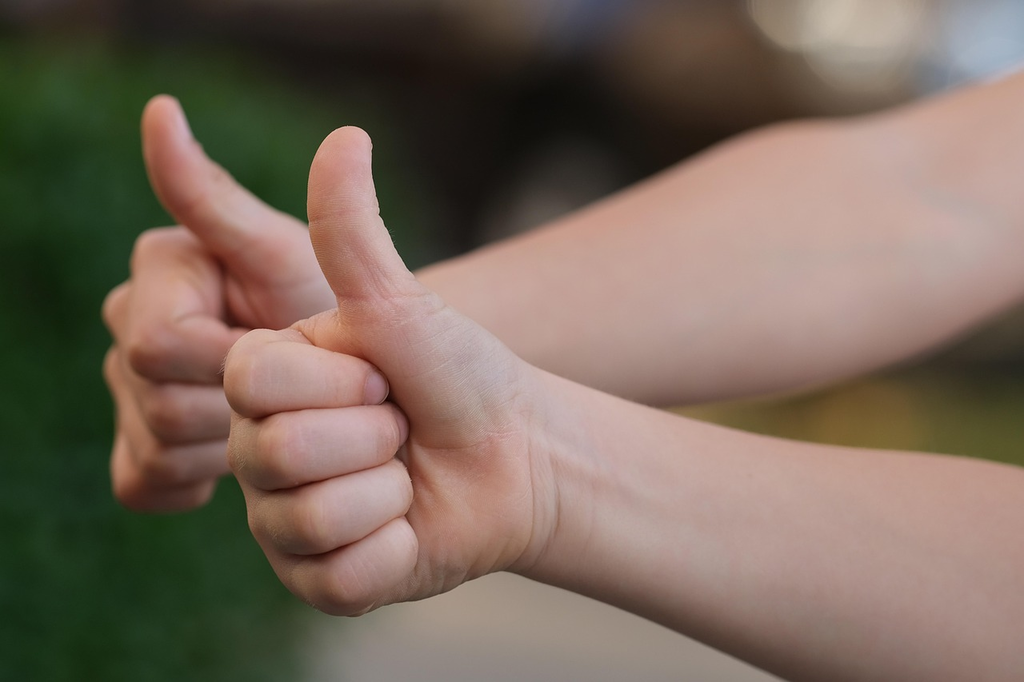
The thumbs up gesture, symbolizing approval or agreement, has ancient roots, possibly dating back to Roman times where it signaled life or death in gladiatorial combat. Over centuries, its meaning evolved, becoming a universal sign of positivity. In the 20th century, it gained widespread popularity, especially during World War II among pilots. Alongside, the peace sign (two fingers raised) emerged in the 1960s, representing harmony, often used together with thumbs up in gesture waves to convey goodwill.
History of Thumbs Up
The thumbs up gesture, symbolizing approval or agreement, has ancient roots, possibly dating back to Roman times where it signaled life or death in gladiatorial combat. Over centuries, its meaning evolved, becoming a universal sign of positivity. In the 20th century, it gained widespread popularity, especially during World War II among pilots. Alongside, the peace sign (two fingers raised) emerged in the 1960s, representing harmony, often used together with thumbs up in gesture waves to convey goodwill.
💡 Key Takeaways
- Trace the origins of the thumbs up gesture from ancient symbols to modern use
- Explore how the gesture became a global signal of approval across cultures
- Learn about cultural variations and potential misinterpretations of the gesture
- See how media and digital platforms popularized thumbs up as an emoji and reaction
❓ Frequently Asked Questions
What does a thumbs up generally signify today?
It usually signals approval, agreement, or that something is good; widely used in conversation and on social media.
Is there a single origin for the thumbs up gesture?
No. The gesture’s history is complex, with ancient signals in various cultures and the modern thumbs up becoming popular in the 20th century.
Is the idea that Romans used a thumbs up to spare someone’s life true?
That popular image is a myth; historical sources are unclear, and the exact crowd signal in Roman times is debated.
Do cultural interpretations of the thumbs up vary?
Yes. In many Western cultures it’s positive, but in some regions it can be rude or offensive; context matters when using it internationally.