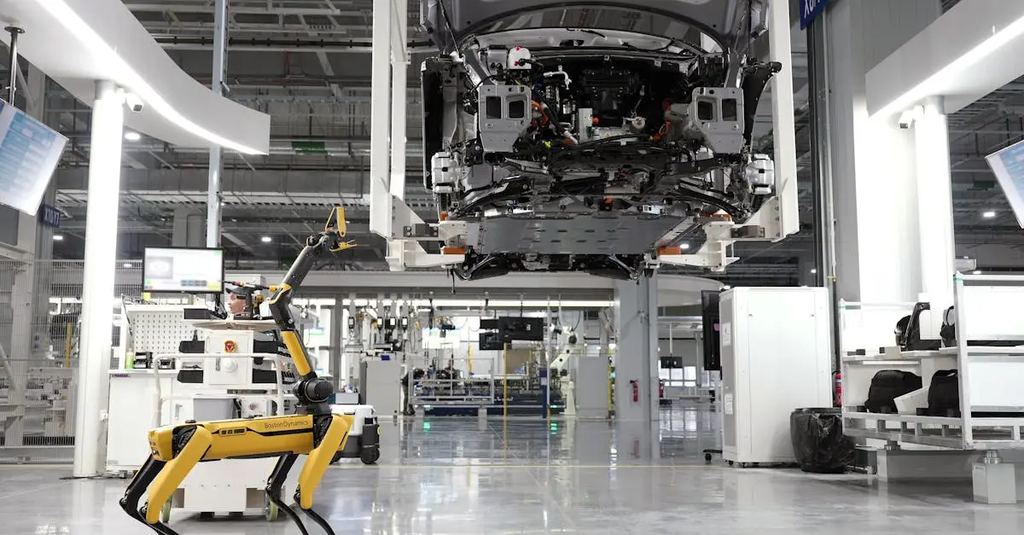
Human-Robot Interaction & Collaborative Systems in engineering and technology careers focus on designing, developing, and managing systems where humans and robots work together seamlessly. Professionals in this field create intuitive interfaces, ensure safety, and optimize workflows for productivity. Their work spans robotics, artificial intelligence, and user experience, enabling machines to assist humans in manufacturing, healthcare, logistics, and other sectors, ultimately enhancing efficiency and transforming modern workplaces.
Human-Robot Interaction & Collaborative Systems
Human-Robot Interaction & Collaborative Systems in engineering and technology careers focus on designing, developing, and managing systems where humans and robots work together seamlessly. Professionals in this field create intuitive interfaces, ensure safety, and optimize workflows for productivity. Their work spans robotics, artificial intelligence, and user experience, enabling machines to assist humans in manufacturing, healthcare, logistics, and other sectors, ultimately enhancing efficiency and transforming modern workplaces.
💡 Key Takeaways
- Understand the goals and scope of human-robot collaboration in real-world work scenarios
- Identify common interaction methods used with collaborative robots (speech, gesture, touch, gaze)
- Explain how trust, safety, and transparency influence effective human–robot teams and how to design for them
- Describe levels of robot autonomy and when human supervision or intervention is appropriate
❓ Frequently Asked Questions
What is human-robot interaction (HRI)?
The study of how people and robots interact to complete tasks, focusing on interfaces, communication, safety, and collaboration.
What is a collaborative robot (cobot)?
A robot designed to work alongside humans in shared spaces, with safe, intuitive interfaces and features to support joint tasks.
What is shared autonomy in human-robot collaboration?
A control approach where both human input and robot autonomy contribute to task execution, with the robot interpreting intent and taking supportive actions.
Why is trust important in HRI?
Trust influences how users rely on robot assistance and is built through reliable behavior, transparency, and predictable responses.
What are common goals when evaluating human-robot collaboration?
Safety, effectiveness, efficiency, user satisfaction, and ease of use.