Hybrid Scores & Multimedia Performance in performing arts and music refer to innovative works that blend traditional musical notation with digital or visual elements. These performances often integrate live music, electronic sounds, video projections, and interactive media, creating immersive experiences. Artists use hybrid scores—combinations of written music, graphic symbols, and digital cues—to guide performers, fostering collaboration between musicians, visual artists, and technologists in a dynamic, interdisciplinary setting.
Hybrid Scores & Multimedia Performance
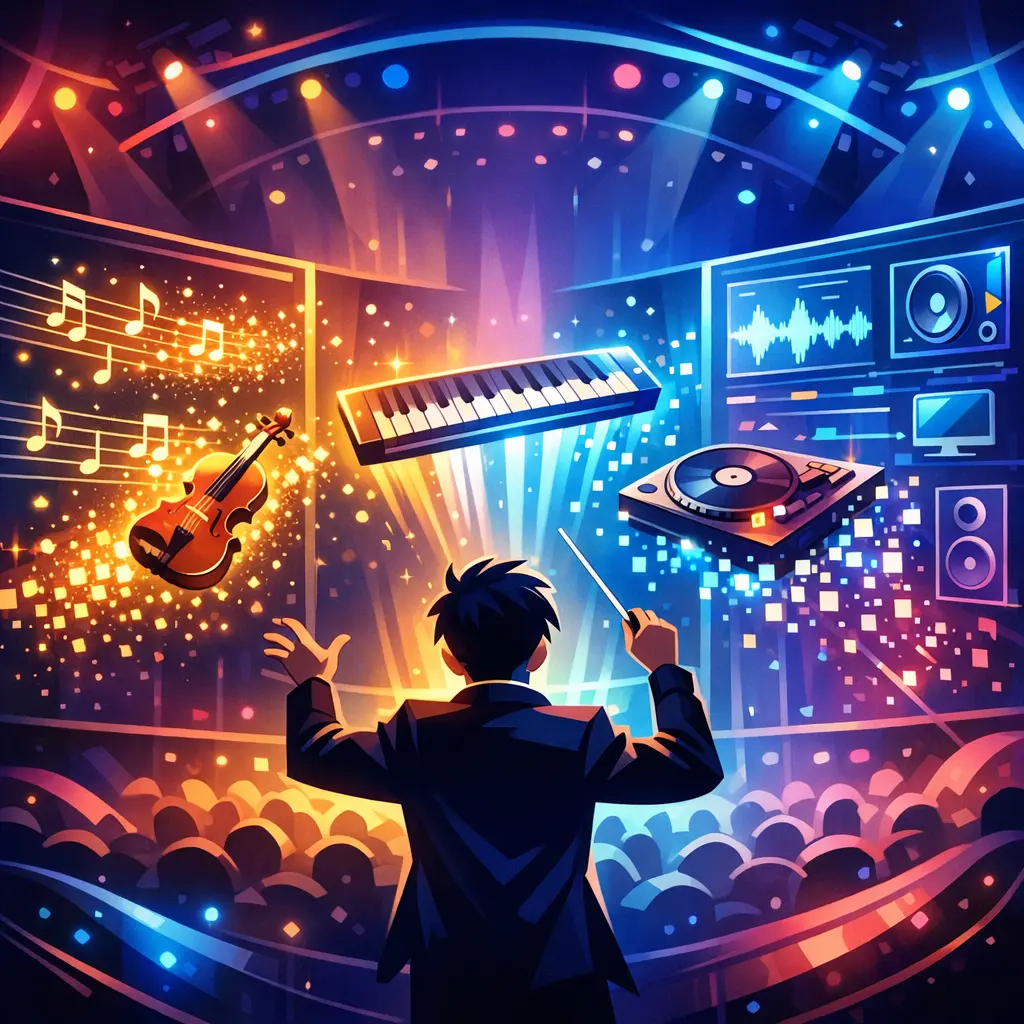
Hybrid Scores & Multimedia Performance in performing arts and music refer to innovative works that blend traditional musical notation with digital or visual elements. These performances often integrate live music, electronic sounds, video projections, and interactive media, creating immersive experiences. Artists use hybrid scores—combinations of written music, graphic symbols, and digital cues—to guide performers, fostering collaboration between musicians, visual artists, and technologists in a dynamic, interdisciplinary setting.
💡 Key Takeaways
- Define what a hybrid score is in multimedia and where it's commonly used (film, games, live performance).
- Describe how traditional scores blend with digital or synthetic elements to form a hybrid score.
- Identify key factors for evaluating hybrid scores, including synchronization, pacing, and emotional impact.
- Learn practical steps to design, implement, and adapt hybrid scores across various media platforms.
❓ Frequently Asked Questions
What is a hybrid score?
A hybrid score blends original composition with sound design, pre-recorded tracks, and interactive elements to accompany multimedia projects (film, games, live shows). It often combines acoustic instruments with electronics and adapts to on-screen events or user actions.
How do you synchronize a hybrid score with video or interactive media?
Plan with a storyboard, lock the edit, and align cues to the media timeline. Use a DAW with video import or middleware (e.g., Wwise, FMOD) to map cues to events, then test timing across devices and in context.
When should live performance be used in a hybrid score?
Live performers add spontaneity and human nuance. Include them when the project benefits from real-time expression or audience energy, and prepare clear cues, click tracks, and robust tech setup.
What tools and workflows are common for hybrid scores?
Use a DAW (Logic Pro, Ableton Live, Pro Tools) for composition/editing, video timelines for synchronization, and middleware (Wwise, FMOD) for interactivity. Combine with sound design, stems exports, and collaborative workflows.