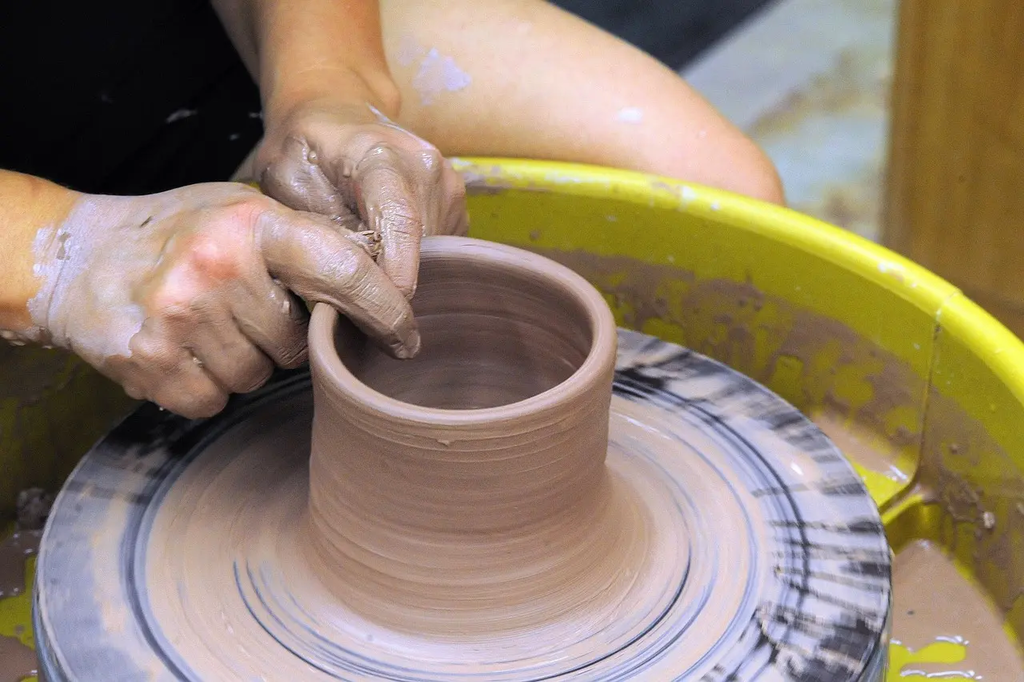
Intermediate wheel-throwing refers to a pottery skill level where individuals have moved beyond basic techniques and are developing greater control over the pottery wheel. Students at this stage refine their ability to center clay, shape more complex forms, and experiment with decorative techniques. They may create vessels with lids, handles, or altered shapes, focusing on consistency and precision. The goal is to build confidence and creativity while mastering more advanced wheel-throwing methods.
Intermediate Wheel‑Throwing
Intermediate wheel-throwing refers to a pottery skill level where individuals have moved beyond basic techniques and are developing greater control over the pottery wheel. Students at this stage refine their ability to center clay, shape more complex forms, and experiment with decorative techniques. They may create vessels with lids, handles, or altered shapes, focusing on consistency and precision. The goal is to build confidence and creativity while mastering more advanced wheel-throwing methods.
💡 Key Takeaways
- Improve centering and wheel control to produce consistent thickness and stable starts.
- Shape more complex forms with controlled profiles, necks, and footed bases.
- Explore surface decoration and texture techniques (slips, carving, underglazes) compatible with wheel-thrown pieces.
- Refine post-throw finishing skills such as trimming, hollowing, and smoothing for balanced, ready-to-fire wares.
❓ Frequently Asked Questions
What is intermediate wheel-throwing?
A pottery level beyond basics where you consistently center clay, throw more complex forms, and begin decorative experimentation.
How can you improve centering and shaping on the wheel?
Use well-wedged, pliable clay; set a steady wheel speed; keep your body aligned; apply even, gradual pressure; practice centering before pulling walls.
What should you aim for when throwing more complex forms?
A symmetrical profile, consistent wall thickness, and smooth transitions between form sections (e.g., body to neck or shoulder to rim).
What decorative techniques are common at this stage?
Carving or incising on leather-hard surfaces, slip trailing, underglaze decoration, and light surface textures.
What is trimming and why is it important in intermediate throwing?
Trimming refines the shape after the piece stiffens, reduces weight, and creates a balanced foot and cleaner profile.