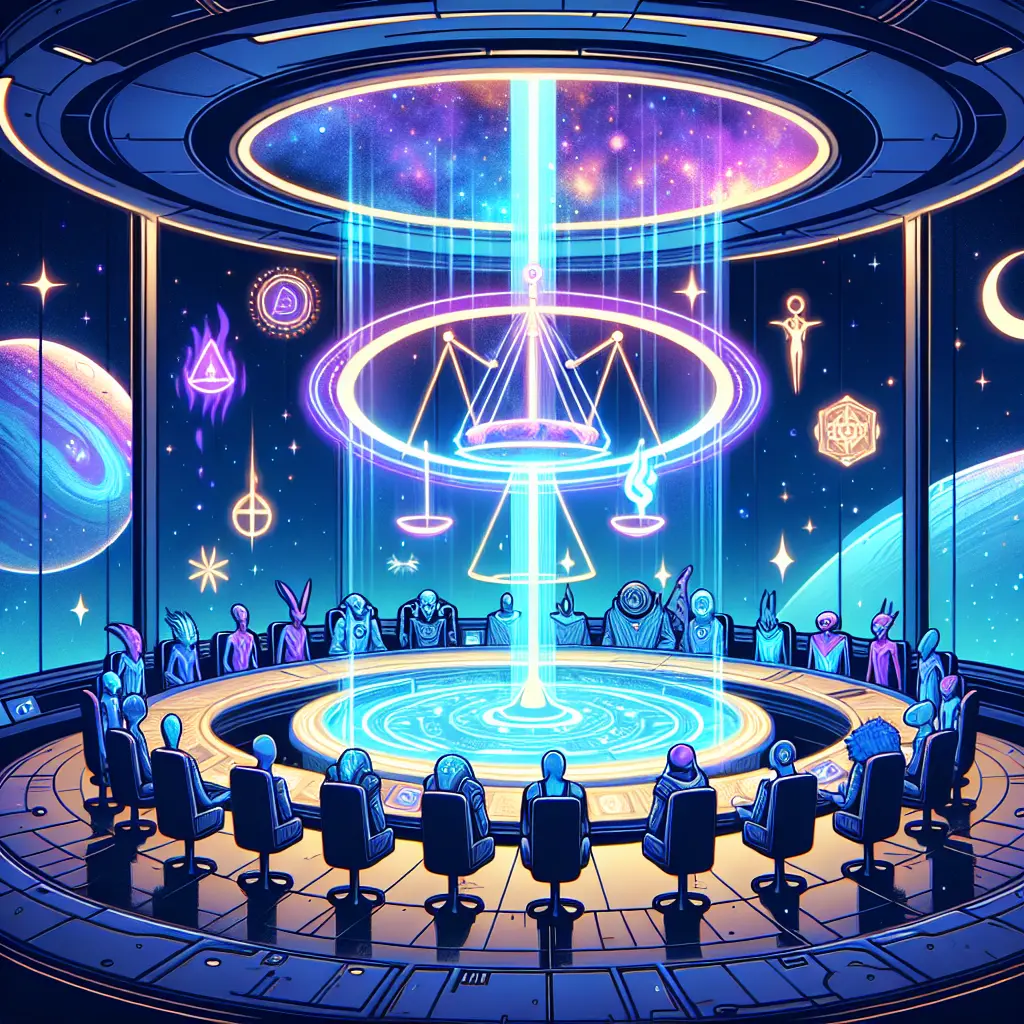
Interstellar Law & Diplomacy refers to the legal frameworks and diplomatic practices that govern interactions between different civilizations or entities across space. It encompasses treaties, conflict resolution, trade agreements, and the establishment of rights and responsibilities among planetary systems or species. The aim is to maintain peace, ensure cooperation, and address disputes or ethical issues that arise from contact and collaboration beyond a single planet or solar system.
Interstellar Law & Diplomacy
Interstellar Law & Diplomacy refers to the legal frameworks and diplomatic practices that govern interactions between different civilizations or entities across space. It encompasses treaties, conflict resolution, trade agreements, and the establishment of rights and responsibilities among planetary systems or species. The aim is to maintain peace, ensure cooperation, and address disputes or ethical issues that arise from contact and collaboration beyond a single planet or solar system.
💡 Key Takeaways
- Understand the purpose and scope of interstellar law and who enforces it.
- Learn the key components of space treaties, including exploration rights and resource usage.
- Explore conflict resolution and arbitration mechanisms in a multi-civilization setting.
- See how interstellar diplomacy shapes trade, alliances, and humanitarian norms across worlds.
- Consider practical challenges and ethical questions in enforcing rights and responsibilities across space.
❓ Frequently Asked Questions
What is interstellar law?
A body of rules that governs interactions between spacefaring civilizations and entities, covering rights, duties, treaties, and dispute mechanisms across space.
What role do treaties play in space diplomacy?
Treaties establish shared norms, restrictions, and procedures for cooperation, trade, resource use, and conflict resolution among civilizations.
How are disputes resolved in interstellar contexts?
Disputes are handled through diplomacy, mediation, arbitration, or interstellar courts and councils, guided by existing treaties.
Who enforces space law?
Enforcement comes from recognized governing bodies, coalitions, or neutral parties cooperating with member civilizations; enforcement is challenging over vast distances.
What is covered by space trade and rights agreements?
Trade deals govern the exchange of goods and technologies, while rights and responsibilities define ownership, safety, innovation access, and environmental protections.