Introduction to Transfer Learning refers to a machine learning technique where a model developed for one task is reused as the starting point for a model on a second, related task. This approach leverages previously acquired knowledge, enabling faster training and improved performance, especially when limited data is available for the new task. Transfer learning is widely used in fields like computer vision and natural language processing to enhance efficiency and accuracy.
Introduction to Transfer Learning
Introduction to Transfer Learning refers to a machine learning technique where a model developed for one task is reused as the starting point for a model on a second, related task. This approach leverages previously acquired knowledge, enabling faster training and improved performance, especially when limited data is available for the new task. Transfer learning is widely used in fields like computer vision and natural language processing to enhance efficiency and accuracy.
💡 Key Takeaways
- Understand what transfer learning is and why pretrained models serve as starting points for related tasks.
- Learn the difference between feature extraction (freezing layers) and fine-tuning (updating weights) in neural networks.
- Recognize when transfer learning helps, such as small datasets or related domains, for faster training and better performance.
- Be aware of potential pitfalls like domain mismatch, negative transfer, and the need for careful evaluation and regularization.
❓ Frequently Asked Questions
What is transfer learning in neural networks?
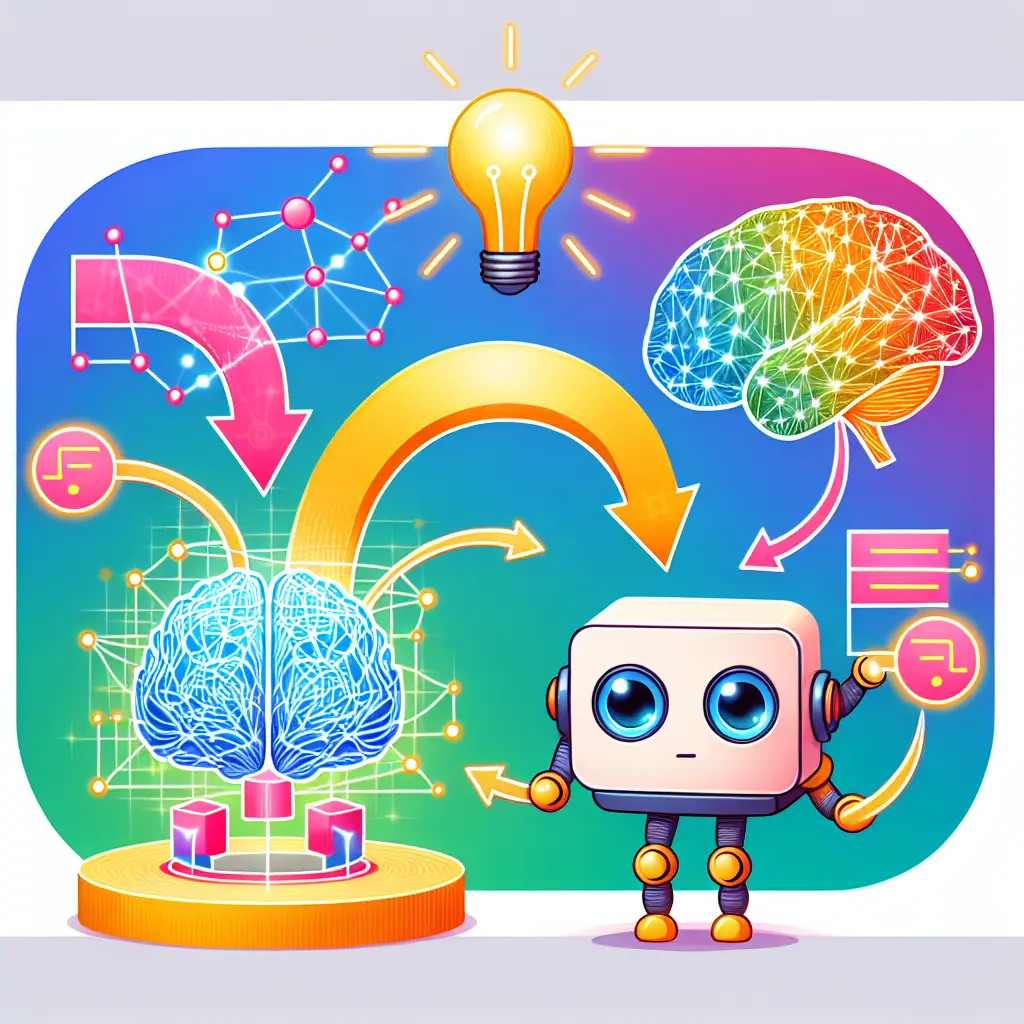
Transfer learning reuses a model trained on one task as the starting point for a related task, leveraging its learned features to speed up training and improve performance.
Why is transfer learning beneficial for neural networks?
It reduces training time and data requirements by starting from a model that already captures useful representations, often boosting performance on the new task.
What are common transfer learning approaches?
Two main approaches are: (1) feature extraction — freeze the base model and train a new classifier head; (2) fine-tuning — unfreeze some or all layers and train with the new task data at a smaller learning rate.
When should you use transfer learning?
Use it when labeled data for the new task is limited, when tasks are related, or when you want to leverage powerful pretrained models to achieve faster training and better results.