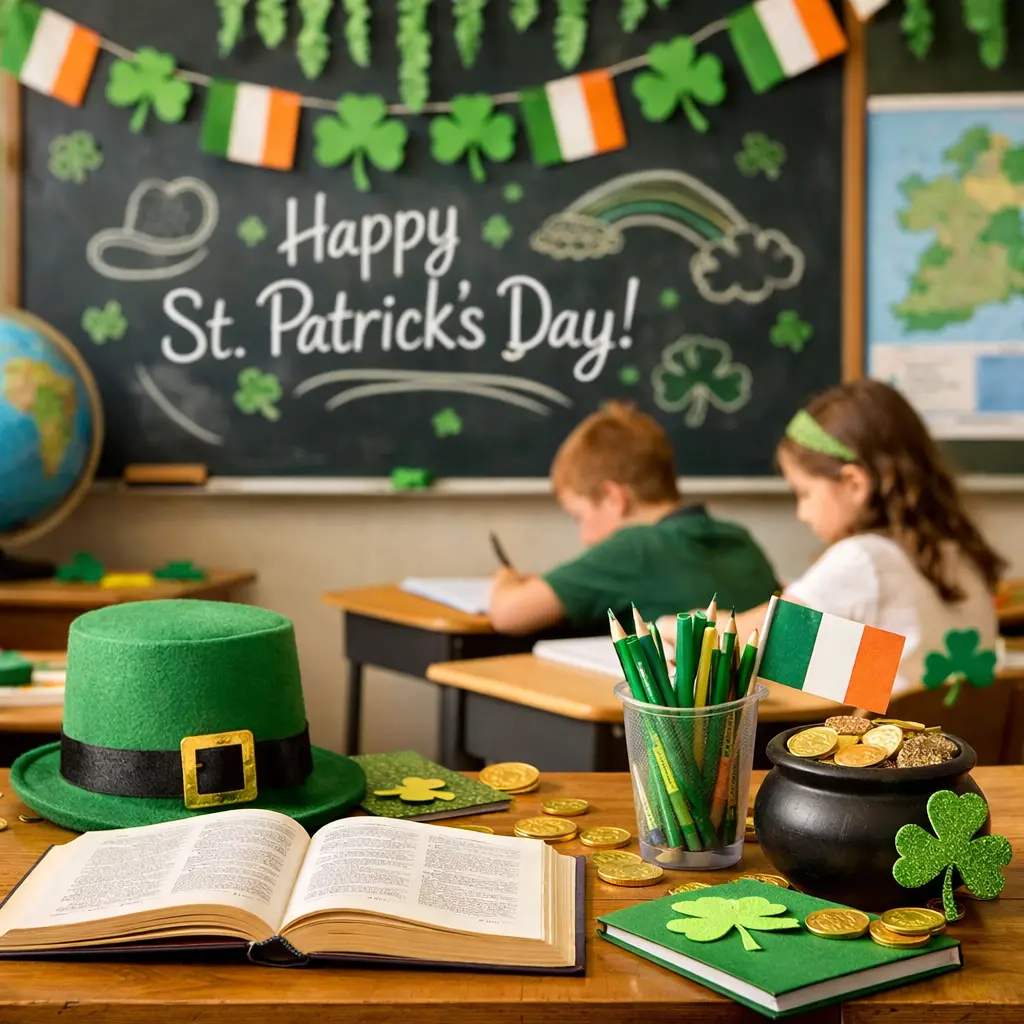
Irish Myths and Legends (St. Patrick's Day) refers to the rich folklore and traditional stories from Ireland, often celebrated during St. Patrick’s Day. These tales feature legendary heroes, magical creatures like leprechauns and fairies, and epic adventures, such as those of Cú Chulainn and the Children of Lir. St. Patrick’s Day festivities honor these myths, connecting Irish cultural heritage with themes of bravery, magic, and the triumph of good over evil.
Irish Myths and Legends
Irish Myths and Legends (St. Patrick's Day) refers to the rich folklore and traditional stories from Ireland, often celebrated during St. Patrick’s Day. These tales feature legendary heroes, magical creatures like leprechauns and fairies, and epic adventures, such as those of Cú Chulainn and the Children of Lir. St. Patrick’s Day festivities honor these myths, connecting Irish cultural heritage with themes of bravery, magic, and the triumph of good over evil.
💡 Key Takeaways
- Identify key figures, creatures, and artifacts from Irish myths (e.g., Cú Chulainn, Finn MacCool, the Tuatha Dé Danann, the Salmon of Knowledge).
- Name the major mythic cycles (Mythological, Ulster, Fenian) and describe a defining theme for each.
- Explore common motifs and themes in Irish myth (otherworld, shapeshifting, magical objects, sacred landscapes).
- Explain how Irish myths have influenced literature, folklore, and modern media and where to find core sources (e.g., Book of Invasions, Ulster and Fenian cycles).
❓ Frequently Asked Questions
What are Irish myths and legends, and how do they differ?
Irish myths are ancient stories about gods and the Otherworld, while legends are heroic tales rooted in Ireland's past that blend history with myth.
Who were the Tuatha Dé Danann, and what happened to them?
They are Ireland's former gods and goddesses; after being defeated by human settlers, they’re said to have retreated to the sí and continued as the Otherworldly fairies.
What are the main Irish storytelling cycles and a key source for them?
Major cycles include the Mythological Cycle (gods and the Otherworld), Ulster Cycle (Cú Chulainn), and Fenian Cycle (Fionn mac Cumhaill). The Book of Invasions (Lebor Gabála Érenn) chronicles Ireland's legendary invasions.
Who are Cú Chulainn and Fionn mac Cumhaill, and what are they known for?
Cú Chulainn is the Ulster Cycle hero famed for heroic feats and single combat; Fionn mac Cumhaill is the Fianna leader celebrated for wisdom and the Salmon of Knowledge.