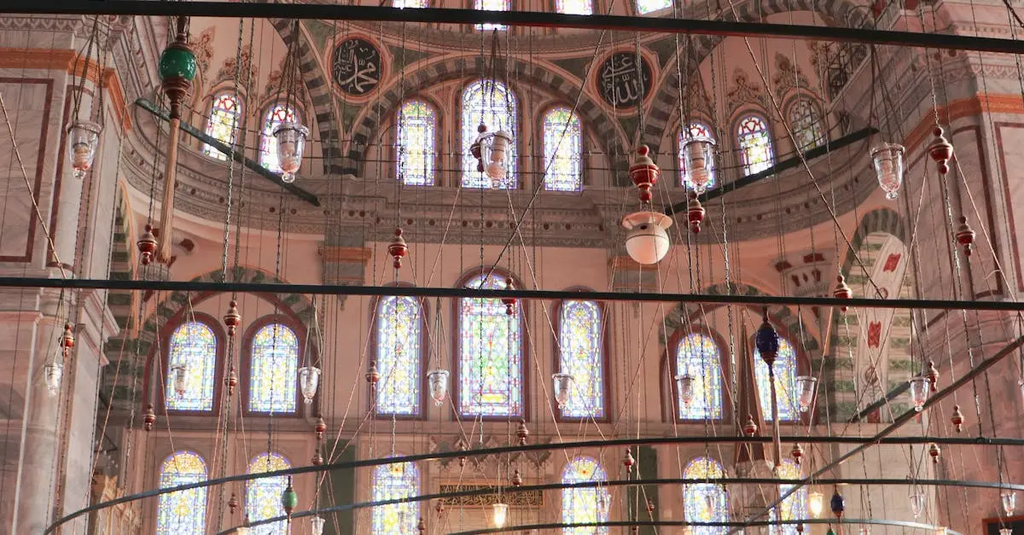
Islamic art and architecture encompass a diverse range of artistic expressions and building styles developed in regions influenced by Islam from the 7th century onward. Characterized by intricate geometric patterns, arabesques, calligraphy, and the avoidance of figurative imagery, these forms reflect spiritual and cultural values. Prominent features include domes, minarets, courtyards, and elaborate tilework, seen in mosques, palaces, and public buildings across the Middle East, North Africa, and beyond.
Islamic Art and Architecture
Islamic art and architecture encompass a diverse range of artistic expressions and building styles developed in regions influenced by Islam from the 7th century onward. Characterized by intricate geometric patterns, arabesques, calligraphy, and the avoidance of figurative imagery, these forms reflect spiritual and cultural values. Prominent features include domes, minarets, courtyards, and elaborate tilework, seen in mosques, palaces, and public buildings across the Middle East, North Africa, and beyond.
💡 Key Takeaways
- Identify core Islamic art and architecture features—geometric patterns, arabesques, and calligraphy—in buildings and objects.
- Explain why figurative imagery is avoided in many Islamic works and how this shapes design choices in religious and secular spaces.
- Recognize common architectural elements and decorative techniques (minarets, domes, mihrabs, tilework, stucco, and muqarnas) across regions.
- Understand the regional spread and historical timeline of Islamic art and architecture from the 7th century onward, with notable styles from the Middle East, North Africa, Iberia, and South Asia.
❓ Frequently Asked Questions
What defines Islamic art and architecture?
Common features include geometric patterns, arabesques, and calligraphy, with non-figurative decoration and harmonious symmetry.
Why is calligraphy important in Islamic art?
The Qur'an is central in Islam, so script is used decoratively on buildings and objects as a primary artistic element.
What is an arabesque?
A decorative, interlacing pattern of foliage and tendrils used to create intricate designs.
What is muqarnas in Islamic architecture?
A three-dimensional, honeycomb-like ornamentation used to decorate domes, arches, and vaults.
Can you name a famous Islamic architectural site?
The Alhambra in Granada, Spain is a renowned example of Islamic art and architecture.