Juvenile Justice & Youth Courts refer to the legal system and specialized courts that handle cases involving minors, typically individuals under 18, who are accused of breaking the law. These courts focus on rehabilitation rather than punishment, aiming to guide young offenders toward positive behavior. They operate within the broader framework of law, government, and public service, emphasizing protection of minors’ rights and addressing underlying issues contributing to delinquency.
Juvenile Justice & Youth Courts
Juvenile Justice & Youth Courts refer to the legal system and specialized courts that handle cases involving minors, typically individuals under 18, who are accused of breaking the law. These courts focus on rehabilitation rather than punishment, aiming to guide young offenders toward positive behavior. They operate within the broader framework of law, government, and public service, emphasizing protection of minors’ rights and addressing underlying issues contributing to delinquency.
💡 Key Takeaways
- Understand the goals of juvenile courts: rehabilitation, accountability, and public safety for youth.
- Learn how juvenile courts differ from adult courts, including privacy protections and sentencing options.
- Identify the typical stages of a juvenile case (intake, detention, adjudication, disposition) and common outcomes such as probation or treatment programs.
- Recognize the rights of young offenders in the system (counsel, notice, due process) and the role of families and communities in case outcomes.
❓ Frequently Asked Questions
What is the juvenile justice system?
A legal framework for youths under the typical age of adulthood that handles offenses, focusing on rehabilitation, education, privacy, and age-appropriate sanctions rather than punishment.
What is a youth court?
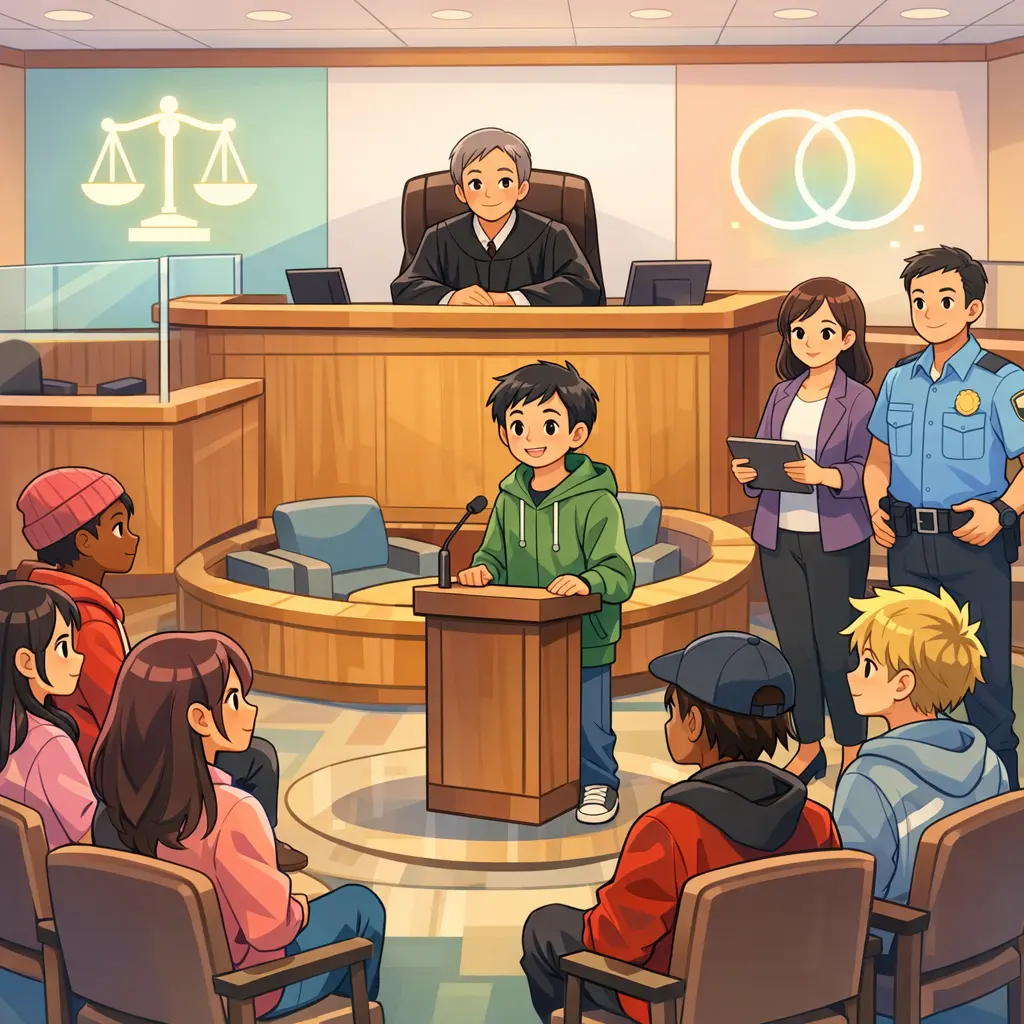
A program (often run by or for young people) that handles minor juvenile offenses using peer judges or juries and emphasizes restorative, community-based sanctions rather than formal penalties.
What is the difference between delinquency and status offenses?
Delinquency offenses are acts that would be crimes for adults. Status offenses are acts that are offenses only because of the youth’s age (e.g., truancy, underage drinking).
What rights do juveniles have in court?
The right to a lawyer, notice of charges, a fair hearing, and privacy protections for juvenile records, along with due process rights appropriate for their age.