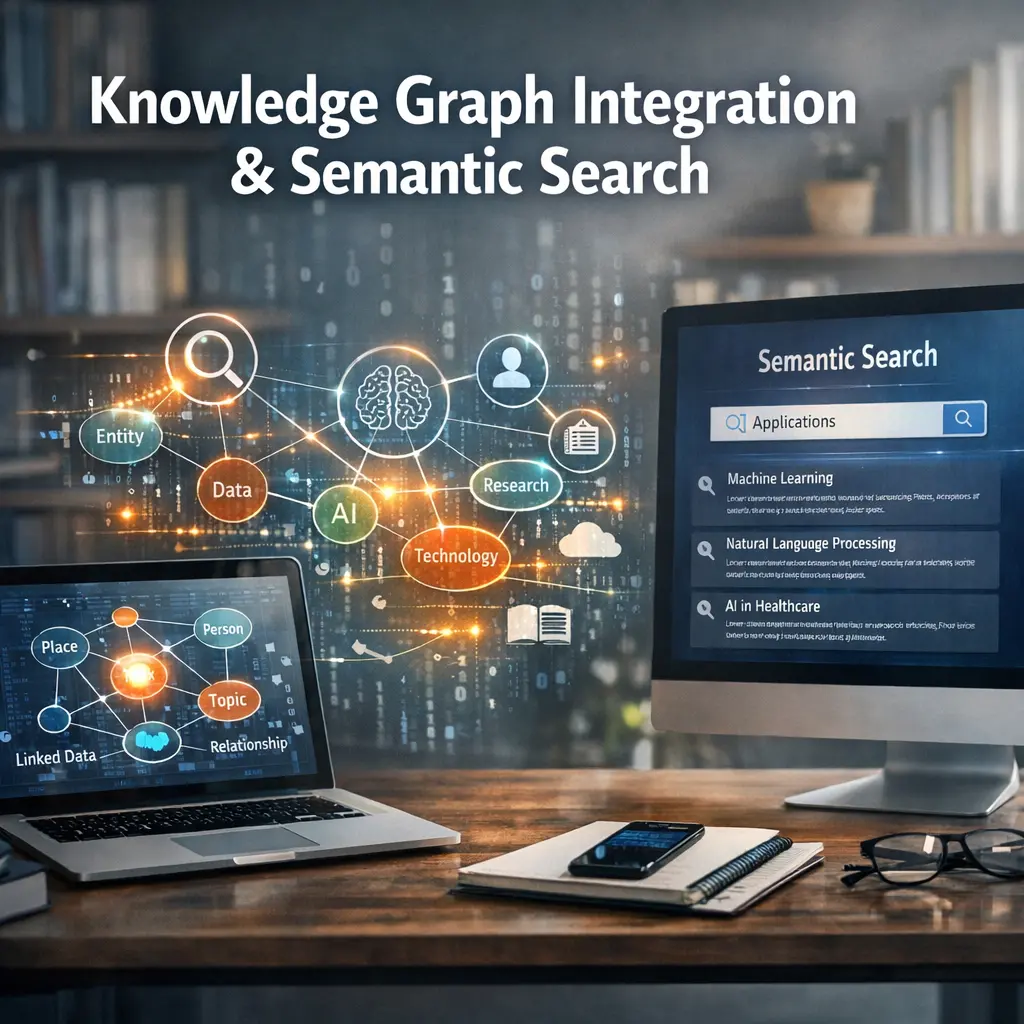
Knowledge Graph Integration & Semantic Search (Advanced RAG Techniques) involves combining structured knowledge graphs with semantic search capabilities to enhance Retrieval-Augmented Generation (RAG) models. This approach enables AI systems to access, understand, and utilize interconnected data, improving the relevance and accuracy of retrieved information. By leveraging relationships and context from knowledge graphs, semantic search delivers more precise results, while advanced RAG techniques ensure that generated responses are contextually informed and grounded in authoritative sources.
Knowledge Graph Integration & Semantic Search
Knowledge Graph Integration & Semantic Search (Advanced RAG Techniques) involves combining structured knowledge graphs with semantic search capabilities to enhance Retrieval-Augmented Generation (RAG) models. This approach enables AI systems to access, understand, and utilize interconnected data, improving the relevance and accuracy of retrieved information. By leveraging relationships and context from knowledge graphs, semantic search delivers more precise results, while advanced RAG techniques ensure that generated responses are contextually informed and grounded in authoritative sources.
💡 Key Takeaways
- Understand the basics of knowledge graphs: entities, relationships, and properties
- Learn how to integrate diverse data sources into a unified graph using standards like RDF/OWL and ETL processes
- Explore semantic search concepts: how graph structure and ontologies improve query relevance and understanding
- Practice implementing a knowledge graph: schema design, entity resolution, and choosing the right graph database
- Identify evaluation methods for semantic search quality and considerations for data governance and maintenance
❓ Frequently Asked Questions
What is a knowledge graph?
A structured map of entities (nodes) and their relationships (edges) that lets computers understand how things are connected.
What is semantic search?
A search method that uses meaning, context, and graph relationships to find results, not just exact keywords.
What does knowledge graph integration involve?
Merging data from multiple sources into one graph by matching entities, aligning schemas, and linking relationships.
Why pair semantic search with knowledge graphs?
It enables smarter retrieval, better disambiguation, and inferences by leveraging the graph's connections.
What are common challenges in implementing knowledge graphs?
Data quality issues, entity resolution, schema alignment, scalability, and governance.