The Magna Carta, signed in 1215 by King John of England, is a historic document that established the principle that everyone, including the king, is subject to the law. It granted certain legal rights to English nobles, limited royal authority, and laid the groundwork for modern concepts of justice and individual freedoms. The Magna Carta is often regarded as a cornerstone in the development of constitutional law and democratic principles.
Magna Carta+50
The Magna Carta, signed in 1215 by King John of England, is a historic document that established the principle that everyone, including the king, is subject to the law. It granted certain legal rights to English nobles, limited royal authority, and laid the groundwork for modern concepts of justice and individual freedoms. The Magna Carta is often regarded as a cornerstone in the development of constitutional law and democratic principles.
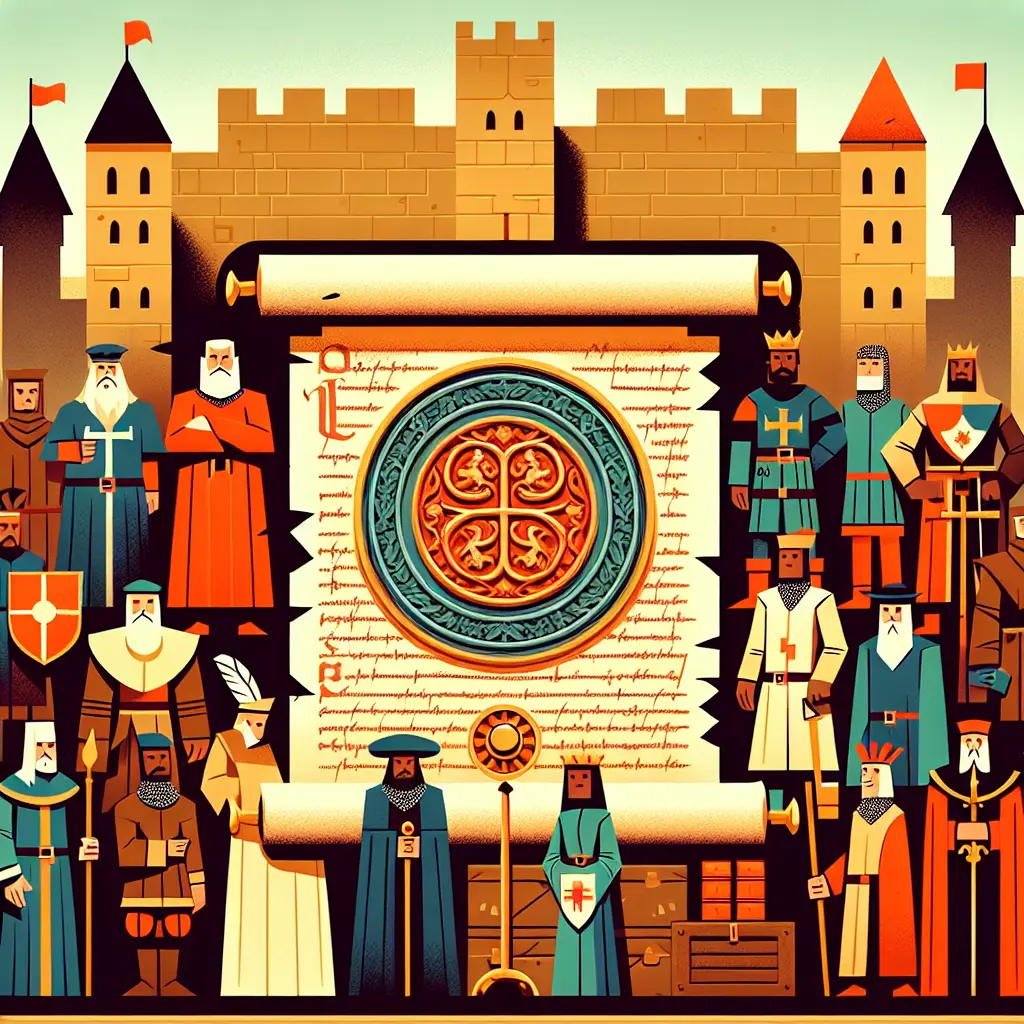
💡 Key Takeaways
- Learn that Magna Carta established that the king, like everyone else, is subject to the law.
- Explore how it limited royal authority and protected certain legal rights for English nobles.
- Understand its early contribution to due process and fair treatment in legal matters.
- Recognize its lasting influence on later constitutional documents and modern concepts of justice.
❓ Frequently Asked Questions
What is the Magna Carta?
A charter signed in 1215 that limited the king's power and established that everyone, including the king, is subject to the law, while granting certain rights to nobles.
Who signed the Magna Carta and when?
King John of England signed it in 1215.
What core legal idea did Magna Carta introduce?
The rule of law: the king’s authority is limited and individuals have protections such as due process and fair trials.
How did Magna Carta influence later law and government?
It laid the groundwork for modern constitutional law and justice, shaping later rights protections and documents that constrain royal authority.